

Daily Dose Of Jazz…
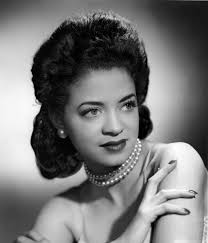
Kay Davis was born Katherine McDonald on December 5, 1920 in Evanston, Illinois. She studied voice and piano at Northwestern University, earning bachelor and master’s degrees.
In 1944 Kay joined Duke Ellington’s orchestra, singing alongside Joya Sherrill and Al Hibbler. She is best known for her wordless vocals in pieces such as “Transblucency” and “On a Turquoise Cloud” but also sang many lyrical compositions and is the only person Ellington ever allowed to reprise Adelaide Hall’s famous wordless vocal on “Creole Love Call”.
Although she never recorded as a solo artist, Davis’ tenure with Ellington’s band coincided with their increasing exposure on film, especially for Universal Pictures. She performed with Billy Strayhorn on the very first performance of his composition “Lush Life” at Carnegie Hall in 1948, though he wrote the song in the Thirties.
Kay toured England with Ellington alongside Ray Nance in 1948 and two years later with the full orchestra throughout Europe. In 1950 vocalist Kay Davis left the Ellington organization, got married and retired to Florida. After a long and full life, the vocalist passed away on January 27, 2012 in Apopka, Florida.

Give A Gift Of Jazz – Share
More Posts: vocal
Daily Dose Of Jazz…
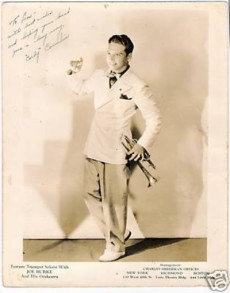
Edward “Corky” Cornelius was born in Indiana on December 3, 1914 but was raised in Binghamton, New York. Learning music from his father who worked as a drummer in regional Texas dance bands, he began his professional career in the early 1930s.
The trumpeter was first hired by Les Brown, Corky would go on to play with Frank Dailey and Buddy Rogers but by 1039 was playing alongside Gene Krupa in Benny Goodman’s band. Following his short tenure Cornelius left with Gene Krupa when the later decided to form his own band.
It was during this period that Cornelius met and married popular vocalist Irene Daye and left Krupa for the Casa Loma Orchestra from 1941 until his sudden death from kidney failure at age 28 on August 3, 1943.
Put A Dose In Your Pocket
More Posts: trumpet
Daily Dose Of Jazz…
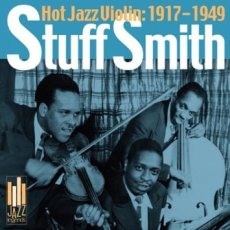
Benny Moten was born on November 30, 1916. A solid and supportive bassist, he had a long career as a sideman for decades. He began seriously playing professionally in 1941 and quickly developed relationships with top players of the time.
Over the course of his career Benny played and recorded with such artists as Hot Lips Page, Henry “Red” Allen, Stuff Smith, Arnett Cobb, Ella Fitzgerald, Wilbur DeParis, Roy Eldridge and Dakota Staton, just to name a few. He toured Africa from 1956 – 1957.
Bassist Benny Moten, often confused or mistaken for pianist and bandleader Bennie Moten, was never a leader however he remained musically active as a sideman until the time of his death at the age of 60 on March 27, 1977.
Dose A Day – Blues Away
More Posts: bass
Daily Dose Of Jazz…
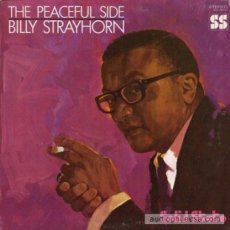
Billy Strayhorn was born William Thomas Strayhorn on November 29, 1915 in Dayton, Ohio but the family moved to Pittsburgh, Pennsylvania shortly after his birth. Protecting him from his father’s drunken sprees his mother sent him to live with his grandparents in North Carolina, which is here he first became interested in music. He learned to play hymns on the piano and listening to records on her Victrola.
By high school he was back in Pittsburgh and began his music career studying classical music, writing a school musical, forming a trio that played daily on the radio and composing Life Is Lonely (renamed Lush Life), My little Brown Book and Something To Live For while still in his teens.
When the harsh reality of a black man making it in the white classical world shattered his 19-year-old ambitions, Strayhorn turned to the music of Art Tatum and Teddy Wilson and was guided into jazz. In 1938 he met Ellington, impressed him with an arrangement of a Duke piece, went to New York and collaborated with Ellington for the next quarter century. He composed Take The “A” Train, Chelsea Bridge, Day Dream, Such Sweet Thunder and A Drum I A Woman among others and the landmark score to the film Anatomy Of A Murder.
Billy was openly gay, participated in many civil rights causes, was a committed friend to Dr. Martin Luther King, influenced and help propel the singing career of Lena Horne, embarked on a solo career and continued to compose and arrange for Ellington.
Billy Strayhorn, composer, pianist and arranger whose compositions are known for the bittersweet sentiment and classically infused designs that set him apart from Duke succumbed to esophageal cancer on May 31, 1967. His final song “Blood Count”, composed while in the hospital, was the first track on Ellington’s memorial album for Strayhorn, …And His Mother Called Him Bill. The final track is a solo version of Lotus Blossom performed by Duke for his friend while the band was packing up.
Inspire A Young Mind
Daily Dose Of Jazz…
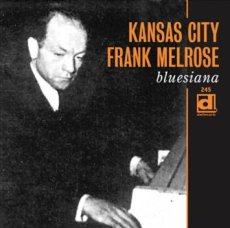
Frank Melrose was born Franklyn Taft Melrose on November 26, 1907 in Sumner, Illinois, the younger brother of Walter and Lester who set up the Melrose Brothers Music Company in Chicago in 1918. His first instrument was the violin, but he later took up the piano, strongly influenced by his brothers’ business partner, Jelly Roll Morton.
In 1924 Frank left home and began drifting around, playing and settling for short periods in St. Louis, Kansas City, Detroit and playing occasionally in Chicago with Jelly Roll. In 1929 his brother Lester recorded him performing piano solos that were released under the pseudonym of “Broadway Rastus”.
1930 saw Melrose recording “Jelly Roll Blues” and other tunes that were released on the Brunswick Record label’s “race” series under the pseudonym of “Kansas City Frank”, and for some years were wrongly assumed to be the work of Morton. Throughout the decade he continued to play piano in small clubs and bars, either solo or as part of a band, recorded sporadically with Johnny Dodds and others while occasionally working in a factory to support his family.
Pianist Frank Melrose, one of the leading figures in the Midwest blues and jazz scene during the 1920s and 30s played his last recording session with Bud Jacobson’s Jungle Kings. On Labor Day, September 1, 1941 he was found dead in the road after apparently being killed in a fracas in a club in Hammond, Indiana.
Put A Dose In Your Pocket
More Posts: piano