

Daily Dose Of Jazz…
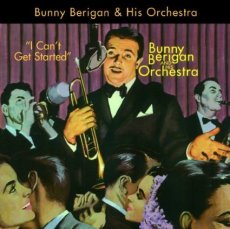
Bunny Berigan was born Rowland Bernard Berigan on November 2, 1908 in Hilbert, Wisconsin. Raised in Fort Lake the child prodigy learned violin and trumpet at an early age and played in local orchestras by his late teens. He joined the Hal Kemp Orchestra in mid 1930 recording his first trumpet solos and touring England. Upon his return in ’31 he was a sought after studio musician and recorded his first vocal “At Your Command”, then worked with the bands of Paul Whiteman and Abe Lyman by 1934.
He continued freelancing in the recording and radio studios, most notably with the Dorsey Brothers and on Glenn Miller’s earliest recording date as a leader in 1935, an association that graduated him to fame in his own right when he joined Benny Goodman’s re-formed band that included drummer Gene Krupa. The band made the legendary tour that ended with their unexpectedly headline-making stand at the Palomar Ballroom in Los Angeles, California, which has often been credited with the “formal” launch of the swing era.
Berigan went on to work with Tommy Dorsey recording one of his signature solos on the hit “Marie”, recorded under his own name his biggest hit “I Can’t Get Started”, led his own big band for three years that included Buddy Rich and Ray Conniff. He was a fixture on CBS Radio’s coast-to-coast broadcasts of Saturday Night Swing Club from 1937 to 1940, that helped further popularize jazz as the swing era climbed to its peak.
Already a heavy drinker and the band failing financially, Bunny drinking took a toll suffering pneumonia and then stricken with cirrhosis and ignoring his doctor’s advice, trumpeter, composer and bandleader Bunny Berigan, who modeled his playing in part on Louis Armstrong’s style lost his battle with alcoholism passing away of a massive hemorrhage on June 2, 1942 at age 33.

Dose A Day – Blues Away
More Posts: trumpet
Daily Dose Of Jazz…
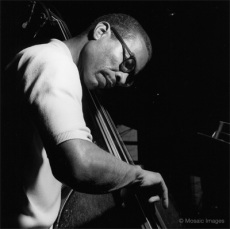
Wendell Marshall was born into a musical family on October 24, 1920 in St. Louis, Missouri. He took up the bass in emulation of and receiving his first lessons from his cousin Jimmy Blanton. He began playing professionally around his hometown in the late ‘30s and played with Lionel Hampton in ’42. Graduating from Lincoln University, he then served in the Army during World War II.
After his discharge, Marshall played and recorded with Stuff Smith, relocated to New York City and played with Mercer Ellington prior to his tenure with Duke Ellington from 1948 to 1955, appearing in several films with the orchestra.
Departing from Duke, Wendell played in pit orchestras on Broadway, freelanced with Mary Lou Williams, Art Blakey, Donald Byrd, Milt Jackson and Hank Jones among others. He was the house bassist for Prestige Records known for his rich tone, reliable sense of time and fine technique making him a popular collaborator.
It is estimated that he recorded with a prodigious list of musician with albums numbering over 150 including his own in 1955 as a leader, Wendell Marshall with the Billy Byers Orchestra. He was also a part of the Jazz Lab quintet led by Donald Byrd and Gigi Gryce.
However, by 1968 he retired from music and returned to St. Louis where he set up his own insurance business. Double bassist Wendell Marshall passed away of colon cancer on February 6, 2002 in his hometown of St. Louis.
Put A Dose In Your Pocket
More Posts: bass
Daily Dose Of Jazz…
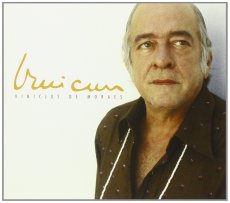
Vinicius de Moraes was born Marcus Vinicius de Moraes on October 19, 1913 in Rio de Janiero, Brasil. As a child he was exposed to various musicians and composers and in high school he was writing his first compositions. He went on to graduate college at twenty and published two books of poetry.
Over the next several years he held a variety of banking, government and diplomatic positions while still writing and publishing his poetry. But it wasn’t until the ‘50s that he moved into the realm of pop culture. He studied film festival management, wrote his first samba, contributed lyrics to several classical pieces and in 1956 Vinicius staged his musical play Orfeu da Conceicao that would later become Orfeu Negro or Black Orpheus and win an Academy Award for Best For Language Film in 1959, a British Academy Award and the French Palm d’Or at Cannes.
Collaborating with Antonio Carlos Jobim, Moraes was at the fore when the bossa nova movement began with the release of Elizete Cardoso’s album Cancao do Amor Demais that consisted of the pairs music and a then unknown Joao Gilberto. They went on to compose Garota de Ipanema, Insensitez and Chega de Saudade. Vinicius’ songs would go on to be included in another Cannes winner Un Homme et une Femme (A Man and A Woman) in 1966.
In the 1960s and 1970s, Vinicius continued collaborating with many renowned Brazilian singers and musicians, in particular with Baden Powell venturing into Afro-Brazilian influences that came to be known as collectively as Afro-Sambas. A known bohemian and diplomat, Vinicius also had a problem with alcohol that ultimately had him drummed out of the diplomatic corps by the military regime. But with his new partner, guitarist and singer Toquinho, he continued to realize success on both music and literary landscapes releasing several popular and influential albums.
Vinicius de Moraes, composer, playwright and diplomat nicknamed O Poetinha (The Little Poet), passed away on July 9, 1980 in Rio de Janiero after a long spell of poor health. Hundreds of jazz musicians and performers worldwide have recorded more than 400 of his songs. In 2006 he was reinstated into the diplomatic corps and in 2010 was posthumously promoted to the post of Ambassador by the Brazilian Chamber of Deputies.
Give A Gift Of Jazz – Share
Daily Dose Of Jazz…
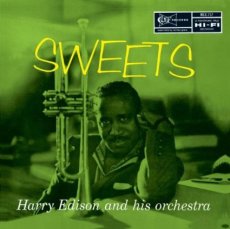
Harry “Sweets” Edison was born on October 10, 1915 in Columbus, Ohio but spent his early childhood in Kentucky, getting his first introduction to music by his uncle. Moving back to Columbus at age 12, he started playing trumpet with local bands.
In 1933, he became a member of the Jeter-Pillars Orchestra in Cleveland, went on to play with the Mills Blue Rhythm Band followed by Lucky Millinder. In 1937 he moved to New York joining Count Basie’s Orchestra playing alongside Buck Clayton, Lester Young (who named him Sweets), Buddy Tate and Jo Jones among others.
Edison came to prominence in the Basie band as a soloist and as a composer and arranger for the band. He spent 13 years with Basie until the band was temporarily disbanded in 1950. He then pursued a varied career as leader of his own groups, freelancing with other orchestras and traveling with Jazz At The Philharmonic.
In the early 1950s, he settled on the West Coast and became a highly sought-after studio musician, making important contributions to recordings by such artists as Billy Holiday, Frank Sinatra and Ella Fitzgerald. In 1956 he recorded the first of three albums with tenor great Ben Webster.
Through the 60s and 70s Harry worked in many orchestras on TV shows, including Hollywood Palace and The Leslie Uggams Show, specials with Sinatra; prominently featured on the sound track and album of Lady Sings The Blues, was musical director for Redd Foxx, toured Europe and Japan.
Jazz trumpeter Harry “Sweets” Edison, the first tribute Honoree from the Los Angeles Jazz Institute, and twice Los Angeles Jazz Society’s tribute Honoree in 1983 and 1992, passed away on July 27, 1999.
Put A Dose In Your Pocket
More Posts: trumpet
Daily Dose Of Jazz…
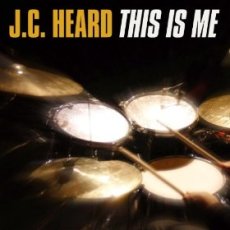
J. C. Heard was born James Charles Heard on October 8, 1917 in Dayton, Ohio. A very supportive drummer, versatile enough to fit comfortably into swing, bop and blues settings, he landed his first important professional job with Teddy Wilson in 1939. This kicked off a long and fruitful career.
By 1946 he was recording with top bop musicians such as Charlie Parker, Dizzy Gillespie and Dexter Gordon. Heard would go on to lead his own groups and in the Fifties spent a few years in Japan. Late in the decade he returned to New York and freelanced, even reuniting with Teddy Wilson in ’61.
Throughout his career J. C. would play, record and tour with Lena Horne, Coleman Hawkins, Cab Calloway, Benny Carter, Erroll Garner, Jazz At The Philharmonic, Pete Johnson, Sir Charles Thompson and Roy Eldridge among others.
In 1966 J.C. Heard moved to Detroit, worked as a bandleader and a mentor to younger musicians into the mid-’80s and passed away on September 27, 1988 in Royal Oak, Michigan.
Take A Dose On The Road
More Posts: drums