

Daily Dose Of Jazz…
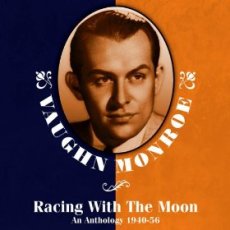
Vaughn Wilton Monroe was born on October 7, 1911 in Akron, Ohio and didn’t study music until attending the New England Conservatory in 1935 and then only one semester of voice. By 1940 he formed his first orchestra becoming lead vocalist and recording for the Bluebird label. That same year he built The Meadows, a restaurant/nightclub outside Boston and hosted the Camel Caravan radio program on location in 1946.
Monroe recorded extensively for RCA Victor into the 1950s and his signature tune was “Racing with the Moon” among his many other hits such as In The Still Of The Night, There I’ve Said It Again, Let It Snow, Let It Snow, Let It Snow; and Riders In The Sky are just a few. A composer, he also wrote a number of songs.
His interest turned to acting and as the movies also beckoned he pursued but with little vigor. He co-authored The Adventures of Mr. Putt Putt, a children’s book about airplanes and flying, published in 1949.
He hosted The Vaughn Monroe Show on CBS television in the Fifties, and appeared on Bonanza, the Mike Douglas Show, the Ed Sullivan Show, the Jackie Gleason Show and American Bandstand. A major stockholder in RCA, Monroe appeared in print ads and television commercials for the company’s TV and audio products.
Vaughan Monroe, baritone singer, trumpeter, bandleader actor and composer died on May 21, 1973 shortly after having stomach surgery. He has two stars on the Hollywood Walk of Fame for recording and radio.

Dose A Day – Blues Away
Daily Dose OF Jazz…
Demas Dean was born on October 6, 1903 in Sag Harbor, New York. He began playing trumpet at age 10 and later picked up the violin but professionally became a trumpeter.
While in high school he played in Mazzeo’s Brass Band, and worked with Beatrice Van while still in his teens. He attended Howard University from 1922 – 23 and played with Elmer Snowden, Doc Perry, Russell Wooding and Lucille Hegamin in the first half of the decade.
Through the end of the 1920s Dean played with Billy Butler, Ford Dabney and Leon Abbey, touring South America. In 1928 he recorded with Bessie Smith and the following year worked with Noble Sissle in the Blackbirds revue in Europe.
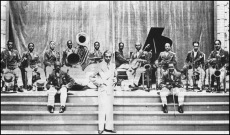
By the early 1930s Demas was working with bandleaders Joe Jordan and Pike Davis but returned to play with Sissle from 1934 to 1944. Shortly after 1944 he quit music and took a post office position in Los Angeles, working there until his retirement in 1965. Jazz trumpeter Demas Dean passed away in 1991 in Los Angeles, California. (in picture – 2nd from left)
Inspire A Young Mind
More Posts: trumpet
Daily Dose OF Jazz…
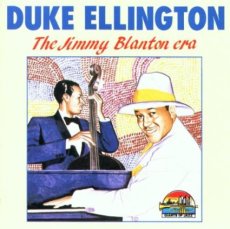
Jimmy Blanton was born on October 5, 1918 in Chattanooga, Tennessee and originally learned to play the violin but took up the bass while at Tennessee State University. During his matriculation in the mid-thirties he performed with the Tennessee State Collegians, and during the vacations with Fate Marable. Blanton left school to play full time in St. Louis with the Jeters-Pillars Orchestra. Making his first recordings with the orchestra, he then went on to join Duke Ellington’s band in 1939.
Though he stayed with Ellington for only two years, Blanton made an incalculable contribution in changing the way the double bass was used in jazz. Moving from quarter notes in ensemble or solos to soloing more in a ‘horn like’ fashion, Blanton began sliding into eighth and sixteenth-note runs, introducing melodic and harmonic ideas that were totally new to jazz bass playing.
His virtuosity put him in a different class from his predecessors, making him the first true master of the jazz bass and demonstrating the instrument’s unsuspected potential as a solo instrument. Such was his importance to Ellington’s band at the time, together with the tenor saxophonist Ben Webster, that it became known as the Blanton-Webster band.
In 1941, Blanton was diagnosed with tuberculosis, cutting short his tenure with Ellington. However, he recorded a series of bass and piano duets with Ellington. Double bassist Jimmy Blanton, credited as the originator of pizzicato and bowed bass solos, died the following year on July 30, 1942 after retiring to a sanatorium in California at the age of 23.
Give A Gift Of Jazz – Share
More Posts: bass
Daily Dose OF Jazz…
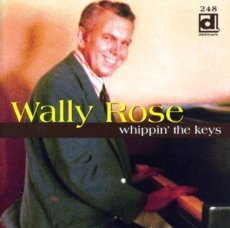
Wally Rose was born on October 2, 1913 in Oakland, California. A mainstay of the jazz scene in San Francisco during the 1940s and 1950s, he was the pianist in Lu Watter’s group, and the Yerba Buena Jazz Band, for its entire existence from 1939 to 1950. During this period he recorded for the Jazz Man imprint in 1941-42, did several albums for Good Time Jazz and also recorded for Columbia Records.
Following this tenure, through the 1950s Rose played with Bob Scobey and Turk Murphy then did mainly solo work for the rest of his career. He did an album in 1982, which was his first release as a leader in 24 years.
Wally Rose, jazz and ragtime pianist passed away on January 12, 1997 in Walnut Creek, California.
Give The Gift Of Knowledge
More Posts: piano
Daily Dose Of Jazz…
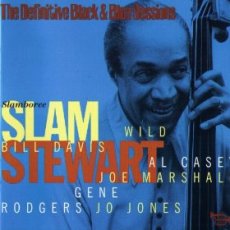
Slam Stewart was born Leroy Eliot Stewart on September 21, 1914 in Englewood, New Jersey. He originally played violin before switching to bass at the age of 20. While attending the Boston Conservancy he heard Ray Perry singing along with his violin giving him the inspiration to follow suit with his bass.
In 1937 Stewart teamed with Slim Gaillard forming the novelty jazz act Slim and Slam. The duo’s biggest hit was in 1938 with Flat Foot Floogie (With A Floy Floy).
Stewart found regular session work throughout the 1940s with Lester Young, Fats Waller, Coleman Hawkins, Erroll Garner, Art Tatum, Johnny Guarnieri, Red Norvo, Don Byas, Benny Goodman Sextet and Beryl Booker among others.
One of the most famous sessions he played on took place in 1945, when Stewart played with Dizzy Gillespie’s group during Charlie Parker’s tenure. Out of those sessions came some of the classic bebop tunes such as “Groovin’ High” and “Dizzy Atmosphere”.
Throughout the rest of his career, Stewart worked regularly and employed his unique and enjoyable bass-playing style trademark of bowing the bass (arco) while simultaneously humming or singing an octave higher until his death on December 10, 1987 in Binghamton, New York.
Inspire A Young Mind
More Posts: bass