

Daily Dose Of Jazz…
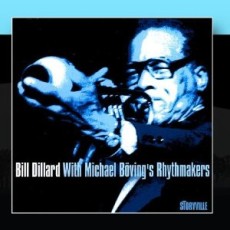
Bill Dillard was born on July 20, 1911 in Philadelphia, Pennsylvania and started playing the trumpet at age 12. He established his early reputation on recording sessions with jazz pioneer Jelly Roll Morton and at the age of 18, Dillard went on to record with Spike Hughes, Henry “Red” Allen, Bill Coleman, Coleman Hawkins, Roy Eldridge, Dizzy Gillespie and Django Reinhardt.
He made his theater debut in “Carmen Jones” and sang in several other Broadway productions, including “Regina,” “Beggars Holiday,” “A Temporary Island” and “Lost in the Stars.” He also appeared on television as Joe the bartender in the soap opera “Love of Life,” and as the King of Babylon in “Green Pastures.”
Dillard was well known for his work with the big bands of Benny Carter, Luis Russell and Teddy Hill. He also had a prolific acting career on Broadway. The trumpeter and vocalist imported to Denmark the sounds of early 20th century New Orleans but it wasn’t until he was 79 that he released his only album as a solo improviser that released in 1991 with the Michael Boving’s Rhythmakers.
Swing jazz trumpeter, actor and vocalist passed away just four years later on the Martin Luther King Jr. holiday, January 16, 1995.

Dose A Day – Blues Away
More Posts: trumpet
Daily Dose Of Jazz…
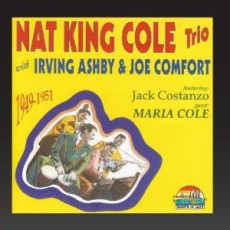
Joe Comfort was born on July 18, 1917 in Los Angeles, California into a musical family. Influenced by Jimmy Blanton, Paul Chambers and Ray Brown, he taught himself to play the bass and began performing with Lionel Hampton’s orchestra in the late Twenties. Later he would perform with Nat King Cole, a partnership that would endure until the early 1950s.
Comfort participated in numerous studio dates in the late fifties and early 1960s, with such luminaries as Sammy Davis Jr., Benny Carter, Nancy Wilson and Frank Sinatra but his fear of flying kept him grounded in and around Los Angeles.
According to Mingus’ biography, Joe taught Charles Mingus how to play in Watts where he grew up. His studio credits include working with Nelson Riddle, as well as pop and vocal projects. He was also a part of the M Squad band that highlighted jazz on television.
His beautiful wife, Mattie, was the inspiration for Billy Strayhorn’s “Satin Doll.” Joe Comfort, jazz bassist, passed away on October 29, 1988.
Give A Gift Of Jazz – Share
More Posts: bass
Daily Dose Of Jazz…
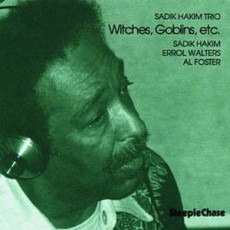
Sadik Hakim was born Argonne Thornton on July 15, 1919 in Duluth, Minnesota and was taught piano by his grandfather and started playing professionally about 1939. In 1944 he moved to New York City and was hired by Ben Webster. A participant in the emergence of bebop, he shared piano duties with Dizzy Gillespie on Charlie Parker’s famous “Ko-Ko” session.
He recorded with Dexter Gordon and Lester Young, heard on the latter’s I’m Confessin’, also credited with co-writing Thelonious Monk’s standard “Eronel” and is rumored to have written a few famous bop tunes credited to other composers. He adopted his Muslim name in 1947.
Hakim moved to Montreal after visiting in 1949 and was a big fish on the small bebop scene there, working with Louis Metcalf’s International Band. Compelled to leave Canada following a drug bust in 1950 he returned to New York and through the decade worked with James Moody and George Holmes Tate.
He returned to Montreal from 1966 to 1976, leading bands and recording with Charles Biddle. He led a few recording dates from 1976–1980 and cut an album with Sonny Stitt in 1978. Hakim played “Round Midnight” at Monk’s funeral in 1982, and the pianist and composer passed away himself the following year on June 20, 1983.
Give The Gift Of Knowledge
Daily Dose Of Jazz…
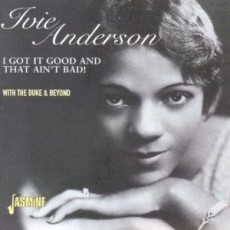
Ivie Anderson was born on July 10, 1905 in Gilroy, California. From age nine to thirteen, she attended St. Mary’s Convent and studied voice. At Gilroy grammar and high school, she joined glee club and choral society. She also studied voice under Sara Ritt while in Nunnie H. Burroughs Institution in Washington, DC.
Ivie’s career officially started around 1921 when she first performed in Los Angeles, California. From 1922 to 1923, she was brought to New York City by joining a pioneering African-American musical revue Shuffle Along. By 1924 and 1925, she had already performed in various locations such as Cuba, the Cotton Club in New York City and in Los Angeles with the bands of Paul Howard, Curtis Mosby and Sonny Clay.
1928 saw Anderson singing in Australia with Clay’s band, starred in Frank Sebastian’s Cotton Club in Los Angeles and soon after, she finally began touring in the States as a solo singer.
With a sweet, clear singing voice, she was a popular attraction with Ellington’s band. Over Ellington’s long career as bandleader, his indifference toward vocalists changed with the hiring of Anderson, who was generally considered the best vocalist he ever employed.
Her outstanding performance of “Stormy Weather” in the movie short Bundle of Blues in 1933 was only eclipsed by the later and far better known version sung by Lena Horne. She also appeared as a singer in the Marx Brothers movie “A Day At The Races” in 1937 and the same year in Hit Parade of 1937 as Ivy Anderson.
Suffering from asthma for years, jazz vocalist Ivie Anderson passed away on December 28, 1949.
Give A Gift Of Jazz – Share
More Posts: vocal
Daily Dose Of Jazz…
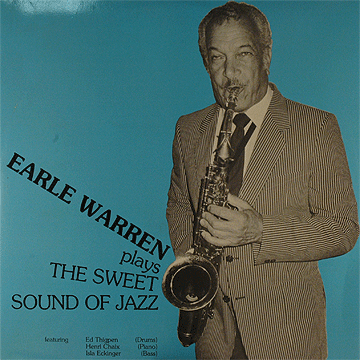
Earle Warren was born on July 1, 1914 in Springfield, Ohio. He was the primary alto saxophonist and occasional singer in the Basie orchestra in its formative years and its heyday, from 1937 to the end of the 1940s. After the break-up of Basie’s 1940s band, in 1949, he worked with former Basie trumpeter, Buck Clayton.
Earle also played some rock´n roll working for Alan Freed in Alan Freed’s Christmas Jubilee, December 1959, which was the very last big Alan Freed show before payola put an end to the legendary Freed. He also appeared in the 1970s jazz film of Count Basie and his band, “Born to Swing”.
In his later years, Warren performed often at the West End jazz club at 116th and Broadway in New York City, helming a band called The Countsmen, which also featured fellow former Basie-ite Dicky Wells on trombone and Peck Morrison on bass. He lived part of the time in Switzerland where he fathered a child in a May/September romance. Alto saxophonist Earle Warren passed away on June 4, 1994.
Put A Dose In Your Pocket