


Daily Dose Of Jazz…
Paul Wesley “Doc” Evans was born on June 20, 1907 in Spring Valley, Minnesota and learned piano and drums as a child. He went on to play saxophone in high school and during his college years played with the Carleton Collegians. By the late Twenties gave up saxophone for the cornet to play Dixieland in Minneapolis.
Doc played through the Great Depression, turning down offers to play outside of the Midwest. In 1947 he recorded for Disc Records and led the band that played for the opening of Chicago Jazz Limited club. He stayed in Chicago until 1952, and then embarked on nationwide tours, recording frequently along the way, particularly for Audiophile Records.
He returned to Minneapolis and continued playing jazz up until his last recordings in 1975. He founded the Bloomington Symphony Orchestra and conducted it until his death on January 10, 1977 in Minneapolis, Minnesota. His legacy was marked in 1999 with the yearly Doc Evans Jazz Festival, founded in Minnesota.

Inspire A Young Mind
More Posts: cornet
Daily Dose Of Jazz…
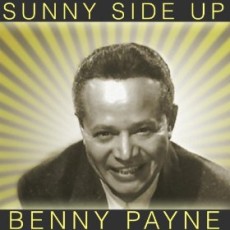
Benny Payne was born on June 18, 1907 in Philadelphia, Pennsylvania and began playing piano when he was 12, working as an organist at a Philadelphia church as a teenager. His professional career started in 1926, working locally and with Wilbur Sweatman’s band for six months in 1928.
Fats Waller gave him some unofficial lessons; they recorded two piano duets in 1929. Payne worked as accompanist for singer Elizabeth Welch, was a member of the Blackbirds of 1929 show and toured Europe, appeared in Hot Chocolates and accompanied Gladys Bentley.
His foremost claim to fame was as Cab Calloway’s regular pianist during the singer’s prime years from 1931 until he had to join the Army in late 1943, then again after the war until ’46. Although he did not solo much, he was a major asset to the group and gave the big band stability in addition to contributing to the solid rhythm section.
He worked with Pearl Bailey, led his own trio and then started working in 1950 started a long relationship as pianist and musical director for lounge signer Billy Daniels until the singer’s death. In 1964, Payne appeared on Broadway in a revival of “Golden Boy” with Daniels and Sammy Davis, Jr.
He primarily performed in the cabaret world, led only one recording session as a leader for Kapp Records in 1955. Pianist Benny Payne retired and settled in Los Angeles, passing away on January 2, 1986.
Jazz Is Global – Share
More Posts: piano
Daily Dose Of Jazz…
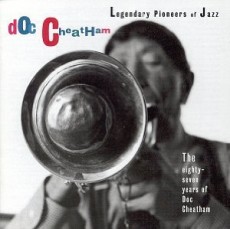
Adolphus Anthony Cheatham, better known as Doc Cheatham was born on June 13, 1905 in Nashville, Tennessee. Growing up without jazz, he was introduced by early recordings and touring bands of the late 1910s. Abandoning family plans to be a pharmacist to play music, he retained the name Doc and started with the soprano and tenor saxophone in addition to trumpet in the African American Vaudeville theatre.
He toured the TOBA circuit (Theatre Owners Booking Association) accompanying blues singers but it wasn’t until his move to Chicago and hearing King Oliver that his focus turned to jazz. A year later Louis Armstrong added his influence on Doc’s playing. Cheatham went on to play with Ma Rainey, worked in the big bands of Bobby Lee, Wilbur de Paris, Chick Webb, Sam Wooding, Cab Calloway, Fletcher Henderson, Benny Carter, Claude Hopkins and Teddy Wilson through the 30s and 40s.
By the late 40s into the 50s Doc play in New York City Latin bands of Ricardo Ray, Marcelino Guerra, Perez Prado and Machito. In the 60s he led his own band for five years then worked with Benny Goodman. In the 70s he began singing after scatting during a Paris recording session, was well received and he continued to sing for the rest of his life.
Cheatham created his best work after the age of 70, winning a Grammy with Nicholas Payton and Butch Thompson for the Verve Record release of “Doc Cheatham and Nicholas Payton”. Trumpeter, singer and bandleader Doc Cheatham continued playing until two days before his passing on June 2, 1997, eleven days shy of his 92nd birthday.
Dose A Day – Blues Away
More Posts: trumpet
Daily Dose Of Jazz…
Shelly Manne was born Sheldon Manne in New York City on June 11, 1920. His father and uncles were drummers, he got tips from drummer Billy Gladstone as a teenager and soon he rapidly developed his style in the 52nd Street clubs in the late 30s and 40s. He got his first professional job with the Bobby Byrne Orchestra and was soon recording with Coleman Hawkins, Charlie Shavers, Don Byas, Duke Ellington, Johnny Hodges, Harry Carney and Rex Stewart.
Manne rose to stardom when he became part of the bands of Woody Herman and Stan Kenton in the late 1940s and early 1950s, winning awards and developing a following at a time when jazz was the most popular music in the United States. When the bebop movement began to change jazz in the 1940s, Manne loved it and adapted to the style rapidly, performing with Dizzy Gillespie, Charlie Parker, Flip Phillips, Charlie Ventura, Lennie Tristano and Lee Konitz.
In the early 1950s, Manne left New York, settled permanently on a ranch outside Los Angeles, where he and his wife raised horses. This began his important role in the West Coast school of jazz, performing on the Los Angeles jazz scene with Shorty Rogers, Hampton Hawes, Red Mitchell, Art Pepper, Russ Freeman, Frank Rossolino, Chet Baker, Leroy Vinnegar and many others.
Shelly led a number of small groups that recorded under his name and leadership, recording his now famous live Black Hawk sessions and for Contemporary Records. He played in styles of Dixieland, swing, bebop, avant-garde jazz and fusion, as well as contributing to the musical background of hundreds of Hollywood films and television programs, collaborating with Henry Mancini on such films as Breakfast At Tiffany’s, Hatari and The Pink Panther and tv shows like Peter Gunn and Mr. Lucky.
Shelly Manne passed away of a heart attack on September 26, 1984 shortly before the popular revival of interest in jazz had gained momentum.
Give A Gift Of Jazz – Share
More Posts: drums
Daily Dose Of Jazz…
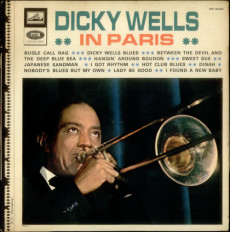
Dicky Wells was born William Wells on June 10, 1907 in Centerville, Tennessee but came to fame playing trombone as Dicky or Dickie Wells. He moved to New York City in 1926 and joined the band of Lloyd Scott.
He played two stints with Count Basie between 1938-1945 and 1947-1950. Dickie also played with Cecil Scott, Spike Hughes, Fletcher Henderson, Benny Carter, Teddy Hill, Jimmy Rushing, Buck Clayton and Ray Charles.
In his later years, Wells suffered a severe beating that affected his memory, but he recovered and continued to perform. He played frequently at the West End jazz club at 116th and Broadway, most often with a band called “The Countsmen”, led by alto saxophonist Earle Warren, his colleague from Count Basie days. His trademark was a “pepper pot” mute that he made himself.
Jazz trombonist Dickie Wells died on November 12, 1985, in New York City. Shortly after his death, his family donated his trombone to Rutgers University.
Jazz Is Global – Share
More Posts: trombone