

Daily Dose Of Jazz…
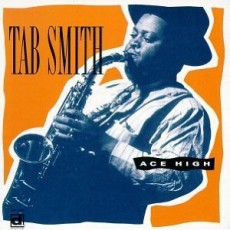
Talmadge (Tab) Smith was born in Kinston, North Carolina on January 11, 1909. He joined his first professional band, the Carolina Stompers, in 1929 and in the 1930s and 1940s he spent several years in the bands of Lucky Millinder and Count Basie as well as spending long periods freelancing both as a player and as an arranger. After WWII he led his own groups, which concentrated on rhythm and blues as jazz turned from swing to bop.
His biggest R & B hit was “Because of You”, recorded for United Records reached #1 on the R & B charts and number 20 on the pop charts, in 1951. His association with United lasted until 1957, put ting out 24 singles and a 10-inch LP for the company sometimes alternating on tenor saxophone.
During the 1950s, Smith was a significant rival to alto saxophone-playing bandleader Earl Bostic, and was also in competition with his own formative influence Johnny Hodges, until Hodges returned to Duke Ellington’s band.
His career never recovered from the closure of United Records. After brief stays at Checker and King Labels, Tab retired from the music business in the early 1960s. He sold real estate, and played piano part-time in a steakhouse.
Alto saxophonist Tab Smith, who concentrated on swing and R&B genres, passed away in St. Louis, Missouri on August 17, 1971.
More Posts: saxophone
Daily Dose Of Jazz…
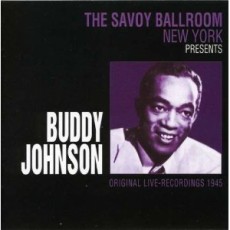
Buddy Johnson was born Woodrow Wilson Johnson on January 10, 1915 in Darlington, South Carolina. He took piano lessons as a child and classical music remained one of his passions. In 1938 he moved to New York and the following year toured Europe with the Cotton Club Revue, but was expelled from Nazi Germany. Later in 1939 he first recorded for Decca Records with his band, soon afterwards being joined by his sister Ella as vocalist.
In 1941 he assembled a nine-piece orchestra and soon began a series of R&B and pop chart hits that included “They All Say I’m The Biggest Fool” with Arthur Prysock on vocals and his sister Ella’s recording of “Since I Fell for You” in 1945, that would later become a jazz standard. In 1946 Buddy composed a Blues Concerto, which he performed at Carnegie Hall two years later. His orchestra remained a major touring attraction through the late 1940s and early 1950s, and continued to record in the jump blues style with some success for Mercury Records. By the end of the 50s Buddy switched to Roulette Records the next year, and bowed out with a solitary session for Hy Weiss’s Old Town label in 1964.
Buddy Johnson, jazz and blues pianist and bandleader passed away on February 9, 1977 in New York at the age of 62 from a brain tumor and sickle cell anemia.
More Posts: bandleader,piano
Daily Dose Of Jazz…
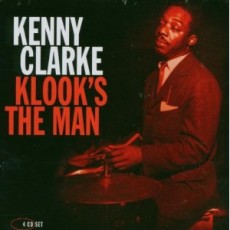
Born Kenneth Spearman Clarke on January 9, 1914 in Pittsburgh, Pennsylvania, Kenny Clarke grew up in a musical family, studied multiple instruments, including vibes and trombone, as well as music theory and composition while still in high school. As a teenager he played in the bands of Leroy Bradley and Roy Eldridge. He later toured around the Midwest for several years with the Jeter-Pillars band that also featured bassist Jimmy Blanton and guitarist Charlie Christian. By 1935, he was more frequently in New York, where he eventually moved and worked in groups led by Edgar Hayes and Lonnie Smith.
While working in the bands of Edgar Hayes and Roy Eldridge, Clarke started developing the rhythmic concepts that would later define his contribution to the music. He began experimenting with moving the time-keeping role from the combination of snare drum or hi-hat and bass drum to embellished quarter notes on the ride cymbal, the familiar “ding-ding-da-ding” pattern, which Clarke is often credited with inventing. One of these passages, a combination of a rim shot on the snare followed directly by a bass drum accent, earned Clarke his nickname, “Klook”, which was short for “Klook-mop”, in imitation of the sound this combination produced. This nickname was enshrined in “Oop Bop Sh’Bam”, recorded by Dizzy Gillespie in 1946 with Clarke on drums, where the scat lyric to the bebop tune goes “oop bop sh’bam a klook a mop.”
Clarke himself claimed that these stylistic elements were already in place by the time he put together the famous house band at Minton’s Playhouse, which hosted Monk, Parker, Gillespie, Russell, saxophonist Don Byas and many others while serving as the incubator of the emerging small group sound. While playing at Minton’s, Clarke made many recordings, most notably as the house drummer for Savoy Records. When the musicians from the Minton’s band moved to different projects, Clarke began working with a young pianist and composer John Lewis and vibraphonist Milt Jackson, and with the addition of bassist Ray Brown they formed the Modern Jazz Quartet or MJQ. The group pioneered what would later be called chamber jazz or third stream, referring to its incorporation of classical and baroque aesthetics as an alternative to hard bop.
Clarke stayed with the MJQ until 1955, relocating in Paris in 1956. As soon as he moved to Paris, he regularly worked with visiting American musicians in, as well as forming a working trio, known as “The Bosses”, with Bud Powell also a Paris resident and Pierre Michelot. In 1961 along with pianist Francy Boland, Kenny formed a regular big band “The Kenny Clarke-Francy Boland Big Band that lasted eleven years and featured leading European and expatriate American musicians, such as Johnny Griffin and Ronnie Scott.
Drummer Kenny Clarke continued recording and playing with both visiting U.S. musicians along with his regular French band mates until his death on January 26, 1985 in Montreuil-sous-bois. In 1988 he was inducted into the Down Beat Jazz Hall of Fame and his innovation set the stage for the development of the bebop combo, which relied heavily on improvised exchanges between drummer and soloist to propel the music forward.
More Posts: drums
Daily Dose Of Jazz…
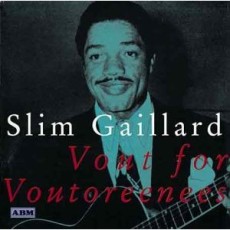
Bulee “Slim” Gaillard was born on January 4, 1916 in Santa Clara, Cuba. His childhood in Cuba was spent cutting sugarcane and picking bananas, as well as occasionally going to sea with his father. At age 12, he made his way to America settling in Detroit. A move to New York City in the late 1930s saw Gaillard’s rise to prominence as part of Slim & Slam, a jazz novelty act he formed with bassist Slam Stewart. Their hits included “Flat Foot Floogie”, “Cement Mixer” and the hipster anthem, “The Groove Juice Special”.
Gaillard’s appeal was that he presented a hip style with broad appeal, was a master improviser whose stream of consciousness vocals ranged far afield from the original lyrics along with wild interpolations of nonsense syllables. Gaillard could play several instruments, such as guitar and piano and always managed to turn the performance from hip jazz to comedy.
In the late forties and early fifties, Gaillard frequently opened at Birdland for such greats as Charlie Parker, Flip Phillips and Coleman Hawkins. Slim composed theme songs for radio shows, appeared in several shows in the 1960s and 1970s, such as Charlie’s Angels, Mission Impossible, Along Came Bronson and Roots: The Next Generation. By the early 1980s he was touring the European jazz festival circuit, playing with such musicians as Arnett Cobb.
Slim Gaillard, singer, songwriter, pianist, guitarist and actor noted for his vocalese, spoke 9 languages including “Vout”, a language he constructed out of word play and created a dictionary, passed away on February 26, 1991 in London, England at the age of 75.
Daily Dose Of Jazz…
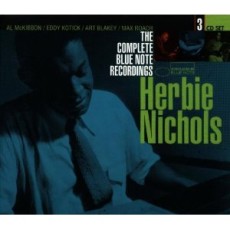
Herbie Nichols was born in San Juan Hill, Manhattan, New York City on January 3, 1919. His first known work was with the Royal Barons in 1937, a few years later performing at Minton’s Playhouse but he did not find a very happy experience due to a competitive atmosphere that did not suit his personality.
Nichols was drafted into the Infantry in 1941. After the war he worked in various setting, beginning to achieve some recognition when Mary Lou Williams recorded some of his songs in 1952. He befriended Thelonious Monk and from about 1947 persisted in trying to persuade Alfred Lion at Blue Note to sign him. Lion finally acquiesced and between 1955 and 1956 Herbie recorded less than half his 170 compositions that produced three albums, with other tracks from these sessions not being issued until the 1980s.
As a player he was capable not only of dark lyricism but also of writing melodies so harmonically adventurous that placed his music in a rhythmic league of its own. Nichols was indeed fortunate in the drummers with whom he worked Art Blakey and Max Roach. As a composer he penned such notable standards as “Serenade” that had lyrics added as well as “Lady Sings The Blues” that became synonymous with Billie Holiday, to which she set lyrics and adopted the title for her autobiography.
Jazz pianist and composer Herbie Nichols died from leukemia at the age of 44 on April 12, 1963 in New York City. Although he lived most of his life in relative obscurity, he is now highly regarded by many musicians and critics.