

Daily Dose Of Jazz…
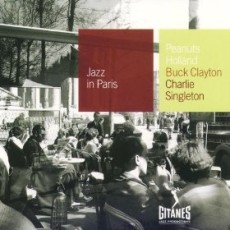
Herbert Lee “Peanuts” Holland was born on February 9, 1910 in Norfolk, Virginia. Holland learned to play trumpet at the Jenkins Orphanage. A veteran of the Alphonse Trent territory band with whom he recorded and played with from 1928 to 1933, he also played with Al Sears, the Jeters-Pillars Orchestra, Willie Bryant Jimmie Lunceford and Lil Armstrong’s band.
In 1938 Peanuts led his own very successful band prior to moving to New York City the following year. There he joined the big bands of Coleman Hawkins and Fletcher Henderson. Through the first half of the Forties he was part of Charlie Barnet’s band and in 1946 with Don Redman toured Europe.
Holland elected to stay in Europe living in Paris and Stockholm and performing with his own small combo. He amassed a catalog of 46 recordings for European labels between 1946 and 1960 regularly working with such jazz names as Mezz Mezzrow, Don Byas, Billy Taylor and Claude Bolling.
Jazz trumpeter Peanuts Holland best known for his contributions to swing jazz, passed away on February 7, 1979 in Stockholm, Sweden, just two days shy of his 69th birthday.
Daily Dose Of Jazz…
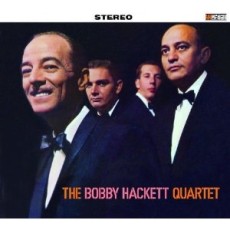
Bobby Hackett was born January 31, 1915 and raised in Providence, Rhode Island. At an early age he played the ukulele and by the time he was twelve, he was playing guitar, violin and had bought his first cornet. Leaving high school after his freshman year he took a steady job with a band that performed seven days a week at the Port Arthur and playing guitar regularly at the Rhodes and Arcadia ballrooms that often broadcasted on Providence radio and when Cab Calloway arrived short-handed and invited him to fill in.
In the fall of 1932 Bobby was recruited by The Herbie Marsh Orchestra, spent the summer of 1933 playing with Payson Re’s band, met Pee Wee Russell, by 1934, and playing college gigs with his band The Harvard Gold Coast Orchestra on weekends between Providence and Boston throughout 1935 and 36.
He worked with a new band at Nick’s in Greenwich Village, with Benny Goodman, Eddie Condon, Jack Teagarden and Teddy Wilson, played the new York World’s Fair in 1939, did the club circuit in New York, toured, recorded with his own band on MCA, took a seat with the Horace Heidt Musical Knights and recorded on the soundtrack of Fred Astaire vehicle “Second Chorus”.
After a dental surgery Bobby’s lip was in bad shape making it difficult for him to play, however, Glenn Miller offered him a job as a guitarist with the Miller Band and playing short trumpet solos. During the 1950s, he made a series of albums of ballads with a full string orchestra, produced by Jackie Gleason, in the Sixties toured with singer Tony Bennett, and by the early 1970s, Hackett performed separately with Dizzy Gillespie and Teresa Brewer. In his later years, he continued to perform in a Dixieland style even as trends in jazz changed.
Trumpeter Bobby Hackett passed away on June 7, 1976 from a heart attack. In 2012, he was selected to be inducted into the Rhode Island Music Hall of Fame.
More Posts: bandleader,cornet,guitar,trumpet
Daily Dose Of Jazz…
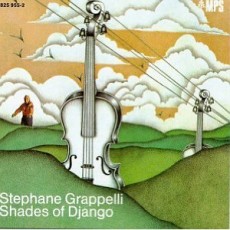
Stéphane Grappelli was born on January 26, 1908 in Paris, France. Losing both his parents he was accepted into Isadora Duncan’s dance school where he discovered his love for French impressionist music. His musical career began playing violin at age 12, attended the Conservatoire de Paris studying music theory and made his living busking on the streets of Paris and Montmartre.
While at the conservatory he worked as a silent film pianist and also playing the saxophone and accordion. Grappelli eventually gained fame in Paris as a violin virtuoso but piano was his other love. His early fame came playing with the Quintette du Hot Club de France with Django Reinhardt though the band disbanded in 1939 due to World War II. In 1940, a little known jazz pianist by the name of George Shearing made his debut as a sideman in Grappelli’s band.
After the war Stephane appeared on hundreds of recordings including sessions with Duke Ellington, Oscar Peterson, Michel Petrucciani, Claude Bolling, Jean-Luc Ponty, Stuff Smith, Toots Thielemans, Gary Burton, Joe Pass, Andre Previn and many, many others.
During the 1960s he played for cocktail hour at the Paris Hilton, recorded the title track of Pink Floyd’s “Wish You Were Here”, made a cameo appearance in “King of the Gypsies”, received the Grammy Lifetime Achievement Award in 1997 and was inducted into the Down Beat Jazz Hall of Fame.
Violinist Stephane Grappelli died in Paris after undergoing a hernia operation on December 1, 1997.
More Posts: violin
Daily Dose Of Jazz…
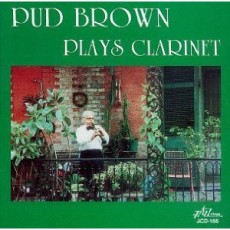
Pud Brown was born Albert Francis Brown on January 22, 1917 in Wilmington, Delaware but was raised in Shreveport, Louisiana. Brown was fluent on saxophone by age five, and toured throughout North America in a family band at the age of seven, playing the circus, nightclub and minstrel show circuits in the mid 1920s.
After moving to Chicago, Pud found work in Phil Lavant’s orchestra in 1938 and then in Lawrence Welk’s band. In 1941 he married, left music to run a motorcycle shop in Shreveport – a failed endeavor, relocated to Los Angeles and found work as a jazz musician.
Brown career exploded over the next several decades working with such jazz musicians as Les Brown, Coleman Hawkins, Doc Cheatham, Danny Barker, Kid Ory, Percy Humphrey and Louis Armstrong among others. He returned to New Orleans in 1975 and became a mainstay of the local scene playing with Clive Wilson’s Original Camelia Brass Band in the 1980s, holding a regular gig at the French Quarter’s Palm Court Jazz Cafe.
Pud Brown, clarinetist, reed player and active as an educator in local schools until his death, passed away on May 27, 1996 in Algiers, Louisiana.
Daily Dose Of Jazz…
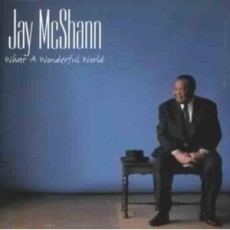
Jay McShann, born James Columbus McShann on January 12, 1916 in Muskogee, Oklahoma began played the piano from the age of 12. His primary education came from Earl “Fatha” Hines late-night radio broadcasts from the Grand Terrace Café. Leaving home he spent time at college and working with bands throughout Oklahoma, Arkansas, Arizona and New Mexico.
In the 1930 Jay moved to Kansas City working with both local groups and his own band with his 1938 band comprised of Charlie Parker, Bernard Anderson, Al Hibbler, Paul Quinichette, Earl Coleman, Ben Webster and Walker Brown, creating a music that would become known as the Kansas City sound.
Nicknamed Hootie, it was during the 1940s that he stood at the forefront of the blues and hard bop jazz musicians mainly from Kansas City. His first recordings were all with Charlie Parker, the first as “The Jay McShann Orchestra” on August 9, 1940. After World War II he began to lead small groups featuring blues shouter Jimmy Witherspoon. Witherspoon started recording with McShann in 1945, and fronting McShann’s band, and had a hit in 1949 with “Ain’t Nobody’s Business”.
Jay McShann was inducted into the Blues Hall of Fame, was nominated twice for a Grammy Award, performed regularly with violinist Claude Williams and continued to recording and touring into the nineties around Kansas City and Toronto, Ontario. The blues and jazz pianist Jay McShann, whose career spanned more than sixty years, passed on December 7, 2006, at St. Luke’s Hospital in Kansas City.