

Daily Dose Of Jazz…
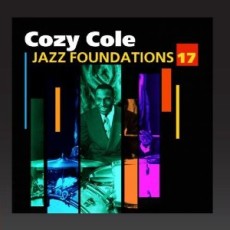
Cozy Cole was born William Randolph Cole on October 17, 1909 in East Orange, New Jersey. His first music job was with Wilbur Sweatman in 1928 and two years later he was playing with Jelly Roll Morton’s Red Hot Peppers. He had his first drum solo on the recording of “Load of Cole”. In 1931 Cozy went on to spend two years with Blanche Calloway, followed by a year with Benny Carter, then a year with Willie Bryant, two with Stuff Smith’s small combo.
For four years from1938-42 he played with Cab Calloway. In 1942, CBS Radio music director Raymond Scott hired Cozy as part of the network radio’s first mixed-race orchestra. After his stint with CBS, he played with Louis Armstrong’s All Stars.
Cole scored a #1 Cashbox magazine hit with the “Topsy Part 2” that also peaked at number three on Billboard’s Hot 100 in 1958and at number one on the R&B chart. It sold over one million copies garnering it a gold disc. The recording contained a lengthy drum solo and was one of the few drum solo recordings that ever made the Billboard Hot 100 chart.
Throughout the 1960s and 1970s Cole continued to perform in a variety of settings. Cole and Gene Krupa often played duets at the Metropole in New York City during the 1950s and 1960s. Cole appeared in music-related films, including a brief cameo in “Don’t Knock The Rock” and has been cited as an influence by many contemporary jazz and rock drummers including Cozy Powell, who took his nickname from Cole.
Cozy Cole passed away from cancer on January 31, 1981 in Columbus, Ohio.
More Posts: drums
Daily Dose Of Jazz…
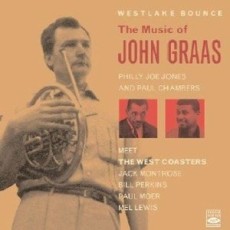
French Horn jazz musician and arranger John Graas was born March 14, 1917 in Dubuque, Iowa. Classically trained, partially at Tanglewood Music Center, he soon became interested in jazz and studied ways to bring it together with classical. His earliest effort would be called Third Stream music.
Following the path of dual music loves, between 1941 and 1953 John was a member of the Indianapolis Symphony Orchestra, The Claude Thornhill Orchestra, the Army Air Corps band during WWII, the Cleveland Orchestra, the Tex Beneke Orchestra and the Stan Kenton Orchestra.
Eventually settling in Los Angeles, Graas found work as a studio musician and played with kindred spirits on the innovative side of West Coast jazz including Shorty Rogers, Jimmy Giuffre, Gerry Mulligan, Art Pepper, Buddy Collette and Shelly Manne. All of these musicians were involved in efforts to blend jazz with elements of classical music.
John recorded a few albums under his own name, including French Horn Jazz, Coup de Graas, and Jazzmantics. His “Jazz Chaconne No. 1” was an example of his ambitious attempts to fuse jazz with classical music. It appeared on the 1958 International Premiere in Jazz with his “Jazz Symphony No. 1”, which, despite its title, was far more classical than jazz.
The 1950s held intense activity for Graas, as performer, composer, and arranger. Leading groups under his own name, he appeared in the musical aggregations of Stan Kenton, Maynard Ferguson, Billy May, Pete Rugolo, Mel Lewis, Henry Mancini and Bobby Darin among others.
John Graas was known primarily as one of the first and best French horn players in jazz. He had a short but busy career on the West Coast, until his career was cut short by his death of a heart attack, at age 45, on April 13, 1962 in Los Angeles, California.
More Posts: french horn
Daily Dose Of Jazz…
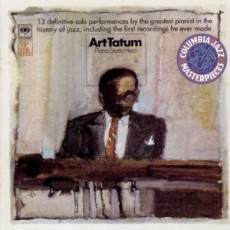
Arthur Tatum, Jr. was born in Toledo, Ohio on October 13, 1909. His father was a guitarist and his mother played piano. A prodigy with perfect pitch, Tatum learned to play by ear, picking out church hymns by the age of three, learning tunes from the radio and copying piano-roll recordings his mother owned. As a child he was also very sensitive to the piano’s intonation and insisted it be tuned often. He developed an incredibly fast playing style, without losing accuracy.
Suffering from infancy with cataracts that left him blind in one eye and only very limited vision in the other, Art had a number of surgical procedures to improve his eye condition but lost some of the benefits when he was assaulted in 1930. He enrolled in the Columbus School for the Blind and studied music, piano and learned Braille. Drawing inspiration from pianists James P. Weldon and Fats Waller, who exemplified the stride piano style, he also identified with the more modern style of Earl Hines.
By the age of 19, he was playing with singer Jon Hendricks at the Waiter’s and Bellmen’s Club. As word of Tatum spread, national performers including Duke Ellington, Louis Armstrong, Joe Turner and Fletcher Henderson when passing through Toledo would make it a point to drop in to hear the piano phenomenon. However, the major event that propelled his meteoric rise to success was his appearance at a 1933 cutting contest at Morgan’s Bar in New York City that included Waller, Johnson and Willie “The Lion” Smith. Standard contest pieces included Johnson’s “Harlem Strut” and “Carolina Shout” and Fats Waller’s “Handful of Keys.” Tatum triumphed with his arrangements of “Tea For Two” and “Tiger Rag”, in a performance that was considered to be the last word in stride piano. Tatum’s debut was historic because he outplayed the elite competition and heralded the demise of the stride era.
Tatum went on to have a prolific performing and recording career being widely acknowledged as one of the greatest jazz pianists of all time. The virtuoso, while piano was his most obvious skill, he also had an encyclopedic memory for Major League Baseball statistics. Art Tatum passed away at age 47 from kidney failure on November 5, 1956 in Los Angeles, California.
More Posts: piano
Daily Dose Of Jazz…
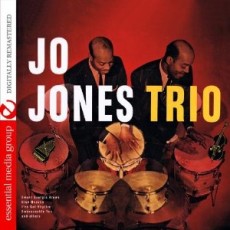
Jo Jones was born Jonathan David Samuel Jones on October 7, 1911 in Chicago, Illinois. He moved to Alabama where he learned to play several instruments, including saxophone, piano, and drums. He worked as a drummer and tap-dancer in carnival shows until joining Walter Page’s band “The Blue Devils” in Oklahoma City, Oklahoma in the late 1920s. He recorded with trumpeter Lloyd Hunter’s Serenaders in 1931, later joining pianist Count Basie’s band in 1934.
Jones, Basie, guitarist Freddie Green and bassist Walter Page were sometimes billed as an “All American Rhythm Section”. Taking a brief break for two years when he was in the military, he remained with Basie until 1948, participating in the Jazz At The Philharmonic concert series.
One of the first drummers to promote the use of brushes on drums and shifting the role of timekeeping from the bass drum to the hi-hat cymbal, Jo had a major influence on later drummers such as Buddy Rich, Kenny Clarke, Roy Haynes, Max Roach and Louie Bellson.
He performed regularly in later years at the West End jazz club at 116th and Broadway in New York City. He also starred in several films, most notably the musical short Jammin’ The Blues in 1944. In his later years, he was known as Papa Jo Jones and often omitted bass drum playing altogether. He continued a ride rhythm on hi-hat while it was continuously opening and closing instead of the common practice of striking it while it was closed. His style influenced the modern jazz drummer’s tendency to play timekeeping rhythms on a suspended cymbal that is now known as the ride cymbal.
In 1979, Jones was inducted into the Alabama Jazz Hall of for his contribution to the Birmingham, Alabama musical heritage and 1985 was the recipient of an American Jazz Masters fellowship awarded by the National Endowment for the Arts.
He recorded nearly a dozen albums as a leader and more as a sideman between 1950 and 1985 working with the likes of Gene Ammons, Art Blakey, Sonny Stitt, Coleman Hawkins, Oscar Peterson, Ella Fitzgerald, Illinois Jacquet, Ben Webster and Charles Mingus.
Drummer Jo Jones, who passed away on September 3, 1985 was often confused with drummer Philly Joe Jones, and ironically the two died a few days apart.
More Posts: drums
Daily Dose Of Jazz…
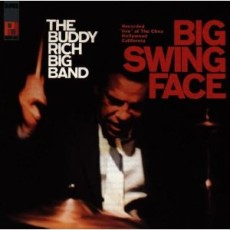
Buddy Rich was born Bernard Rich on September 30, 1917 in New York City to vaudevillians. His father first noticed his musical talent to keep a steady beat with spoons at the age of one. He began playing drums at eighteen months in vaudeville billed as “Traps the Drum Wonder”. At the height of his childhood career he was reportedly the second-highest paid child entertainer in the world, after Jackie Coogan.
By age 11 he became a bandleader without any formal drum instruction, claiming that instruction would only degrade his musical talent; never admitted to practicing, played drums only during performance, and was not known to read music. Buddy’s first major jazz gig was in 1937 with Joe Marsala and guitarist Jack Lemaire was followed with Bunny Berigan, Artie Shaw, Vic Schoen Orchestra, Tommy Dorsey and Frank Sinatra.
In 1942 he enlisted in the Marines and two years later was back with Dorsey. With financial backing from Sinatra in ’46 he formed his own band and continued to lead different groups into the early fifties. In addition he performed with Benny Carter, Harry James, Les Brown, Charlie Ventura, Jazz at the Philharmonic and led several successful big bands in an era that didn’t popularize them, played on sessions with Ella Fitzgerald and Louis Armstrong for their late-career comeback recordings, Oscar Peterson and his famous trio with Ray Brown and Herb Ellis.
Rich always have a drummer there during rehearsals to read and play the parts initially on new arrangements. He’d listen to a chart once, have it memorized, run through it and he’d know exactly how it went, how many measures it ran and what he’d have to do to drive it.
Buddy, once billed as “The World’s Greatest Drummer”, was known for his virtuosic technique, power, groove and speed and remained an active performer until the end of his life. On April 2, 1987 in Los Angeles, California drummer, bandleader and songwriter Buddy Rich succumbed to heart failure following surgery for a malignant brain tumor. He was 69.
More Posts: drums