

Daily Dose Of Jazz…
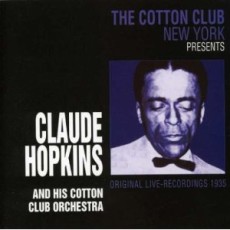
Claude Driskett Hopkins was born on August 24, 1903 in Alexandria, Virginia to Howard University faculty parents. A highly talented stride piano player and arranger, he left home at 21 as a sideman with the Wilbur Sweatman Orchestra but stayed less than a year. In 1925, he left for Europe as the musical director of The Revue Negre that starred Josephine Baker with Sidney Bechet in the band.
Returning to the USA in 1927, Hopkins based himself in Washington, toured the TOBA circuit with The Ginger Snaps Revue before heading once again to NYC where he took over the band of Charlie Skeets. Between 1932-36 he led a fairly successful Harlem band employing many jazz musicians who were later to become famous in their own right such as Edmond Hall, Jabbo Smith and Vic Dickerson. This was his most successful period with long residencies at the Savoy and Rosewood ballrooms, and at the Cotton Club. In 1937 he took his band on the road with a great deal of success but by 1940 dissolved the band.
Using his arranging talents, Claude began working for several non-jazz bandleaders and for CBS. In 1948/9 he led a “novelty” band briefly but took a jazz band into The Cafe Society in 1950. From 1951 up until his death, he remained in NYC working mostly as a sideman with Dixieland bands playing at festivals and various New York clubs and recording. Often under-rated in later years, he was one of jazz’s most important bandleaders and has yet to be given full recognition for his achievements. Claude Hopkins passed away on February 19, 1984 a disillusioned and dispirited man.
More Posts: piano
Daily Dose Of Jazz…
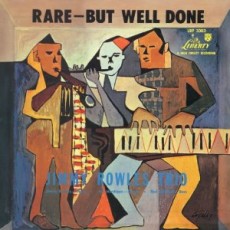
Jimmy Rowles was born James G. Rowles on August 19, 1918 in Spokane, Washington and studied at Gonzaga College. After moving to Los Angeles in 1942, he joined Lester Young’s group and also worked with Benny Goodman, Woody Herman, Les Brown, Tommy Dorsey, Tony Bennett and as a studio musician.
In the 1950s and 1960s, he frequently played behind Billie Holiday and Peggy Lee and in 1973, Rowles settled in New York City, where he performed and/or recorded with Zoot Sims and Stan Getz among others. He joined Ella Fitzgerald for nearly three years in 1981 succeeding Paul Smith as her accompanist first performing with her at the Mocambo nightclub in L.A.’s Hollywood district in late 1956. Jimmy appeared on several recording sessions with her in the 1960s and played on Fitzgerald’s final collaboration with Nelson Riddle, The Best Is Yet To Come in 1982.
In 1983, Jimmy worked with Diana Krall in Los Angeles, developing her playing abilities and encouraged her to add singing to her repertoire. He composed several jazz pieces, the best known being “The Peacocks”; accompanied jazz singer Jeri Brown in 1994 on the only album containing only his own compositions, A Timeless Place.
Pianist Jimmy Rowles, who released a number of albums under his own name and explored various idioms including swing and cool jazz, died from cardiovascular disease in Burbank, Los Angeles County, California, at the age of 78 on May 28, 1996.
More Posts: piano
Daily Dose Of Jazz…
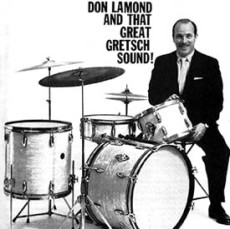
Don Lamond was born on August 18, 1920 in Oklahoma City, Oklahoma and attended the Peabody Conservatory in Philadelphia in the early ‘40s. He played with Sonny Durham and Boyd Raeburn at the outset of his career, and then took over Dave Tough’s spot in Woody Herman’s big band “First Herd” in 1945, remaining until the group disbanded at the end of 1946.
By 1947 he briefly freelanced with musicians including Charlie Parker, and then returned to duty under Herman in his Second Herd, where he remained until its 1949 dissolution. In the 1950s and 1960s Don found work as a session musician, recording in a wide variety of styles.
He performed and recorded with such jazz luminaries as Stan Getz, Zoot Sims, Johnny Smith, Benny Goodman, Ruby Braff, the Sauter-Finegan Orchestra, Sonny Stitt, Johnny Guarnieri, Jack Teagarden, Quincy Jones, George Russell and Bob Crosby among others.
Lamond recorded as a bandleader in 1962 with a tentet that included Doc Severinsen, played with George Wein’s Newport Festival band in the late ‘60s, and worked with Red Norvo, Maxine Sullivan and Bucky Pizzarelli in the Seventies. He put together his own swing group that recorded in 1977 and 1982, and recorded a quartet album with his wife Terry singing in 1981. Don Lamond, drummer, bandleader and sideman died on December 23, 2003 in Orlando, Florida at age 83.

More Posts: drums
Daily Dose Of Jazz…
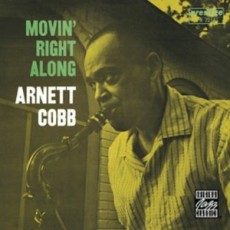
Arnett Cobb was born on August 10, 1918 in Houston, Texas. Taught to play piano by his grandmother, he went on to study violin before taking up the saxophone in high school. At fifteen he joined Louisiana bandleader Frank Davis, performing around Houston and throughout Louisiana during the summers. He continued his career in the mid-Thirties with the local bands of Chester Boone and Milt Larkin; the latter home to Illinois Jacquet, Wild Bill Davis and Eddie “Cleanhead” Vinson.
Arnett went on to replace Illinois in Lionel Hampton’s band in 1942 and is credited with the words and the music to “Smooth Sailing” which became a jazz standard in 1951, and sung by Ella Fitzgerald on her Lullabies of Birdland. After departing from Hampton’s band, Cobb formed his own seven-piece band, but suffering a serious illness in 1950, which necessitated spinal surgery, the group was disbanded.
Reforming the band upon recovery, in 1956 its success was again interrupted, this time by a car crash. This accident had long-term effects on his health, involving long hospital stays and making him permanently reliant on crutches. Nevertheless, Cobb worked as a soloist through the 1970s and 1980s in the U.S. and abroad, working with Jimmy Heath and Joe Henderson in Europe during the late Eighties.
Arnett Cobb, tenor saxophonist, passed away in his hometown in March 24, 1989 at the age of 70.
More Posts: saxophone
Daily Dose Of Jazz…
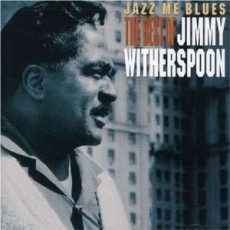
Jimmy Witherspoon was born on August 8, 1920 in Gurdon, Arkansas. He first attracted attention singing with Teddy Weatherford’s band in Calcutta, India, which made regular radio broadcasts over the U. S. Armed Forces Radio Service during World War II. Witherspoon made his first recordings with Jay McShann’s band in 1945.
By 1949 Jimmy was recording under his own name with the McShann band and had his first hit and signature tune with “Ain’t Nobody’s Business”. In 1950 he had several more with “No Rollin’ Blues” and “Big Fine Girl”, as well as “Failing By Degrees” and “New Orleans Woman” recorded with the Gene Gilbeaux Orchestra. These Gilbeaux recordings are from a live performance on May 10, 1949 at a “Just Jazz” concert in Pasadena, CA sponsored by Gene Norman.
Witherspoon’s style of the “blues shouter” became unfashionable in the mid-1950s, but he returned to popularity with his 1959 album, “Jimmy Witherspoon at the Monterey Jazz Festival” featuring Roy Eldridge, Woody Herman, Ben Webster, Coleman Hawkins, Earl Hines and Mel Lewis among others.
The early 60s saw Witherspoon touring Europe with Buck Clayton, recording in the UK, the 70s recording with Brother Jack McDuff in London, with Eric Burdon, toured with his own band with a host of players such as Joe Sample, Cornell Dupree, Thad Jones and others. He continued to record and perform well into the Nineties with Gerry Mulligan, Leroy Vinnegar, Teddy Wilson, Pepper Adams, Junior Mance and the list jazz luminaries goes on and on.
Vocalist Jimmy Witherspoon died of throat cancer in Los Angeles, California on September 18, 1997.
More Posts: vocal