

Daily Dose Of Jazz…
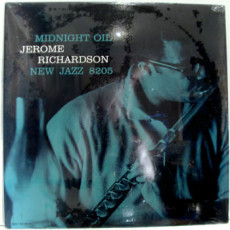
Jerome Richardson was born November 15, 1920 in Oakland, California and started on alto saxophone at the age of eight. In his teens Benny Carter, Johnny Hodges and Willie Smith were his idols. He became a professional musician at the age of fourteen, and had a brief stint with Lionel Hampton, and worked with Bay Area bands until 1941, during which time he also studied music at San Francisco State College. The flute was added to his working compliment in 1940. Both this and his alto sax were used to advantage in a Navy band, under the direction of Marshall Royal, at St. Mary’s Pre-Flight from 1942 to 1945. He joined the Lionel Hampton band again in 1949, with whom he recorded what is widely regarded as the first modern jazz solo played on flute on “Kingfish”, and was also a member of the Earl Hines big band.
Settling in New York in 1954 he began a very active session career, but continued to make his mark in a purely jazz context. He worked with bands led by Lucky Millinder and Cootie Williams, led his own quartet at Minton’s Playhouse in Harlem in 1955 and was part of Oscar Pettiford’s group that summer.
Over the next decade Jerome continued to lead his quartet, work the Roxy pit orchestra, regularly worked with Quincy Jones, toured Europe with Harold Arlen’s blues opera, was a founder member of the Thad Jones-Mel Lewis Orchestra, organizing and performing many Thad Jones tribute concerts. He played with a number of other notable big bands during his long career, including bands led by Jimmy Lunceford, Gerald Wilson, Gil Evans and Charles Mingus.
His standing as a superbly accomplished soloist on a range of reed and wind instruments was complemented by an equally strong reputation as an accompanist of singers, including the likes of Ella Fitzgerald, Frank Sinatra, Sarah Vaughan, Billie Holiday, Peggy Lee, Nancy Wilson, Billy Eckstine, and Lena Horne. Richardson performed with practically every significant post-war jazz artist, including Miles Davis, Dizzy Gillespie, Duke Ellington, Louis Armstrong, John Coltrane, Cannonball Adderley, Lionel Hampton, Herbie Hancock, Milt Jackson, Oliver Nelson, Art Farmer, Clifford Jordan, Slide Hampton, Horace Silver, Gerry Mulligan, Jimmy Smith, Wes Montgomery, Cal Tjader, and Antonio Carlos Jobim, as well as a whole range of blues, soul and pop artists.
Jerome Richardson played tenor, alto, baritone saxophone, clarinet, piccolo, and flute passed away in Englewood, New Jersey on June 23, 2000 recorded sparingly as a leader but was one of the most sought after session musicians for more than half a century was probably the most recorded saxophonist of his generation.
Daily Dose Of Jazz…
Joe Turner was born Joseph H. Turner on November 3, 1907 in Baltimore, Maryland. He was a stride and jazz pianist, not to be confused with blues singer Big Joe Turner. He started to learn the piano from his mother at age five and began to make a name for himself in Harlem as a teenager shortly after his move to New York in 1925.
Joe got his first big break in 1928 when Benny Carter hired him as part of his orchestra. He followed this with playing in Louis Armstrong’s group. He was an accompanist to Adelaide Hall with whom he toured Europe in 1931 where he remained through 1939 when war broke out.
Tuner returned to the States and worked as a singer, played with Sy Oliver’s band, then Rex Stewart until after the war. He went back to Europe passing through Hungary and Switzerland before settling in Paris and occasionally returning to the U.S. to perform.
He was the last major stride pianists to survive the era following in the footsteps of James P. Johnson and Fats Waller. He had a superb technique and fine sense of swing, recording a handful of albums. Joe Turner passed away of a heart attack on July 21, 1990 in Paris, France at age 82.

More Posts: piano
Daily Dose Of Jazz…
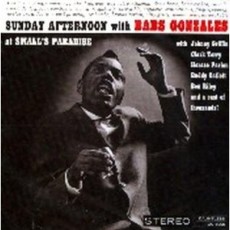
Babs Gonzales was born Lee Brown on October 27, 1919 in Newark, New Jersey and he and his brothers were all called Babs. He studied piano at a young age and learned to play drums. He sang in clubs; wore a turban in Hollywood in the late 1940s, calling himself Ram Singh; worked as a chauffeur for Errol Flynn; called himself Ricardo Gonzales (Mexican rather than ‘Negro) so as to get a room in a good hotel.
Gonzales was a pioneer in the scat vocalese style who did what he could to popularize bop. He had stints with Charlie Barnet and Lionel Hampton’s big bands, and then led his own group Three Bips & a Bop from 1946 to1949, recording for Blue Note during 1947- 1949, including the earliest version of “Oop-Pop-A-Da”, later covered by Dizzy Gillespie. Among his sidemen on these dates were Tadd Dameron, Tony Scott, Roy Haynes, James Moody, J.J. Johnson, Julius Watkins, Art Pepper, Wynton Kelly, Don Redman and Sonny Rollins making his recording debut.
When Capitol Records decided to flirt with bop around 1950, Babs was voicing the sessions. He worked with James Moody; recorded with Jimmy Smith, Johnny Griffin, and Bennie Green, who was one of the first Americans to perform at Ronnie Scott’s club in London as early as 1962. Spending a lot of time in Europe Babs was considered quite a colorful jazz personality there. A hard-working promoter of jazz, he also published three autobiographies; “I Paid My Dues — Good Times”, “No Bread” and “Movin’ On Down De Line”.
Babs Gonzales, who used his voice as a musical instrument incorporating slang, strange and funny new words in rhythmically complex phrases died on January 23, 1980. He would later become more of a cult figure, leaving a recorded legacy that is considered collector’s items for the die-hard bop aficionados. Though his place in jazz history is often blurred, he was present during the bop revolution and was ever the consummate hipster.
More Posts: vocal
Daily Dose Of Jazz…
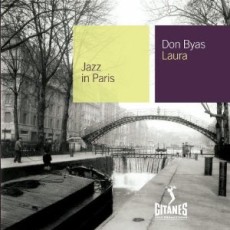
Don Byas was born Carlos Wesley Byas October 21, 1912 in Muskogee, Oklahoma into a musical family, his mother a pianist and father playing clarinet. He started training in classical music, first on the violin, then clarinet and finally the alto saxophone, which he played until the end of the 1920s. He started playing in local orchestras at the age of 17, with the likes of Bennie Moten, Terrence Holder and Walter Page’s Blue Devils.
In 1931 while at Langston College in Oklahoma he founded and led his own college band, “Don Carlos and His Collegiate Ramblers”. Switching to the tenor saxophone when he moved to West Coast, through the Thirties he played with various Los Angeles bands such as Bert Johnson’s Sharps and Flats, Lionel Hampton, Eddie Barefield, Buck Clayton, Lorenzo Flennoy and Charlie Echols bands.
By 1937 Byas moved to New York working with Eddie Mallory and his wife Ethel Waters, went on to work with Don Redman, recorded his first solo in 1939, played with the bands of lucky Millinder, Andy Kirk, Edgar Hayes and his childhood idol Benny Carter. He played and recorded with Billie Holiday, Pete Johnson, Hot Lips Page, Big Joe Turner, Charlie Christian, Thelonious Monk and Kenny Clarke in after hour sessions.
However Byas’ big break came in early 1941 when Count Basie selected him to fill the seat vacated by Lester Young. Through the forties he played the best New York nightspots, had some success with a few hits, collaborated with Dizzy Gillespie, Charlie Parker, George Wallington, Oscar Pettiford and Max Roach. Despite his bebop associations, Byas always remained deeply rooted in the sounds of swing. He started out by emulating Coleman Hawkins, but always cited Art Tatum as his greater influence: “I haven’t got any style, I just blow like Art”.
In 1946 Byas went to Europe and forgot to return to America. A bon vivant in the true sense he was seen on the Riviera, St. Tropez often sporting mask and flippers, sport fishing, shooting pool or dishing up Louisiana style menus for his female admirers all while recording and playing regularly throughout Europe.
Settling in Amsterdam he continued to tour and play with the likes of Art Blakey, Kenny Clarke, Bud Powell, Jazz At The Philharmonic and Ben Webster to name a few. He returned once to the U.S. to appear at the Newport Jazz Festival. Tenor saxophonist Don Byas died on August 24, 1972 from lung cancer in Amsterdam, Netherlands at the age 59.
More Posts: saxophone
Daily Dose Of Jazz…
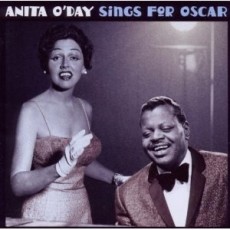
Anita O’Day was born Anita Belle Colton into a broken home in Chicago, Illinois on October 18, 1919. She took the first chance to leave home at age 14, she became a contestant in the popular Walk-a-thons as a dancer. She toured on the Walk-a-thons circuits for two years, occasionally being called upon to sing. In 1934, she began touring the Midwest as a marathon dance contestant and singing “The Lady In Red” for tips.
In 1936, she left the endurance contests, determined to become a professional singer. Anita started out as a chorus girl in such uptown Chicago venues as the Celebrity Club and the Vanity Fair, and then found work as a singer and waitress at the Ball of Fire, the Vialago, and the Planet Mars. It was at the Vialago that O’Day met and later married drummer Don Carter and later married, who introduced her to music theory. Her first big break came in 1938 when Down Beat editor Carl Cons hired her to work at his new club, the “Off-Beat” followed by a stint at The Three Deuces.
She went on to work with Gene Krupa in 1941, recorded her first big hit with him performing a novelty duet with Roy Eldridge titled “Let Me Off Uptown”, was named “New Star of the Year” by Down Beat, appeared in two short musical films, and over the next several years she performed as a solo act, fronted the bands of Woody Herman, Stan Kenton, rejoined Krupa and then became a solo artist again.
During the late forties she would record regularly, attempting to achieve popularity without sacrificing her jazz singer identity. Plagued with long-term problems with heroin addiction and alcoholism, coupled with erratic behavior surfacing earned her the nickname “The Jezebel of Jazz”. During this period she was in and out of jail for various possession charges. However, a date with Count Basie at the Royal Roost resulted in five air checks and her career was back on the upswing. But what secured O’Day’s place in the jazz pantheon are the 17 albums she recorded for Norman Granz’s Norgran and Verve labels between 1952 and 1962, recording her and the label’s inaugural LP “Anita O’Day Sings Jazz” in 1952.
Anita’s backbeat-based singing style was strongly influential on many other female singers of the late swing and bebop eras, including June Christy, Chris Connor and Doris Day. Admired for her sense of rhythm and dynamics, her early big band appearances shattered the traditional image of the “girl singer” by presenting herself as a “hip” jazz musician, wearing a band jacket and skirt. Anita O’Day passed away in her sleep of cardiac arrest on Thanksgiving Day, November 23, 2006, at age 87.
More Posts: vocal