

Daily Dose Of Jazz…
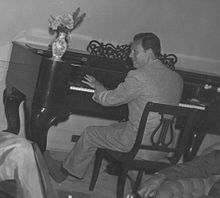
Irving Gordon was born in Brooklyn, New York on February 14, 1915 and as a child, studied violin. After attending public schools in New York City, he went to work in the Catskill Mountains at some of the resort hotels in the area. While working the resorts, he took to writing parody lyrics to some of the popular songs of the day. He has been credited with writing “Who’s On First” made famous by Abbott and Costello, according to his son William.
In the 1930s, he took a job with the music-publishing firm headed by talent agent Irving Mills, at first writing only lyrics but subsequently writing music as well. Together they wrote two songs for Duke Ellington, Please Forgive Me and Prelude To A Kiss and co-wrote Blue Prelude with Ellington.
After writing Mister and Mississippi, a Patti Page hit, Irving decided he enjoyed puns on state names, and some years later wrote Delaware, a Perry Como hit. He also went on to write for Bing Crosby, Eddy Arnold and Billie Holiday. But he is perhaps best known for his song, “Unforgettable” recorded by Nat King Cole in 1951 and then three Grammys in 1992 by his daughter Natalie Cole, in which Gordon himself received a Grammy. Nat’s version was inducted into the Grammy Hall of Fame in 2000.
In the 1940’s he moved to Los Angeles where he spent the rest of his life continually writing and composing and is noted for his contribution in music and lyrics of the Americana genre. Songwriter Irving Gordon passed away in his home of cancer on December 1, 1996.
More Posts: songwriter
Daily Dose Of Jazz…
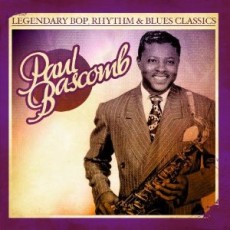
Paul Bascomb was born into a family with nine siblings on February 12, 1912 in Birmingham Alabama. From an early age he felt the urge to create music and by his late teens he was an accomplished clarinetist and tenor saxophonist. Attending Alabama State Teacher’s College he was a founding member of the Bama State Collegians, a respected regional swing band that stayed together from the mid-thirties on assuming leadership under Erskine Hawkins. Paul was a part of this band till the mid 40’s, save a stint with Count Basie’s band from 38-39. During this period he co-wrote the tune Tuxedo Junction with Hawkins but by 1945 left the band a co-led small combos with his brother Dud.
1946 saw Bascomb in New York recording with a small combo for Alert records. A year later he moved to the Jersey based Manor label recording a series of sides for them, went to the London label and recorded Pink Cadillac and in ’48 did a session with The Riffs who eventually became famous with King Pleasure.
In 1950 Paul relocated to the Midwest and began a long association with the Chicago and Detroit nightclubs where owners were allowing black and white musicians to play together. By 1952 he started recording extensively with United Records and later for Mercury as he ventured into the R&B world.
By the late fifties he demand changed and took a job with the city of Chicago. He returned to music in the late 70s, was inducted into the Alabama Jazz Hall of Fame in 1979, and played well into the 80s for well receiving European audiences. It was the last hurrah for tenor saxophonist Paul Bascomb, who passed away at 74 years old on December 2, 1986.
More Posts: saxophone
Daily Dose Of Jazz…
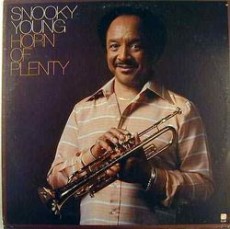
Snooky Young was born Eugene Young in Dayton, Ohio on February 3, 1919. Taking up the trumpet at the age of five, he didn’t begin making a name for himself until he joined the Jimmie Lunceford band as lead trumpeter in 1939, a relationship that lasted for three years.
He played a total of eight years over three stints with Count Basie, Lionel Hampton and was an original member of the Thad Jones/Mel Lewis Big Band. However, his longest engagement was as a studio trumpeter with NBC’s Tonight Show Band from 1967 to 1992 when Johnny Carson’s departure broke up the band and the network replaced it with a new, smaller group.
Young only recorded three albums as a leader but was a sideman on nearly three-dozen albums and he continued to perform in L.A. with several big bands and holds membership in the Clayton-Hamilton Jazz Orchestra. Known for his mastery of the plunger mute, he is able to create a wide range of sounds. He can make his horn speak, shout, growl, and sigh with his mutes while always swinging irresistibly.
On October 17, 2008 he received the NEA Jazz Masters Award. Trumpeter and flugelhornist Snooky Young passed away on May 11, 2011 in Newport Beach, California at the age of 92.

More Posts: flugelhorn,trumpet
Daily Dose Of Jazz…
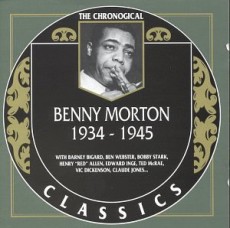
Benny Morton was born on January 31, 1907. Growing up in New York City, Benny was a graduate of the Jenkins Orphanage Band and was greatly influenced by church music as well as Dope Andrews, trombonist for Mamie Smith. By 1923, just 16 years old, he was gaining experience with the Clarence Holiday Orchestra and just three years later joined Fletcher Henderson. Swing was in and Benny moved on to spend six years with Don Redman and then three with Count Basie.
By 1938 he was recording with Clarence Holiday’s daughter Billie on My First Impression Of You and on The Sound Of Jazz. Morton went on to play with Teddy Wilson and Ed Hall in the 40’s and led his own band before playing in the Broadway pit for shows like Guys and Dolls and for Radio City Music Hall.
During the sixties and over the next two decades, the gentle and self-effacing trombonist was back in high jazz society with cornetist Wild Bill Davison and Bobby Hackett, The Saints and Sinners and the World’s Greatest Jazz Band.
One of the most sophisticated trombonists of the swing era, Benny Morton passed away on December 28, 1985.
More Posts: trombone
Daily Dose Of Jazz…
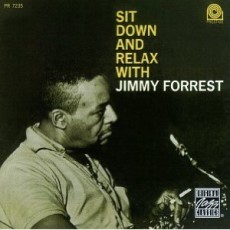
One of the many jazz musicians to come out of St. Louis, Missouri was Jimmy Robert Forrest Jr., born January 24, 1920. Working with pianist Eddie Johnson, Fate Marable and the Jeter-Pillars Orchestra while in high school, he went on the road with Dan Albert in 1938 and then the Jay McShann Orchestra from 1940 to 1942.
Forrest moved to New York and played with Andy Kirk and Duke Ellington before returning to St. Louis. His recording of “Night Train” with it’s hook and classic tenor solo reached the #1 spot on the Billboard R&B chart in 1952 and stayed for seven weeks. Gathering greater attention Jimmy recorded a series of jazz influenced R&B singles for United Records including two other hits “Hey Mrs. Jones” and “Bolo Blues”.
“Night Train” became the theme song for a nightly rhythm and blues program of the same name hosted by William A. “Rascal” McCaskill on KREL-AM in Houston market from 1954-1957 that virtually introduced white teenagers to what was called race music.
During the fifties he led his own combos and played with Miles Davis but Jimmy Forrest’s most important associations were with Harry “Sweets” Edison from ’58-’63, the Count Basie Orchestra from ’72-’77 and Al Grey with whom he co-led a quintet until his death.
Tenor saxophonist Jimmy Forrest, bandleader and sideman, died on August 26, 1980 in Grand Rapids, Michigan.
More Posts: saxophone