

Daily Dose Of Jazz…
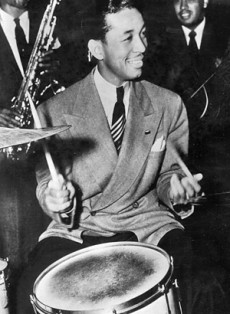
Drummer and singer Lee Young was born on March 7, 1914 as Leonidas Raymond Young in New Orleans, Louisiana to parents who were both musicians and teachers. The younger brother of tenorist Lester Young, his father drilled music into his children long before they started school, preparing them for the carnival and vaudeville road. The family finally settled in Los Angeles.
Steeped in the roots deep in New Orleans jazz, Lee played and recorded with Fats Waller in the thirties, and helped forge a burgeoning and vibrant jazz scene in Los Angeles in the ‘40s, and in 1944 he was drumming with Les Paul, J. J. Johnson, and Illinois Jacquet at Norman Granz’s first Jazz At The Philharmonic. In the Fifties he conducted and drummed for Nat King Cole.
Young was the first Black musician to be a regular studio musician in Hollywood and taught Mickey Rooney to play drums for a movie. By the 60’s he was a successful A&R man and record producer for Vee-Jay and Motown with a reputation for predicting what would sell.
Young is considered one of the most significant figures in jazz who directly connected the world to the early glories of jazz: the birth of jazz in New Orleans, the jazz age, the swing era and bebop. He led an integrated band at a time when it was not fashionable. He worked with Duke Ellington, Count Basie, Benny Goodman, Lionel Hampton and Les Hite. Lee Young passed away at the age of 94 on July 31, 2008.
Lee Young: 1914-2008 / Drums

More Posts: drums
Daily Dose Of Jazz…
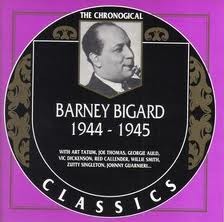
On March 3, 1906 Barney Bigard was born Albany Leon Bigard in New Orleans, Louisiana. As a child he studied music and clarinet with Lorenzo Tio. In the early twenties his move to Chicago had him working and recording with Joe “King” Oliver, Johnny Dodds, Jelly Roll Morton and numerous others.
Bigard’s initial fame came as a tenor saxophonist in the twenties and was #2 behind Coleman Hawkins before moving to the clarinet. In 1927 his swinging style joined the ranks of the Duke Ellington Orchestra, a relationship that lasted till 1942, both as a featured soloist and section tenor. Credited with composing or co-composing several tunes, Barney’s most notable is the Ellington standard “Mood Indigo”.
Tiring of the road with Ellington, Bigard moved to Los Angeles getting into sound tracking, with an on-screen performance with Louis Armstrong in the 1946 film “New Orleans”. By the late 40’s he teamed with Kid Ory followed by once again touring the world with Louis Armstrong’s All Stars band from 1947 to 1955. In the late 50’s he played with Cozy Cole and became semi-retired by 1962, occasionally playing and recording with Art Hodes, Earl Hines and sometimes as a leader.
Considered one of the most distinctive clarinetists in jazz, composer and tenor saxophonist Barney Bigard passed away on June 27, 1980 in Culver City, California.

Daily Dose Of Jazz…
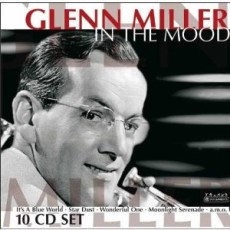
Glenn Miller was born Alton Glenn Miller on March 1, 1904 on a farm in Clarinda, Iowa. Though his early musical schooling was in Nebraska by 1915 his education continued in Missouri. Working to save money by milking cows, he bought his first trombone and played in the town orchestra. By high school his interest turned towards a new style of music called “dance band” and led a band with classmates. His unsuccessful foray into college caused him to concentrate on becoming a professional musician.
The mid-twenties saw Glenn touring with several bands including Red Nichols in Broadway show pits performing with band mates were Benny Goodman and Gene Krupa. In 1929 he was part of the band backing a recording of “If I Could Be With You One Hour Tonight” featuring Pee Wee Russell, Eddie Condon, Gene Krupa and Coleman Hawkins.
He went on to work with the Dorsey brothers and British bandleader Ray Noble, then transitioning into motion pictures for Paramount and 20th Century with such stars as Bing Crosby, George Burns and Gracie Allen, Ethel Merman, Bill “Bojangles” Robinson, Dorothy Dandridge and the Nicholas Brothers.
From 1938 to 1942 Miller amassed great fame with his songs “Tuxedo Junction”, “Moonlight Serenade”, “Little Brown Jug” and “Chattanooga Choo-Choo” breaking all sales and chart records. In 1942 Glenn joined the war effort joining first the Army and then the Army Air Force forming marching bands and orchestras and performing for soldiers. Sadly, on a flight from England to Paris on December 15, 1944, Glenn Miller’s plane went missing over the English Channel. His body was never recovered.
The jazz musician, arranger, composer and swing era bandleader was posthumously issued a postage stamp, three songs are in the Grammy Hall of Fame and in 2003 he received a Grammy Lifetime Achievement Award.

More Posts: trombone
Daily Dose Of Jazz…
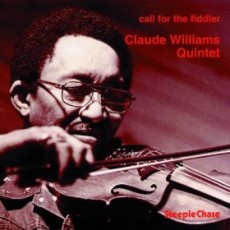
Claude “Fiddler” Williams, born on February 22, 1908 in Muskogee, Oklahoma, by the age of 10 had learned to play guitar, mandolin, banjo and cello and was inspired to learn the violin after hearing Joe Venuti play. He played around Oklahoma with bassist Oscar Pettiford and by 1927 had his first professional gig with Terence Holder’s territory band that soon became known as the Clouds of Joy led by Andy Kirk after Holder’s ouster.
Claude enjoyed a great deal of success due to the performing and composing talents of Mary Lou Williams. Their short-lived relationship ended due to health issues but during the thirties he worked with Alphonse Trent, George E. Lee, Chick Stevens, Nat King Cole and his brother Eddie.
In 1936 Claude became the first guitarist to record with Count Basie and throughout the 30’s and 40’s worked Chicago, Cleveland and Flint with the Four Shades of Rhythm. Throughout the 50’s he worked with Jay McShann, Eddie “Cleanhead” Vinson and Hank Jones.
Settling in Kansas City in 1953 he spent most of the next 20 years leading his own groups. By the 70’s a gig with McShann led to his first recordings in three decades and his second career was born. Over the next two decades he toured with McShann, worked as a feature soloist at jazz festivals, Parisian musical Black & Blue, a New York date with Roland Hanna and Grady Tate, played Carnegie Hall and Lincoln Center, and President Bill Clinton’s first inauguration. In 1997 Williams was the first inductee of the Oklahoma Jazz Hall Of Fame.
Claude “Fiddler” Williams, the venerable elder statesman of jazz, who outlasted virtually all his contemporaries and achieved his greatest successes at an advanced age and was the last surviving jazz musician to be recorded before 1930, passed away at the age of 96 of pneumonia in Kansas City on April 26, 2004.
More Posts: violin
Daily Dose Of Jazz…
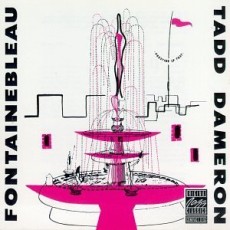
Cleveland, Ohio was the birthplace of Tadley Ewing Peake Dameron on February 21, 1917. Tadd as he was known in the jazz world became the definitive arranger/composer of the bop era writing such standards as “Good Bait,” “Our Delight,” “Hot House,” “Lady Bird,” and “If You Could See Me Now.” Not only did he write melody lines, he also wrote full arrangements. Though he never financially prospered, Dameron was an influential force from the mid-’40s till his death.
Dameron started out in the swing era touring with the Zack Whyte and Blanche Calloway bands, he wrote for Vido Musso in New York and most importantly, contributed arrangements for Harlan Leonard’s Kansas City Orchestra, some of which were recorded.
Soon he was writing charts for such bands as Jimmie Lunceford, Count Basie, Billy Eckstine, and Dizzy Gillespie (1945-1947) in addition to Sarah Vaughan. Always very modest about his own piano playing but he did gig with Babs Gonzales’ Three Bips & a Bop in 1947 and led a sextet featuring Fats Navarro at the Royal Roost during 1948-1949.
Dameron co-led a group with Davis at the 1949 Paris Jazz Festival, stayed in Europe for a few months (writing for Ted Heath), and then returned to New York. He wrote for Artie Shaw’s last orchestra that year, played and arranged R&B for Bull Moose Jackson (1951-1952) and in ‘53 led a nonet featuring Clifford Brown and Philly Joe Jones.
He also led bands that included Dexter Gordon, Sonny Rollins and Wardell Gray. Drug problems, however, started to get in the way of his music. After recording a couple of albums including 1958’s Mating Call with John Coltrane, drug addiction caused him to spend much of 1959-1961 in jail. After he was released, Dameron wrote for Sonny Stitt, Blue Mitchell, Milt Jackson, Benny Goodman, suffered several heart attacks and diagnosed with cancer from which he would eventually succumb to on March 8, 1965 in New York City.