

Daily Dose Of Jazz…
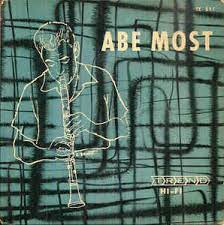
Abe Most was born on February 27, 1920 in New York City, New York. He began his career in 1939 as a member of Les Brown’s Big Band. After serving three years in the Army during World War II beginning in 1942, he became a member of Tommy Dorsey’s Big Band.
Most made a few albums with smaller labels between 1946 and 1984, including Superior, Trend, Annunciata and Camard. His last two albums were Abe Most Live! and I Love You Much Too Much.
He was a studio musician for seven decades, recording on albums by Ted Gärdestad, Dick Haymes, Randy Newman, Dory Previn, Laurindo Almeida, Dominic Frontiere, Henry Mancini, Peggy Lee, Carmen McRae, Ray Conniff, and George Shearing, as well as Joni Mitchell, Cher, Earth, Wind & Fire, and B. B. King among others. He can also be heard playing on the soundtrack of the film How to Marry a Millionaire.
Clarinetist Abe Most, the older brother of flautist Sam Most, recorded three albums as a leader and thirty-one as a sideman, transitioned on October 10, 2002.

More Posts: bandleader,clarinet,history,instrumental,jazz,music
Daily Dose Of Jazz…
Harold “Money” Johnson was born in Tyler, Texas on February 23, 1918 and didn’t start playing trumpet until he was fifteen. Moving to Oklahoma City, Oklahoma in 1936, he jammed with Charlie Christian and Henry Bridges before joining Nat Towles’s band.
He played with Horace Henderson and Bob Dorsey before returning to Towles’s band in 1944 in Chicago, Illinois. He also played with Count Basie, Cootie Williams, Lucky Millinder, and Bull Moose Jackson during the decade.
In the 1950s Money’s associations included Louis Jordan, Lucky Thompson, Sy Oliver, Buddy Johnson, Cozy Cole, Mercer Ellington, Little Esther, and Panama Francis.
The Sixties saw Johnson played in the house band at the Apollo Theater in Harlem, and recorded with King Curtis in 1962. He toured the USSR with Earl Hines in 1966. From 1968 he played in the Duke Ellington Orchestra and also worked again with Hines and Oliver.
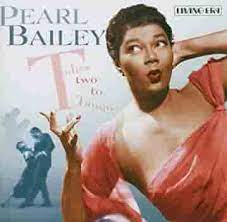
He recorded with Buck Clayton, Pearl Bailey, Red Prysock, Barbara Lews, Jack McDuff, Houston Person, and Jesse Stone. Trumpeter Money Johnson, whose last performance was on the night before, transitioned from a heart attack on March 28, 1978 in New York City.
More Posts: history,instrumental,jazz,music,trumpet
Daily Dose Of Jazz…
Le Roy Watts Harris Jr. was born on February 12, 1916 in St. Louis, Missouri. He played violin while young, then learned saxophone and clarinet. By age 13 he was playing with pianist Chick Finney.
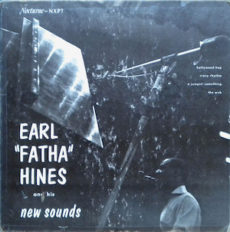
Relocating to Chicago, Illinois around 1930 he played with Ray Nance from 1931 to 1936. Following this stint he worked with Earl Hines from 1937 to 1943. He joined the United States Navy during World War II and played in a band from 1943 to 1944. After his discharge he played with Bill Doggett, Ben Thigpen, Tadd Dameron, Sarah Vaughan, Singleton Palmer, and Wynonie Harris, then returned to play with Hines once more.
In the early 1950s he led his own band at the Kit Kat club in New York. He resettled in St. Louis again in 1957 and played with Eddie Johnson from 1960 to 1971.
Saxophonist and clarinetist Le Roy Harris Jr., whose father and uncle were both jazz musicians, transitioned on February 16, 2005 in his hometown of St. Louis.
More Posts: bandleader,clarinet,history,instrumental,jazz,music,saxophone
Daily Dose Of Jazz…
Alfred “Chico” Alvarez was born in Montreal, Canada February 3, 1920 but grew up in Southern California. Upon graduation from high school, he attended the Los Angeles Conservatory of Music.
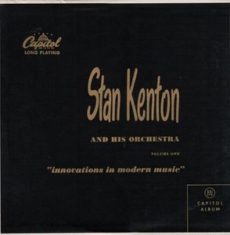
He was a soloist with the Stan Kenton Orchestra from 1941 to 1943 and rejoined the band after Army service in World War II. He also played with the Red Norvo and Charlie Barnet bands, and moved to Las Vegas, Nevada in 1958 and worked the hotel circuit in the 1960s and 1970s. It was during this time that he would accompany singers like Ella Fitzgerald and Sarah Vaughan.
He recorded two dozen albums with Kenton as well as a single recording session on the self-titled Nat King Cole, Bob Keene and His Orchestra, Vido Musso’s The Swingin’st, and Patti Page’s In the Land of Hi-Fi.
Trumpeter Chico Alvarez, who was the business agent for the musicians’ union, the president of the Allied Arts Council and a member of the Nevada State Council on the Arts, transitioned on August 1, 1992 in Las Vegas.
More Posts: history,instrumental,jazz,music,trumpet
Daily Dose Of Jazz…
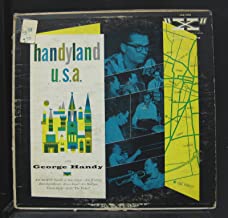
George Handy, born George Joseph Hendleman on January 17, 1920 in New York City, where his musical beginnings were fostered under the tutelage of composer Aaron Copland.
He first worked professionally as a swing pianist for Michael Loring in 1938. Soon afterward George was drafted into the United States Army in 1940. Post WWII, from 1944 to 1946 he became a member of the Boyd Raeburn Orchestra, composing and performing on piano. This was during a time when many big bands were transforming their musical tendencies toward bebop. Leaving the orchestra briefly to work for Paramount Studios, he returned to Raeburn quickly. During this period he entered one of his most creative periods, doing arrangements of older standards with a distinctly bebop quality.
A rift between him and Raeburn, just as he was entering his prime, forced him to depart the group. Handy continued to arrange for other musicians in his later career.
Pianist, arranger and composer George Handy, best remembered in retrospect for his bebop arrangements, transitioned in Harris, New York, on January 8, 1997 at the age of 76, from heart disease.
More Posts: arranger,composer,history,instrumental,jazz,music,piano