


Daily Dose Of Jazz…
Kurt Edelhagen was born on June 5, 1920 in Herne, Germany. He studied conducting and piano in Essen and b 1945, he started a trio, then a big band a year later. He performed on a Frankfurt radio station, am Main, then for three years beginning in 1949 led the Bayerischer Rundfunk in Nuremberg.
From 1952 to 1957 he led the Südwestfunk big band, and 1954 saw him participating in the concerto for jazz band and orchestra by Rolf Libermann. Three years later he began leading the radio station Westdeutscher Rundfunk Big Band (WDR) in Cologne. Members included Dusko Goykovich and Jiggs Whigham. During the 1960s the band toured East Germany, USSR, Czechoslovakia, and several Arab countries.
His radio orchestra played at the opening ceremony of the 1972 Munich Olympics. Big band leader Kurt Edelhagen passed away on February 8, 1982 in Cologne, Germany.

More Posts: bandleader,history,instrumental,jazz,music
Daily Dose Of Jazz…
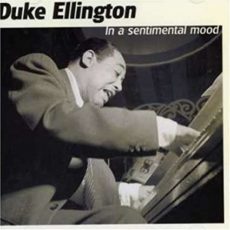
Toby Hardwicke was born Otto James Hardwicke on May 31, 1904 in Washington, D.C., and started on string bass at the age of 14, then moved to C melody saxophone and finally settled on alto saxophone. A childhood friend of Duke Ellington, he joined Ellington’s first D.C. band in 1919. He also worked for banjoist Elmer Snowden at Murray’s Casino.
In 1923, Ellington, Hardwick, Snowden, trumpeter Arthur Whetsol, and drummer Sonny Greer had success as the Washingtonians in New York City. After a disagreement over money, Snowden was forced out of the band and Duke Ellington was elected as the new leader. Booked at a Times Square nightspot called the Kentucky Club for three years, they met Irving Mills, who produced and published Ellington’s music.
Otto left the Duke Ellington band in 1928 to visit Europe, where he played with Noble Sissle, Sidney Bechet and Nekka Shaw’s Orchestra, and led his own orchestra before returning to New York City in 1929. He went on to have a brief stint with Chick Webb that year, then led his own band at the Hot Feet Club, with Fats Waller leading the rhythm section in 1930. He led a group at Small’s before rejoining Duke Ellington in the spring of 1932, following a brief stint with Elmer Snowden.
He played lead alto on most Ellington numbers from 1932 to 1946 and was a soloist on Black and Tan Fantasy, In a Sentimental Mood and Sophisticated Lady. Hardwick, with his creamy tone, was almost always the lead alto in the reed section of the Ellington orchestra except in some situations where Ellington required the more cutting tone of Johnny Hodges’ alto to set the tone of the ensemble. He left the band in 1946 over a disagreement with Ellington about his girlfriend, freelanced for a short time in the following year, and then retired from music.
>Occasionally doubling on violin and string bass in the Twenties, alto saxophonist Toby Hardwicke who also played clarinet and bass, baritone, and soprano saxes, passed away on August 5, 1970.

More Posts: bass,clarinet,history,instrumental,jazz,music,saxophone,violin
Daily Dose Of Jazz…
Earl Malcolm “Jock” Caruthers Sr. was born on May 27, 1910 in Monroe, Mississippi and studied at Fisk University in the 1920s. He began playing in Bennie Moten’s ensemble in 1928.
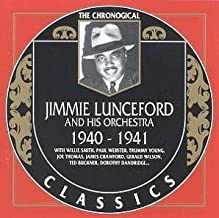
Working in St. Louis, Missouri early in the next decade with Dewey Jackson and Fate Marable, Jock then joined Jimmie Lunceford’s band in 1932, recording often with the band. He remained a member of the orchestra until Lunceford’s death in 1947.
Following this he played with Joe Thomas and Ed Wilcox, and he worked locally in Kansas City through the 1960s. Saxophonist Earl Caruthers, who was a mainstay on the Kansas City jazz scene, passed away on April 5, 1971 in Kansas City, Kansas.
More Posts: history,instrumental,jazz,music,saxophone
Three Wishes
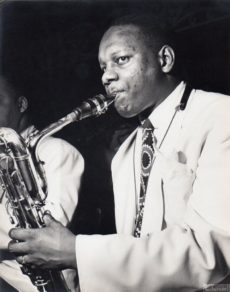
The Baroness asked Harry Carney what his three wishes would be and he replied:
-
-
“To be healthy.”
-
“To be happy.”
-
“For everyone to have eternal life and healthy minds.”
-
*Excerpt from Three Wishes: An Intimate Look at Jazz Greats ~ Compiled and Photographed by Pannonica de Koenigswarter

More Posts: baroness,clarinet,history,instrumental,jazz,music,pannonica,saxophone,three,wishes
Daily Dose Of Jazz…
Bill Barber was born John William Barber on May 21, 1920 in Hornell, New York. He started playing tuba in high school and studied at the Juilliard School of Music. After graduating, he traveled west to Kansas City, Missouri, where he played with the Kansas City Philharmonic and various ballet and theatre orchestras.
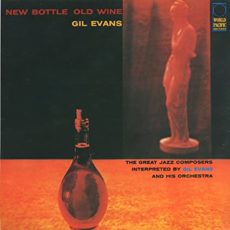
Joining the United States Army in 1942, he played in Patton’s 7th army band for three years. After the war, he started playing jazz, joining Claude Thornhill’s big band where he became friends with trombonist Al Langstaff, pianist Gil Evans and saxophone player Gerry Mulligan in 1947. Barber was one of the first tuba players to play in a modern jazz style, playing solos and participating in intricate ensemble pieces.
Barber became a founding member of Miles Davis’s nonet in 1949 in what became known as the Birth of the Cool recording sessions. He then worked in the theatre pit orchestras of The King and I, Paradiso, and the City Center Ballet. He joined up with Davis and Gil Evans in the late 1950s to record the albums Sketches of Spain, Miles Ahead and Porgy and Bess. Barber also played tuba on John Coltrane’s album Africa/Brass released in 1961.
Completing a master’s degree from the Manhattan School of Music and became an elementary school music teacher at Copiague, New York. He continued to play where possible including with the Goldman Band. In 1992, he recorded and toured with a nonet led by Gerry Mulligan, reworking material from Birth of the Cool.
From 1998 to 2004 he was part of The Seatbelts, New York musicians who played the music of the Japanese anime Cowboy Bebop. Over the course of his career, he recorded with Art Blakey, Bob Brookmeyer, Kenny Burrell, John Coltrane, Miles Davis, Gil Evans, Urbie Green, Gigi Gryce, Slide Hampton, and Pete Rugolo. Tubist Bill Barber, who was also known as Billy Barber, passed away from heart failure on June 18, 2007 in Bronxville, New York.
More Posts: history,instrumental,jazz,music,tuba