

Daily Dose Of Jazz…
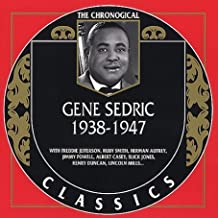
Gene Sedric, born Eugene Hall Cedric on June 17, 1907 in St. Louis, Missouri into a family where his father played ragtime piano. He played with Charlie Creath in his hometown and then with Fate Marable, Dewey Jackson, Ed Allen, and Julian Arthur.
Joining Sam Wooding’s Orchestra in 1925 he toured Europe with him until 1931 when the unit dissolved. During his time in Europe he recorded with Alex Hyde. When he returned to New York City he played with Fletcher Henderson and Alex Hill, before joining Fats Waller’s Rhythm in 1934, where he remained to 1942. When Waller went on solo tours Sedric found work gigging alongside Mezz Mezzrow in 1937 and Don Redman from 1938 to 1939).
Sedric put together his own group in 1943, prior to playing with Phil Moore in 1944 and Hazel Scott in 1945. He put together another ensemble from 1946–51, playing in New York City. His later associations through the late 1940s into the early 60s include time with Pat Flowers, Bobby Hackett, Jimmy McPartland, Mezzrow again, Conrad Janis, and Dick Wellstood. He recorded sparingly as a leader in 1938, 1946, and with Mezzrow in 1953.
Clarinetist and tenor saxophonist Gene Sedric, who acquired the nickname “Honey Bear” in the 1930s because of his large camel hair coat, passed away on April 3, 1963 in New York City.
More Posts: bandleader,clarinet,history,instrumental,jazz,music,saxophone
Daily Dose Of Jazz…
Philip L. Bodner was born June 13, 1917 in Waterbury, Connecticut and played in the Forties and 1950s as a sideman for studio recordings in New York City. He played on jazz sessions with Benny Goodman, with Miles Davis and Gil Evans in 1958.
Organizing The Brass Ring, a group modeled after Herb Alpert, in the mid-1960s they had popular success. Bodner also played with Oliver Nelson and J.J. Johnson during that decade. His associations in the 1970s included Oscar Peterson, Yusef Lateef, Peanuts Hucko, Wild Bill Davison, Ralph Sutton and he also played the signature piccolo part on the disco hit The Hustle by Van McCoy. Other work in the 1970s included playing with Ralph Sutton and Johnny Varro, working with Mingus Epitaph, and arranging Louie Bellson’s tribute to Duke Ellington’s Black, Brown and Beige.
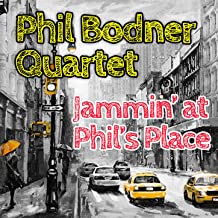
The 1980s saw him working in a swing style with Marty Napoleon, Mel Lewis, George Duvivier, Maxine Sullivan, and Barbara Carroll. He released an album under his own name, Jammin’ at Phil’s Place, on Jazzmania Records in 1990, with Milt Hinton, Bobby Rosengarden, and Derek Smith as sidemen.
Multi-instrumentalist and studio musician Philip Bodner, active in jazz and popular music idioms. Best known as a reedist, he played clarinet, saxophone, oboe, English horn, piccolo, flute, conductor and arranger passed away on February 24, 2008 at age 90 in New York City.
More Posts: clarinet,english horn,flute,history,instrumental,jazz,music,oboe,piccolo,saxophone
Daily Dose Of Jazz…
Rubin “Zeke” Zarchy was born on June 12, 1915 in New York City. He first learned the violin, but after a stint as a bugler with his Boy Scout troop, he switched permanently to trumpet while in his early teens.
In 1935 Zarchy was working with the Joe Haymes Orchestra, followed by Benny Goodman, and then Artie Shaw. He went on to work through the end of the decade with Bob Crosby and Red Norvo, Tommy Dorsey, and Glenn Miller.
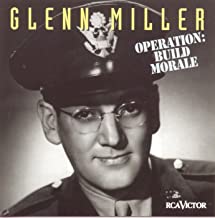
Between 1942 and 1945 he played in US Army bands: he was part of what became Miller’s Army Air Force Band (officially, the 418th Army Band), playing lead trumpet as Master First Sergeant. Zeke’s trumpet can be heard on recordings as Benny Goodman’s Bugle Call Rag, Glenn Miller’s Moonlight Cocktail, and Bob Crosby’s South Rampart Street Parade.
After the war, Frank Sinatra invited Zarchy to move to Los Angeles, California where he became a first-call studio musician. He played on numerous recordings, including those led by Boyd Raeburn, Jerry Gray, Sarah Vaughan, and Frank Capp. He appeared in film in The Glenn Miller Story in 1954.
During the 1960s and 1970s, Zeke played in the CBS house bands of several television variety shows, including The Smothers Brothers Comedy Hour, The Danny Kaye Show and The Jonathan Winters Show, and was a member of the NBC Staff Orchestras in New York and Los Angeles.
In his later years, he made many music tours of Europe, South America, and Australia, as well as thirty-two concert trips to Japan. He tutored several young trumpet players who became successful performers and studio musicians. Trumpeter Zeke Zarchy passed away in Irvine, California, on April 11, 2009.
More Posts: history,instrumental,jazz,music,trumpet
Daily Dose Of Jazz…
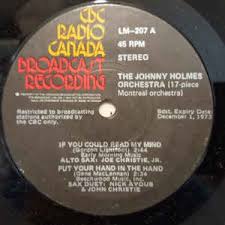
John Joseph Harold Holmes, better known in the music world as Johnny was born in Montreal, Canada on June 8, 1916. He began playing cornet at 10 and studied briefly with C. Van Camp. After playing trumpet for a year in 1940 in a co-operative band, the Esquires, he took over its leadership from 1941 to 19.50.
After establishing the Johnny Holmes Orchestra they played Saturday nights at Victoria Hall in Montreal that was broadcast on CBC radio. They occasionally toured in Quebec and Ontario. One of Montreal’s leading dance bands of the day, it boasted a healthy jazz quotient and benefited from Holmes’ ability to identify talented younger musicians. At various times his sidemen included Nick Ayoub, Al Baculis, Percy and Maynard Ferguson, pianist Bud Hayward, Art Morrow, and Oscar Peterson. Lorraine McAllister and Sheila Graham, in turn, sang with the band.
Holmes retired from music from 1951 to 1959 but was heard 1959 to 1969 on several CBC radio shows including The Johnny Holmes Show, Broadway Holiday, among others. His orchestras made several broadcast recordings between 1966 and 1973 for the CBC’s LM series and continued to perform periodically until his retirement from music in 1978. One edition without saxophones took the name Brass Therapy.
He wrote numerous arrangements for his orchestra and his radio shows, more than 40 songs, and such extended works as The Fair City, a jazz suite dedicated to Expo 67. Trumpeter, bandleader, arranger, and composer Johnny Holmes, who has no known recording on line, passed away on June 11, 1989 in Montreal.
More Posts: arranger,bandleader,composer,history,instrumental,jazz,music,trumpet
Daily Dose Of Jazz…
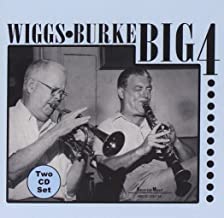
Raymond Burke was born Raymond Barrois on June 6, 1904 in New Orleans, Louisiana. His first instrument was a flute he carved from a fishing pole, then played the tin whistle, kazoo, and clarinet. His first job in music came in 1913 when he panhandled on the kazoo with future New Orleans Rhythm Kings drummer Leo Adde who played percussion on a cigar box.
A polite, albeit eccentric with wavy hair and a thin mustache, the conservatively dressed clarinetist did not drink, smoke, or gamble. Burke rarely left the city except for out-of-town gigs or tours with the Preservation Hall Jazz Band later in life.
In the 1930s Burke played with The Henry Belas Orchestra, spent a short period of time in Kansas City for a musical job, but soon returned. In the 1940s and ’50s, he played with Alvin Alcorn, Sharkey Bonano, and frequently in a trio with pianist Jeff Riddick and bassist Sherwood Mangiapane. Through the 1960s and 70s Burke he played with Preservation Hall musicians.
For a time he ran a rabais shop, a personal collection that the owner makes semi-available to the public for sale. Located in a residential section of Bourbon Street which had light pedestrian traffic the shop was filled with old jazz records, historical memorabilia, musical instruments and equipment, books, magazines, and a collection of sheet music. It generated little financial income.
During his active years, he never achieved mainstream popularity or commercial success. He was known for playing modestly, and in large ensembles, his clarinet could easily be overpowered. Refusing to let contemporary music influence his sound for commercial reasons, he associated with “Second Line” jazz, which differentiated White imitators who simplified the style from Black or Creole musicians.
He gained some popularity around 1939 when fans started using portable recorders at live performances during local jam sessions. Clarinetist Raymond Burke, who played in the Dixieland style, passed away on March 21, 1986.
More Posts: bandleader,clarinet,history,instrumental,jazz,music