

Daily Dose Of Jazz…
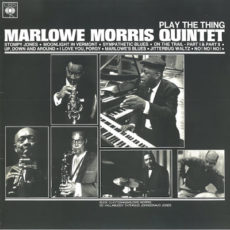
Marlowe Morris, born May 16, 1915 in New York City, New York and learned drums, harmonica, and ukulele as a child. He accompanied June Clark from 1935 to 1937, then played solo for a few years before playing with Coleman Hawkins in 1940–41.
After serving in the Army during World War II, he worked with Toby Browne, Al Sears, Sid Catlett, and Tiny Grimes in addition to leading his own trio in the early and middle 1940s. Marlowe also appeared in the film Jammin’ the Blues in 1944. He quit playing full-time and worked in a post office in the late Forties, then returned in 1949 to play primarily solo organ.
He led a trio in the 1960s with Julian Dash as one of his sidemen, recording for Columbia Records. Morris also recorded with Lester Young, Ben Webster, Big Joe Turner, Sister Rosetta Tharpe, Joe Williams and Jimmy Rushing.
A distant relative of jazz pianist Fats Waller, pianist and Hammond organist Marlowe Morris passed away on May 28, 1978 at the age of 63 in New York City.

More Posts: bandleader,history,instrumental,jazz,music,organ,piano

Daily Dose Of Jazz…
Squire Gersh was born William Girsback on May 13, 1913 in Astoria, Oregon. In the Thirties, he played in San Francisco, California with Lu Watters, Bob Scobey, Turk Murphy, and Mutt Carey. He went on to record with Watters in 1942 and with Murphy multiple times between 1950 and 1966.
Gersh’s agile double bass playing may be heard on Some Of These Days, recorded by Darnell Howard’s Frisco Footwarmers in San Francisco in 1950. He replaced bassist Arvell Shaw and accompanied Louis Armstrong on recording sessions with is All-Stars in “The Edsel Show” on October 13, 1957 and went on a tour of South America with Armstrong between 1956–58.
He then went on to play in Europe with Kid Ory and Red Allen in 1959, along with drummer Alton Redd and pianist Cedric Haywood making up the rhythm section. Never leading his own recordings, little is known about the musician from the Sixties until his death. Tubist and double-bassist Squire Gersh, who played in the traditional jazz genre, passed away on April 27, 1983 in San Francisco.
Daily Dose Of Jazz…
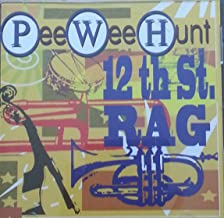
Pee Wee Hunt was born Walter Gerhardt Hunt on May 10, 1907 in Mount Healthy, Ohio. Developing a musical interest at an early age, his mother played the banjo and his father played the violin. The teenager was a banjoist with a local band while he was attending college at Ohio State University where he majored in Electrical Engineering. During his college years, he switched from banjo to trombone. Graduating from the Cincinnati Conservatory of Music, he joined Jean Goldkette’s Orchestra in 1928.
Pee Wee was the co-founder and featured trombonist with the Casa Loma Orchestra, but he left the group in 1943 to work as a Hollywood radio disc jockey before joining the Merchant Marine near the end of World War II. He returned to the West Coast music scene in 1946 and his Twelfth Street Rag became a three million-selling number one hit in 1948.
Hunt was satirized as Pee Wee Runt and his All-Flea Dixieland Band in Tex Avery’s animated MGM cartoon Dixieland Droopy in 1954. His second major hit was Oh! in 1953, his second million-selling disc, which reached number three in the Billboard chart.
Trombonist Pee Wee Hunt passed away after a long illness at age 72, on June 22, 1979 in Plymouth, Massachusetts.
More Posts: bandleader,banjo,history,instrumental,jazz,music,trombone
Daily Dose Of Jazz…
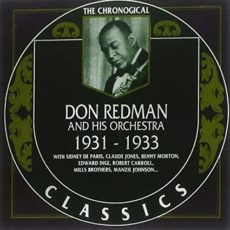
Edward Inge born May 7, 1906 in Kansas City, Missouri and played clarinet from age 12. By 18 he was playing with George Reynolds’s Orchestra, then in the 1920s worked with Dewey Jackson, Art Sims & His Creole Roof Orchestra, and Oscar Young.
In 1930, he became a member of McKinney’s Cotton Pickers, then was offered a spot in Don Redman’s band in 1931, where he played until 1939. From there he replaced Don Byas in Andy Kirk’s band, remaining with Kirk until 1943.
By the mid~1940s Inge became more in demand as an arranger, writing charts for Louis Armstrong, Redman, and Jimmie Lunceford among many others over the course of his career. He led his own band in Cleveland, Ohio in the middle of the 1940s, then worked out of Buffalo, New York in the 1950s and 1960s.
In the 1960s he played with Cecil Johnson, and in the 1970s with C.Q. Price. His recording credits include work with The Mills Brothers, Cab Calloway, and The Boswell Sisters. Clarinetist and arranger Edward Inge passed away on October 8, 1988.
Daily Dose Of Jazz…
Everett Barksdale, born April 28, 1910 in Detroit, Michigan, played bass and banjo before settling on guitar. During early 1930 he moved to Chicago, Illinois where he joined Erskine Tate’s band. He recorded for the first time with violinist Eddie South in 1931, who he remained with until 1939.
A move to New York City saw Everett become a member of the Benny Carter Big Band. Around that same time, he recorded with Sidney Bechet and during the 1940s, he worked for CBS as a session musician.
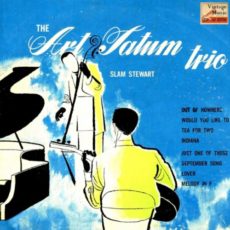
As a sideman, Barksdale played guitar in many genres, working with vocalists Dean Barlow, Maxine Sullivan, the Blenders, and the Clovers. He played on the hit Love Is Strange by Mickey & Sylvia, was the music director for the Ink Spots, and beginning in 1949, he worked with pianist Art Tatum until Tatum died in 1956.
During the Fifties and Sixties, he was part of the ABC house band and played on recordings with a who’s who list of vocalists and musicians not limited to Lena Horne, Sammy Davis Jr., Dinah Washington, Sarah Vaughan, Milt Hinton, Buddy Tate, Chet Baker, Red Allen, Harold Vick, Oscar Brown Jr., J. J. Johnson, Clark Terry, Kai Winding, Louis Armstrong, The Drifters and Ben E. King. He also played guitar in the studio for pop and soul musicians such as.
Guitarist and session musician Everett Barksdale retired from active performance in the 1970s, moved to the West Coast and passed away in Inglewood, California on January 29, 1986.

More Posts: guitar,history,instrumental,jazz,music