

Daily Dose Of Jazz…
Red Wooten was born Lawrence Bernard Wooten on November 5, 1921 in Social Circle, Georgia and started his career playing country & western before moving to big band jazz. While still in his teens, he landed a six-dollar-a-week gig on Archie “Grandpappy” Campbell’s C&W show on radio station WDOD in Chattanooga, Tennessee. The band included future Sons of the Pioneers guitarist Roy Lanham. Texas crooner Gene Austin hired the band and dubbed them the Whippoorwills. He toured with Austin for a time, then quit the band due to exhaustion.
Red went on to play with several successful big bands of the ’40s, including those led by Jan Savitt and Tony Pastor. Beginning in 1949, he played with a succession of prominent swing bandleaders, including Tommy Dorsey, Woody Herman, and Charlie Barnet. In 1957, he recorded with Harry Babasin’s Jazzpickers in a rhythm section that also included Red Norvo. He hooked up with Norvo and recorded and toured with the vibist in 1957-1958.
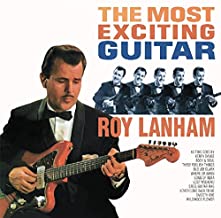
He recorded The Most Exciting Guitar with Lanham in 1959. That year, Wootten also toured with Benny Goodman and Frank Sinatra. With Sinatra, he did movies, TV, and worked the Sands Hotel in Las Vegas. In the ’60s and ’70s, he worked mostly in the studios, composed and arranged for film, and authored a book of musical exercises for bass instruments.
In addition to the aforementioned, Wootten played with Merle Travis, Glen Campbell, Eddie Dean, Mary Ford, Tex Williams, Jimmy Bryant, Joe Maphis, and Roy Rogers, among many others. He also worked on Gene Autry’s Melody Ranch radio show. Returning to country and won an Academy of Country Music Award as Best Bassist in 1982.
By the start of the Seventies, he was less active as a jazz musician and concentrated more on studio work. He also composed and arranged film scores. In the mid-1970s he recorded with Anita O’Day. Double bassist Red Wooten, whose name was sometimes spelled Wootten, at present no date of his transition is available.
More Posts: bass,history,instrumental,jazz,music
Three Wishes
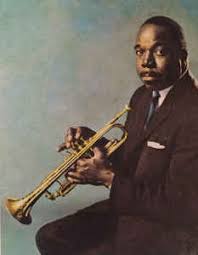
When asked about his three wishes, Thad Jones told the Baroness he would wish for:
- “Health for my family and myself.”
- “An opportuity for my kids.”
- “Peace.”
*Excerpt from Three Wishes: An Intimate Look at Jazz Greats ~ Compiled and Photographed by Pannonica de Koenigswarter

More Posts: baroness,history,instrumental,jazz,music,pannonica,three,trumpet,wishes
Daily Dose Of Jazz…
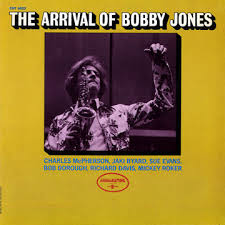
Bobby Jones was born on October 30, 1928 in Louisville, Kentucky and played drums as a child, starting on clarinet at age 8. His father encouraged him to explore jazz and
From 1949 into the mid-1950s he played with Ray McKinley, and then with Hal McIntyre before rejoining McKinley later in the decade. During a stint in the Army, he met Nat and Cannonball Adderley as well as Junior Mance. After getting his discharge, he played country music and rock & roll as a studio musician and did time with Boots Randolph and Glenn Miller before returning again with McKinley from 1959 to 1963.
Briefly playing with Woody Herman and Jack Teagarden in 1963, after the latter’s death, Bobby retired to Louisville and started a local jazz council and taught at Kentucky State College. In 1969 he moved to New York City and from 1970 to 1972 played with Charles Mingus, touring Europe and Japan with him. He also recorded sessions under his own name in 1972 and 1974.
Late in life saw him moving to Munich, Germany, where he ceased performing due to emphysema. Over the course of his career, he only recorded two albums as a leader, 15 as a sideman ~ 8 with Mingus and seven with Bill Cosby, Glen Miller, Woody Herman, Jimmy Raney, Willie Thomas and Bunky Green. Saxophonist Bobby Jones passed away on March 6, 1980 in Munich, Germany.

More Posts: bandleader,history instrumental,jazz,music,saxophone
Daily Dose Of Jazz…
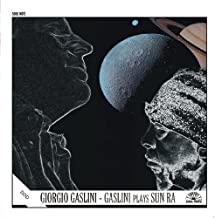
Giorgio Gaslini was born on October 22, 1929 in Milan, Italy and began performing aged 13 and recorded with his jazz trio at 16. In the 1950s and 1960s, Gaslini performed with his own quartet. He was the first Italian musician mentioned as a “new talent” in the Down Beat poll and the first Italian officially invited to the New Orleans Jazz Festival in 1976-77. He collaborated with leading American soloists, such as Anthony Braxton, Steve Lacy, Don Cherry, Roswell Rudd, Max Roach, but also with the Argentinian Gato Barbieri and Frenchman Jean-Luc Ponty.
Adapting the compositions of Albert Ayler and Sun Ra for solo piano, issued on the Soul Note label, he also composed the soundtrack of Michelangelo Antonioni’s La Notte, The Night, in 1961. In the early Seventies, he was the first holder of jazz courses at the Santa Cecilia Academy of Music in Rome.
As to contemporary music, he composed symphonic works, operas and ballets represented at the Scala Theatre in Milan and other Italian theatres. In addition from 1970 to 1977 he scored nine films, including Your Hands On My Body, Cross Current, and Kleinhoff Hotel. From 1991 to 1995, Gaslini composed works for Carlo Actis Dato’s Italian Instabile Orchestra.
Pianist, composer and conductor Giorgio Gaslini passed away on July 29, 2014 at age 84 in Borgo Val di Taro, Parma, Italy, where he had been living for years together with his longtime wife and fourteen dogs and cats.
More Posts: composer,conductor,history,instrumental,jazz,music,piano
Daily Dose Of Jazz…
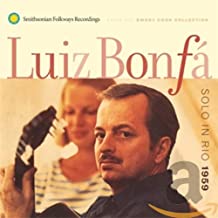
Luiz Floriano Bonfá was born on October 17, 1922 in Rio de Janeiro, Brazil. He studied with Uruguayan classical guitarist Isaías Sávio from the age of 11 and these weekly lessons entailed a long, harsh commute by train, 2 1/2 hours one way and on foot from his family home in Santa Cruz. Given his extraordinary dedication and talent for the guitar, Sávio excused the youngster’s inability to pay for his lessons.
He first gained widespread exposure in Brazil in 1947 when he was featured on Rio’s Rádio Nacional, then an important showcase for up-and-coming talent. In the late 1940s Bonfá was a member of the vocal group Quitandinha Serenaders. Some of his earliest compositions such as Ranchinho de Palha, O Vento Não Sabe, were recorded and performed by Brazilian crooner Dick Farney in the 1950s and his first hit song was De Cigarro em Cigarro recorded by Nora Ney in 1957.
Farney introduced Luiz to Antônio Carlos Jobim and Vinicius de Moraes, the leading songwriting team behind the worldwide explosion of Bossa Nova. He collaborated with them on de Moraes’ anthological play Orfeu da Conceição, which several years later gave origin to Marcel Camus’ film Black Orpheus. For the film he wrote Samba de Orfeu and Manhã de Carnaval, the latter of which Carl Sigman wrote English lyrics and titled the song A Day in the Life of a Fool, which has been among the top ten standards played worldwide, according to The Guinness Book of World Records.
As a composer and performer, Bonfá was at heart an exponent of the bold, lyrical, lushly orchestrated, and emotionally charged samba-canção style that became a highly visible ambassador of Brazilian music in the United States beginning with the famous November 1962 Bossa Nova concert at New York’s Carnegie Hall.
Bonfá worked with American musicians such as Quincy Jones, George Benson, Stan Getz, and Frank Sinatra, recording several albums while in U.S. Also of note is his “The Gentle Rain”, with lyrics by Matt Dubey, and “Sambolero”.
Composer and guitarist Luiz Bonfá, who recorded some five dozen albums, passed away from prostate cancer at 78 in Rio de Janeiro on January 12, 2001.
More Posts: bandleader,composer,guitar,history,instrumental,jazz,music