

Three Wishes
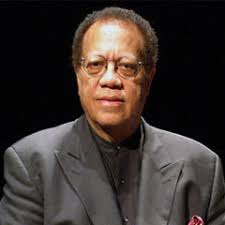
Cedar Walton gave his three wishes to Pannonica and they were:
- “I don’t know how to word this… I’d like to have immediate access to the world, you know? Anywhere I want to go.”
- “To have my own band and to be able to swing no matter what. Playing with Art* demands that.”
- “I wish jazz was accepted like everything else.”

More Posts: adventure,club,genius,jazz,museum,music,preserving,restaurant,travel,voyager
Daily Dose Of Jazz…
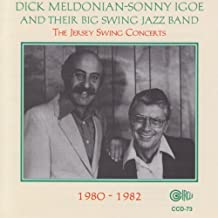
Owen Joseph “Sonny” Igoe was born on October 8, 1923 in Jersey City, New Jersey and grew up in Ridgewood, New Jersey. He attended Ridgewood High School when he got his start after winning a Gene Krupa drumming contest. His playing was initially influenced by Krupa, but he soon drew upon elements of Max Roach and others, which eventually developed into an exuberant and individual style.
From the mid-1940s to 1988, Sonny performed on over 79 recordings with bands and artists, including The Buddy Stewart Quintet, Benny Goodman and His Orchestra, Woody Herman and His Orchestra, Frances Wayne with Neal Hefti and His Orchestra, Rita Moss with the George Williams Orchestra, Charlie Ventura, Tony Bennett, Billy Maxted and His Manhattan Jazz Band, The Chuck Wayne Quintet, The Don Elliott Quintet, Joe Wilder, Phil Napoleon and His Original Memphis Five, Sammy Spear, Pee Wee Erwin, Joe Williams, Marlene Ver Planck, Savina Hartwell, Dick Meldonian, and Doctor Billy Dodd.
In the 1960s, Igoe was a member of the NBC Television Orchestra and then the CBS Television Orchestra, where his credits included The Ed Sullivan Show and The Jackie Gleason Show.
Drummer Sonny Igoe, who toured with the orchestras of Tommy Reed, Les Elgart, Ina Ray Hutton, Benny Goodman, and Woody Herman, passed away on March 28, 2012 in Emerson, New Jersey where he was a longtime resident.

More Posts: bandleader,drums,history,instrumental,jazz,music
Daily Dose Of Jazz…
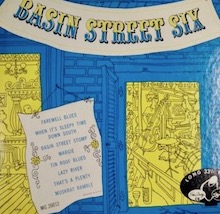
George Girard was born on October 7, 1930 in Jefferson Parish, Louisiana. In high school, he studied music under Johnny Wiggs and became a professional musician immediately after graduating in 1946. He played and toured with the bands of Johnny Archer and Phil Zito before co-founding the band The Basin Street Six, made up mostly of friends he had grown up with, including clarinetist Pete Fountain. The band got a regular gig at L’Enfant’s Restaurant in New Orleans, as well as regular television broadcasts over WWL. The band started receiving favorable national attention, but Girard was dissatisfied with it and broke up the band in 1954.
He found his own band, George Girard & the New Orleans Five which included trombonist Bob Havens, drummer Paul Edwards, and bassist Bob Coquille. He landed a residency at the Famous Door in the French Quarter, recorded for several labels, and got a weekly broadcast on CBS. His ambitions to make a national name for himself and the musical ability to do so fell short of time as he became ill and in 1956 had to give up playing.
Trumpeter George Girard, a member of the Basin Street Six whose technical ability combined Dixieland and big band style trumpet, passed away from colon cancer in New Orleans, Louisiana on January 18, 1957.
More Posts: bandleader,history,instrumental,jazz,music,trumpet
Three Wishes
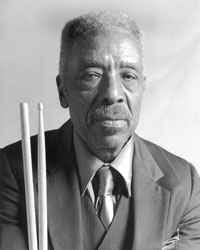
The Baroness inquired of the three wishes that Edgar Bateman would desire and he responded with:
- “To create all the time, master drums, and to make a contribution to drums and music.”
- “To have a loving and truthful wife whom I love.”
- “For everyone to be at peace and be happy.”
*Excerpt from Three Wishes: An Intimate Look at Jazz Greats ~ Compiled and Photographed by Pannonica de Koenigswarter
More Posts: baroness,drums,history,instrumental,jazz,music,pannonica,three,wishes
Daily Dose Of Jazz…
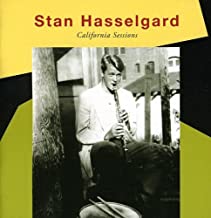
Sten Åke Henry “Stan” Hasselgård was born on October 4, 1922 in Sundsvall, Sweden. His father, John Levin Johansson changed his name to John Hasselgård. Growing up in Bollnäs, Sweden, he began playing clarinet at age 16, attended the University of Uppsala, and played in the Royal Swingers there.
In 1945 he played in a quintet led by Arthur Österwall, and founded a new Royal Swingers group that same year. In 1946-47 he played with Simon Brehm’s sextet alongside pianist Gösta Eriksson, trumpeter Bror Hansson, guitarist Kurt Wärngren, and drummer Bertil Frylmark.
Having achieved international renown, he moved to New York City in 1947, and played on 52nd Street with Jack Teagarden and Max Roach. Under the stage name Stan Hasselgard he made his acclaimed recording of Swedish Pastry. and in 1948 he joined Benny Goodman’s septet, alongside Wardell Gray, Mary Lou Williams and others.
His last recording session took place on November 18th, because five days later he was killed in a car crash. Clarinetist Stan Hasselgard passed away on November 23, 1948 in Decatur, Illinois. He was 26.
More Posts: bandleader,clarinet,history,instrumental,jazz,music