

Daily Dose Of Jazz…
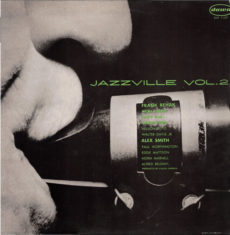
Frank Rehak was born on July 6, 1926, in New York City and started on piano and cello before switching to trombone. He was a member of the Gil Evans band and worked with Miles Davis, appearing with Davis on the broadcast The Sounds of Miles Davis.
As a leader he recorded Jazzville Vol. 2 on the Dawn label but as a sideman he had a prolific career. He recorded with Tony Bennett, Al Cohn, Dizzy Gillespie, Woody Herman, Quincy Jones, Gene Krupa, Hugo Montenegro, Cat Anderson, Ernestine Anderson, Charlie Barnet, Big Maybelle, Art Blakey, Bob Brookmeyer, Ruth Brown, Cándido Camero, Chris Connor, Urbie Green, Johnny Hartman, Michel Legrand, Melba Liston, Mundell Lowe, Teo Macero, Carmen McRae, Red Mitchell, Whitey Mitchell, Blue Mitchell, André Previn, Gerry Mulligan, Kai Winding and the list goes on.
Along with a failed marriage to nightclub dancer Jerri Gray, he also had a heroin addiction, which combined with other financial problems led to his withdrawal from music. With that, he lapsed into relative obscurity.
In an effort to deal with these issues he spent time at Synanon, which led to his mention in Art Pepper’s autobiography. Trombonist Frank Rehak passed away on June 22, 1987 in Badger, California.

More Posts: bandleader,cello,history,instrumental,jazz,music,piano,trombone
Daily Dose Of Jazz…
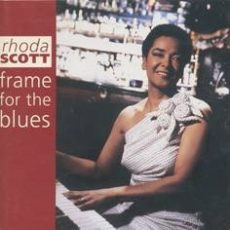
Rhoda Scott was born in Dorothy, New Jersey on July 3, 1938 the daughter of an A.M.E. pastor. She spent most of her childhood in New Jersey, where she learned to play the organ in her father’s churches from the age of seven. Soon she was organist for youth and gospel choirs in her father’s church or in other churches. Later she studied classical piano and focused more on the organ while earning a Masters in Music Theory from the Manhattan School of Music.
During this time, a choir member asked her to be in a small band as a jazz pianist. Accepting under the condition that she play the organ instead of the piano, and overtime on the Hammond organ, she became an outstanding jazz musician. She played the church organ barefoot, and continued this practice earning her the nickname “The Barefoot Lady”. It is considered a role model for many who also play the organ barefoot today. Because of her church training, Scott uses the pedals to play walking bass lines. This leaves her left hand free for more sophisticated chords.
Scott was discovered by Count Basie, who hired her for his club in Harlem, New York. In 1967 she moved to France, where her success was far greater than in the United States. She performed at the Paris Olympia and appeared on stage with many greats such as Ray Charles, George Benson , Ella Fitzgerald, Kenny Clarke and Gilbert Bécaud. In the 1970s she was frequently requested by Joe Thomas, Cees Kranenburg Jr., Bill Elliott, Kenny Clarke, Julie Saury, Sophie Alour, Lisa Cat-Berro, Anne Paceo, Géraldine Laurent, Julien Alour, and Thomas Derouineau.
Her music is a fusion of jazz, gospel, and classical and reflects both her early practice and formal training. Hard bop and soul-jazz organist Rhoda Scott, who has recorded eight albums from 1963 to today, continues to perform and record.
More Posts: bandleader,history,instrumental,jazz,music,organ
Three Wishes
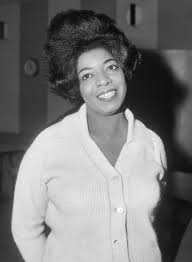
Nica asked Dakota Staton what her three wishes were and she said she only had two and they were:
-
-
“One would be that the hearts of men would change. That they could love one anothe rin peace~live with good in their hearts, so that they can meet their God squarely. That is my main wish. I think if I could have that, that would take care of everything else that I was wanting.”
-
“Freedom! I’d be free. A woman among women!”
-
*Excerpt from Three Wishes: An Intimate Look at Jazz Greats ~ Compiled and Photographed by Pannonica de Koenigswarter

More Posts: baroness,history,instrumental,jazz,music,pannonica,three,vocal,wishes
Daily Dose Of Jazz…
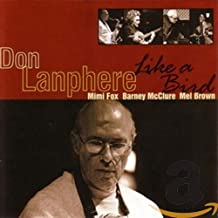
Donald Gale Lanphere was born on June 26, 1928 in Wenatchee, Washington and briefly studied music at Northwestern University in the 1940s, but moved to New York City as a member of Johnny Bothwell’s group and became part of the bebop jazz scene. While in New York, he was in a relationship with Chan Richardson, who later married Charlie Parker and then Phil Woods.
1951 saw Don arrested and charged with heroin possession in New York City. After his release from jail, he worked in his family’s music store in Wenatchee, where he met Midge Hess, whom he married in 1953. By the late 1950s and early 1960s he performed with Herb Pomeroy and with Woody Herman.
Throughout most of the 1960s Lanphere was mostly inactive musically but began performing around the Seattle, Washington area after becoming a born again Christian in 1969, at which time he also stopped using drugs and alcohol. It wasn’t until the 1980s that he would begin recording again and started releasing albums. He toured in New York City and Kansas City in 1983 and a Europe in 1985.
His later years, had Don as a jazz educator in the Pacific Northwest, giving lessons out of his home in Kirkland, Washington. He instructed clinics and small groups, as well as performing at the Bud Shank Jazz Workshop, an annual, week-long summer camp in Port Townsend, Washington for jazz students of all ages. The workshop coincided with the annual Port Townsend Jazz Festival.
He led thirteen recording sessions as well as Fats Nava Jazz Orchestrarro and the Seattle Repertory Jazz Orchestra. Tenor and soprano saxophonist, bandleader, and educator Don Lanphere passed away on October 9, 2003.
More Posts: bandleader,history,instrumental,jazz,music,saxophone
Daily Dose Of Jazz…
Jacques Pelzer was born in Liège, Belgium on June 24, 1924, and got his inspiration from Benny Carter, then Charlie Parker and Lee Koni. His first exposure to jazz was after World War II when he joined the Bob Shots, a legendary Belgian bop band that included at various time pioneers such as Bobby Jaspar, René Thomas, and Sadi. He also played with other historical figures of Belgian jazz such as pianist/arranger Francy Boland, guitar and harmonica player Toots Thielemans, bassist Benoît Quersin. His work with René Thomas continued for several years, leading to several recordings.
Pelzer’s evolution in the Sixties and Seventies included free jazz and fusion, recorded the soundtrack of the film “Le Départ” with Don Chery, Philip Catherine, and Gato Barbieri. He had three tours of the United States with Chet Baker, resulting in a lasting friendship and musical partnership and ultimately met Dexter Gordon, Archie Shepp, Stan Getz, Lee Konitz, Philly Joe Jones and Bill Evans.
The next two decades saw Jacques returning to straight-ahead jazz, acoustic jazz, and bebop standards, modern compositions with an accent on lyricism and expression. Moving back to the studios in 1990 to record his CD Never Let Me Go with his band the Open Sky Unit along with Barney Wilen, Michel Graillier, Eric Legnini as guests. This recording received the Sax Prize for best jazz album of the year 1991.
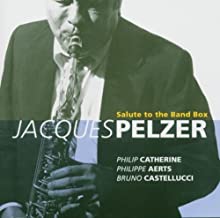
Three magnificent Belgian jazz musicians, guitarist Philip Catherine, bassist Philippe Aerts, and drummer Bruno Castellucci joined for his final album Salute To The Bandbox. Alto and soprano saxophonist and flutist Jacques Pelzer passed away on August 6, 1994 in his hometown.
More Posts: bandleader,history,instrumental,jazz,music