

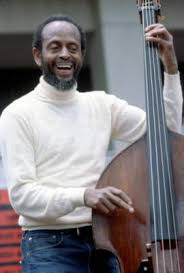
Three Wishes
On the day that Percy Heath was questioned by Pannonica as to what his three wishes would be he said:
-
-
“I would like to be able to travel to another planet.”
-
“To find something to do when I get there.”
-
“To know how to get back again.”
-
*Excerpt from Three Wishes: An Intimate Look at Jazz Greats ~ Compiled and Photographed by Pannonica de Koenigswarter

More Posts: baroness,bass,history,instrumental,jazz,music,pannonica,three,wishes
Daily Dose Of Jazz…
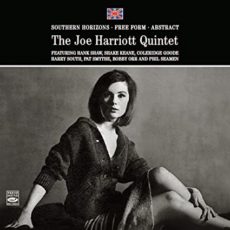
Hank Shaw was born Henry Shalofsky on June 23, 1926 in London, England and played with Teddy Foster’s band during World War II at the age of 15. In the latter half of the decade, he played in London with Oscar Rabin, Frank Weir, and Tommy Sampson, then switched permanently to playing bebop music in 1946 after hearing Dizzy Gillespie.
A visit to the United States in 1947 with close friend and fellow pioneer bebopper alto saxophonist Freddy Syer, preceded their move to Canada after he was unable to secure a work permit. There they played with Oscar Peterson and Maynard Ferguson before returning to England in 1948. He was one of the early Club Eleven players, along with Ronnie Scott, John Dankworth, Lennie Bush, and others. He also played with many of these musicians on the recordings of Alan Dean’s Beboppers.
After Club Eleven shuttered, Shaw played with Vic Lewis and toured Europe with Cab Kaye, then joined Jack Parnell’s ensemble in 1953 and Ronnie Scott’s nonet in 1954. He went on to play regularly both live and as a session musician for many British jazz musicians over the course of the next twenty or so years, working with Joe Harriott, Tony Crombie, Don Rendell, Tony Kinsey, Stan Tracey, Bill Le Sage, and others.
In the Sixties, he led a quartet at the 100 Club and played in the Bebop Preservation Society and the John Burch Quartet for over two decades each. Retiring from music due to ill health in the late 1990s, trumpeter Hank Shaw passed away on October 26, 2006 in Kent, four months past his 80th birthday.

More Posts: history,instrumental,jazz,music,trumpet
Daily Dose Of Jazz…
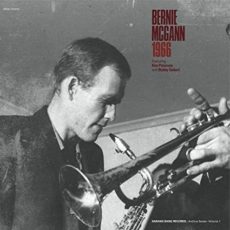
Bernard Francis “Bernie” McGann was born June 22, 1937 in Granville, New South Wales, Australia. He began his career in the late 1950s and remained active as a performer, composer, and recording artist until near the end of his life.
Bernie first came to prominence as part of a loose alliance of modern jazz musicians who performed at the El Rocco Jazz Cellar in Kings Cross, Sydney in the late 1950s and early 1960s. He had an enduring collaboration with drummer John Pochee.
During the 1960s and early 1970s, McGann also performed with rock and pop groups as a session musician. Around 1970 he was a member of the Sydney rock-soul band Southern Comfort.
He led the Bernie McGann Trio and Bernie McGann Quartet through his career. The most well-known lineup of the trio was McGann on alto saxophone, John Pochee on drums, Lloyd Swanton on bass, with the addition of Warwick Alder on trumpet in the quartet.
Alto saxophonist Bernie McGann passed away on September 17, 2013 following complications from heart surgery. He was 76.
More Posts: bandleader,history,instrumental,jazz,music,saxophone
Daily Dose Of Jazz…
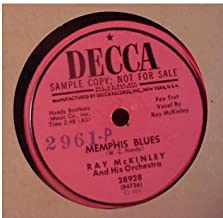
Ray Mckinney was born Raymond Patterson McKinney on June 20, 1931 in Detroit, Michigan. He was the fourth of ten children artistically gifted, and most of the children took music lessons from their mother. Starting on the Ocarina, he soon graduated to the piano, then the cello which he took to the instrument immediately. His father and English teacher encouraged him to write poetry and he became quite proficient.
During his high school years that Ray was first exposed to jazz, hearing Ella Fitzgerald with Chick Webb in 1939, also Erskine Hawkins and Jay McShann when he had Charlie Parker with him. Music in the neighborhood, there were bands made up of youngsters who played homemade instruments, such as, pails, brushes, spoons and it was where Ray learned that he only needed himself to make music.
The band director at Northwestern High School forced him to switch from cello to bass. Academically gifted, he was determined to be heard above the Northwestern band, he developed his technique. His passion for music consumed his time and he quit school in 1947 at age sixteen. He was spending time with like-minded students and other aspiring musicians from his west-side neighborhood, Maurice Wash, Claire Rockamore, Barry Harris, and Frank Foster. It was where he developed stamina, playing twelve, eighteen hours at a time. McKinney and Harris worked local jobs backing a vocal group in which Harris’ wife Christine was a member. This group recorded at least twenty titles for the New Song label in 1950.
Ray became a force to be reckoned with on the competitive Detroit scene and he worked with several Detroit piano stars. Though he liked bassists Alvin Jackson, Clarence Sherrill and Major “Mule” Holley, his major influences were Ray Brown, Oscar Pettiford, Tommy Potter and Dillon “Curly” Russell. He befriended Paul Chambers and his cousin Doug Watkins, because their playing impressed him, especially Paul’s bowing.
In 1956 he moved to New York City with harpist Dorothy Ashby’s group, however, the gig didn’t last long when Ray was fired after punching Ashby’s husband in the face during an argument. He would go on to work with Guy Warren, Barry Harris, Ben Webster, Edmund Hall, Max Roach, Walter Benton, Booker Little, Julian Priester, Coleman Hawkins, Mal Waldron, Eric Dolphy, Red Garland, Yusef Lateef, Andy Bey and spent a year with comic Nipsey Russell’s back-up band.
For a short time he experimented with heroin but by 1973 McKinney was clean and living in Oberlin, Ohio and with a new love interest before settling in San Diego, California in 1974. With not much jazz happening he took up a series of day jobs for the next four years while continuing to create poetry.
His precarious health and his lack of insurance caused his friends concern and made his last years were unsteady. He received a special Lifetime Achievement award during Baker’s Keyboard Lounge 70th anniversary celebration in 2004. It was one of his final public appearances. Bassist Ray McKinney passed away on August 3, 2004, aged 73 in San Diego.
More Posts: bandleader,bass,history,instrumental,jazz,music
Daily Dose Of Jazz…
Rudy Rutherford was born Elmer H. Rutherford on June 18, 1924 in Huachuca City, Arizona. He began performing in the early 1940s with Lionel Hampton and Count Basie. Initially taking Jack Washington’s place in Basie’s orchestra as a baritone saxophonist, once Washington returned from military service, he switched to alto saxophone.
1947 saw Rudy moving to Teddy Buckner’s band, though he continued working with Basie into the early 1950s. He worked with Wilbur De Paris late in the 1950s and appeared with Chuck Berry at the Newport Jazz Festival in 1958. He would record with Dicky Wells, Dinah Washington and Lurlean Hunter.
In the 1960s he worked with Buddy Tate and spent several years with Earl Hines in the mid-1970s. Saxophonist and clarinetist Rudy Rutherford, who worked with Illinois Jacquet in the 1980s and was active in performance until his death, passed away on March 31, 1995 in New York City.
More Posts: clarinet,history,instrumental,jazz,music,saxophone