

Daily Dose Of Jazz…
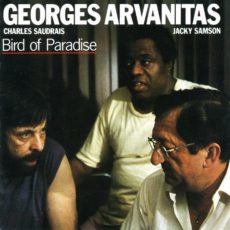
Georges Arvanitas was born on June 13, 1931 in Marseille, France, to Arvanite Greek immigrants from Constantinople, Turkey. At age four he began studying piano and initially trained as a classical pianist. Influenced by Bud Powell and Bill Evans he switched to jazz in his teens.
At 18 he was called up for military duty and finding himself stationed in Versailles and his proximity to Paris, he was exposed to the city’s thriving postwar jazz culture. Soon he was moonlighting at clubs alongside American musicians such as Don Byas and Mezz Mezzrow. After completing his service, Arvanitas relocated permanently to Paris where he led the house band at the Club St. Germain before he graduated to the city’s premier jazz venue, the legendary Blue Note. There he played with Dexter Gordon and Chet Baker. As his notoriety grew, he became a leader and with bassist Doug Watkins and drummer Art Taylor recorded 3 A.M. in 1963. The trio would go on to win the Prix Django Reinhardt and the Prix Jazz Hot for the album.
Georges spent half of 1965 in New York City collaborating with saxophonist Yusef Lateef and trumpeter Ted Curzon on The Blue Thing and the New Thing for Blue Note. A year later he returned stateside on tour with trombonist Slide Hampton’s big band. A respected session player earning the nickname Georges Une Prise (One-take George) for his reliable efficiency and mastery and worked closely with Michel Legrand.
Best remembered for a series of LPs he cut with bassist Jacky Samson and drummer Charles Saudrais, the trio endured from 1965 to 1993. He was received the Chevalier des Arts et des Lettres award in 1985. Unfortunately his failing health forced him to retire from music in 2003 and two year later pianist and organist Georges Arvanitas passed away in Paris on September 25, 2005.

#preserving genius
Daily Dose Of Jazz…
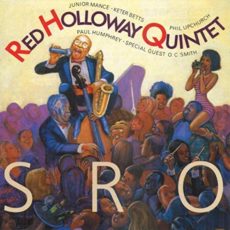
Red Holloway was born James Wesley “Red” Holloway on May 31, 1927 in Helena, Arkansas and started playing banjo and harmonica, switching to tenor saxophone when he was 12 years old. He graduated from DuSable High School] where he had played in the school big band with Johnny Griffin and Eugene Wright. He attended the Conservatory of Music in Chicago, Illinois and then joined the Army when he was 19 and became bandmaster for the U.S. Fifth Army Band.
After completing his military service returned to Chicago and played with Yusef Lateef and Dexter Gordon, among others. In 1948 he joined blues vocalist Roosevelt Sykes, and later played with other rhythm & blues musicians such as Willie Dixon, Junior Parker, and Lloyd Price.
In the 1950s he played in the Chicago area with Billie Holiday, Muddy Waters, Chuck Berry, Ben Webster, Jimmy Rushing, Arthur Prysock, Dakota Staton, Eddie “Cleanhead” Vinson, Wardell Gray, Sonny Rollins, Red Rodney, Lester Young, Joe Williams, Redd Foxx, B.B. King, Bobby Bland, and Aretha Franklin. During this period, he also toured with Sonny Stitt, Memphis Slim and Lionel Hampton. He became a member of the house band for Chance Records in 1952. He subsequently appeared on many recording sessions for the Chicago-based independents Parrot, United and States, and Vee-Jay record labels.
From 1963 to 1966, he was in organist “Brother” Jack McDuff’s band, which also featured a young guitarist, George Benson. In 1974, Holloway recorded The Latest Edition with John Mayall and toured Europe, Japan, Australia and New Zealand. From 1977 to 1982, Holloway worked with Sonny Stitt, recording two albums together, and following Stitt’s death, played and recorded with Clark Terry.
As a leader/co-leader he recorded with Big John Patton, Eric Gale, Shuggie Otis, Horace Parlan, Cedar Walton, Harry “Sweets” Edison, Matthias Bätzel Trio, T.C. Pfeiler, Norman Simmons, Phil Upchurch, O.C. Smith, Plas Johnson, Dr. Lonnie Smith, Melvin Sparks, Sacha Boutros, Henry Johnson, Chris Foreman, Greg Rockingham, Bernhard Pichi Trio
As a sideman he has performed and recorded with Gene Ammons, George Benson, Joe Dukes, Wade Marcus, Joe Williams, Eddie “Cleanhead” Vinson, Carmen McRae, Atle Hammer, Knut Riisnæs, Clark Terry, Freddy Cole, Horace Silver, Junior Mance and Etta James among others.
Saxophonist Red Holloway passed away in Morro Bay, California, aged 84 of a stroke and kidney failure on February 25, 2012, one month after Etta James, with whom he had worked extensively.
Sponsored By


#preserving genius
More Posts: saxophone
Daily Dose Of Jazz…
Harry Beckett was born Harold Winston Beckett on May 30, 1935 in Bridgetown, Saint Michael, Barbados and learned to play music in a Salvation Army band. Moving to the United Kingdom in 1954, he already had an international reputation and in 1961, he played with Charles Mingus in the film All Night Long. The 1960s saw Harry working and recording as a member of bassist and composer Graham Collier. By 1970 he was leading his own groups and recording for Philips, RCA and Ogun Records among other labels.
He was a key figure of important groups in the British free jazz/improvised music scene, including Ian Carr’s Nucleus, the Brotherhood of Breath and The Dedication Orchestra, London Jazz Composers Orchestra, London Improvisers Orchestra, John Surman’s Octet, Django Bates, Ronnie Scott’s Quintet, Kathy Stobart, Charlie Watts, Stan Tracey’s Big Band and Octet, and Elton Dean’s Ninesense.
He has also recorded with Keef Hartley, Jah Wobble, David Sylvian, Barry Guy/The London Jazz Composers’ Orchestra, Oliver Nelson and David Murray. Not limiting himself to jazz , Beckett toured abroad with Johnny Dyani, Chris McGregor, Keith Tippett, John Tchicai, Joachim Kühn, Dudu Pukwana’s Zila, George Gruntz’s Bands, Belgian quintet The Wrong Object, Pierre Dørge’s New Jungle Band and Annie Whitehead’s Robert Wyatt project, Soupsongs, which also featured Phil Manzanera and Julie Tippetts, among other jazz and rock luminaries.
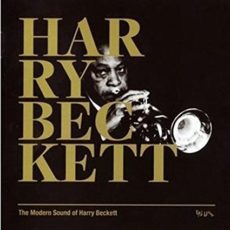
In 1972 he won the Melody Maker Jazz Poll as Top Trumpeter in Britain and was a member of the Orchestre National de Jazz between 1997 and 2000. His dub-oriented album, The Modern Sound of Harry Beckett, was released on On-U Sound in 2008. Trumpeter and flugelhornist and composer Harry Beckett passed away on July 22, 2010 after suffering a stroke.
#preserving genius
More Posts: flugelhorn,trumpet
Daily Dose Of Jazz…
Tricky Lofton was born Lawrence Lofton on May 28, 1930 in Houston, Texas. Not much is documented about him but he studied trombone with Kid Ory and J. J. Johnson.
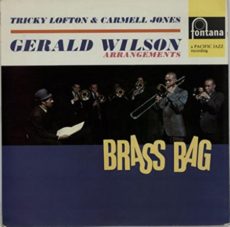
He recorded several recordings with Carmell Jones, Ron Jefferson, Richard “Groove” Holmes, Wayne Henderson, Bobby Hutcherson, Leroy Vinnegar, Frank Strazzeri, Bill Berry’s LA Big Band, Jimmy Cleveland, Les McCann and Ben Webster. He worked with arranger Gerald Wilson and recorded on Pacific Jazz, Fresh Sound Records.
Trombonist Tricky Lofton passed away on December 15, 1993 in San Francisco, California.
Sponsored By

www.whatissuitetabu.com
#preserving genius
More Posts: trombone
Daily Dose Of Jazz…
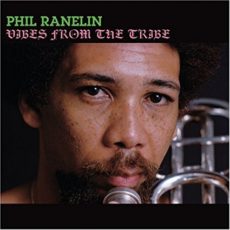
Phil Ranelin was born May 25, 1939 in Indianapolis, Indiana and lived in New York City before moving to Detroit, Michigan in the 1960s. He worked as a session musician on many Motown recordings, including with Stevie Wonder.
In 1971, he and Wendell Harrison formed a group called The Tribe, which was an avant-garde jazz ensemble devoted to black consciousness. Alongside it he co-founded Tribe Records. He released several albums as a leader in the 1970s, and continued with The Tribe project until 1978. Following this, Ranelin worked with Freddie Hubbard, Freddie Redd and the Red Hot Chili Peppers..
Working for the most part locally around Detroit in the following decades, Phil did not find widespread acceptance among jazz aficionados. He did, however, eventually gain the attention of rare groove collectors who became increasingly interested in his work. As a result, Tortoise drummer John McEntire remastered some of his older material and re-released it on Hefty Records. He also recorded on Lifeforce, Wide Hive and Rebirth record labels.
Trombonist Phil Ranelin continues to perform, compose, and record.
Sponsored By

#preserving genius
More Posts: trombone