

Daily Dose Of Jazz…
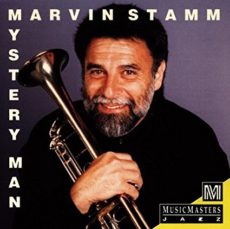
Marvin Stamm was born May 23, 1939 in Memphis, Tennessee and began playing trumpet at age 12. He attended Memphis State University and then went on to matriculate through North Texas State University where he was a member of the One O’Clock Lab Band.
After graduation he played with Stan Kenton’s Mellophonium Orchestra from 1961 to 1963, and then with Woody Herman from 1965 to 1966. For the next six years he performed as a member of the Thad Jones and Mel Lewis Orchestra from until 1972, and went with Benny Goodman from 1974 to 1975.
During the Seventies he began a decades-long career as a prolific studio and session musician, recording with Bill Evans, Quincy Jones, Donald Fagen, Oliver Nelson, Duke Pearson, Wes Montgomery, Freddie Hubbard, Stanley Turrentine, Grover Washington, Jr., Patrick Williams, Michel Legrand, Lena Horne, Frank Foster, Average White Band, Paul Desmond, Frankie Valli, Deodato, Les DeMerle, and George Benson, and played the flugelhorn solo on Uncle Albert/Admiral Halsey by Paul McCartney.
In the 1980s he played with John Lewis’ American Jazz Orchestra, the Bob Mintzer Band, the George Gruntz Concert Jazz Band, Louie Bellson’s Big Band, Maria Schneider’s band and since 2002 the trumpeter has been a member of the Westchester Jazz Orchestra.

#preserving genius
More Posts: trumpet
Daily Dose Of Jazz…
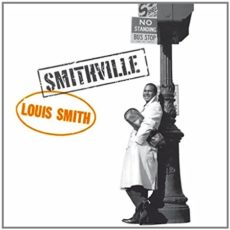
Edward Louis Smith was born May 20, 1931 in Memphis, Tennessee, and while studying at the University of Michigan, he played with visiting musicians such as Dizzy Gillespie, Miles Davis, Thad Jones and Billy Mitchell. He followed this array of musicians by going on to play with Sonny Stitt, Count Basie, Al McKibbon, Cannonball Adderley, Percy Heath, Philly Joe Jones, Lou Donaldson, Donald Byrd, Kenny Dorham and Zoot Sims.
He began his recording career with two albums for Blue Note, the first being Here Comes Louis Smith, originally recorded for the Boston-based Transition Records, featured Cannonball Adderley (then under contract to Mercury) playing under the pseudonym “Buckshot La Funke”, Tommy Flanagan, Duke Jordan, Art Taylor and Doug Watkins.
Smith’s initial music career was brief, opting to become a teacher at the University of Michigan and Ann Arbor’s public school system.He would later recorded for the SteepleChase label. in 2006 Louis suffered a stroke and was seen occasionally enjoying live jazz in the Detroit/Ann Arbor area, but he never returned to performing. He recorded fourteen albums as a leader and recorded Down Home Reunion with his cousin trumpeter Booker Little.
Trumpeter Louis Smith, who recorded both volumes of Blue Lights with Kenny Burrell and Live at Newport ‘58 with Horace Silver, passed away on August 20, 2016, at age 85 in Ann Arbor, Michigan.
Sponsored By


#preserving genius
More Posts: trumpet
Daily Dose Of Jazz…
Mike Zwerin was born May 18, 1930 in New York on May 18, 1930. He studied at the High School of Music and Art and began leading bands in his teens, employing several up-and-coming musicians. At the age of 18, while on summer break from the University of Miami, he was the trombonist in Miles Davis’s nonet at the Royal Roost club in New York. This band was recorded performing the live sessions in 1948 and its music the following year culminated in the album that became immortalized as Birth of the Cool.
He abandoned his musical life for much of the 1950s but after a spell in France he returned to New York in 1958 and played the trombone in several big bands. However, in 1960 after his father’s death, he returned to the world of business and he took over as president of his dad’s company, the Capitol Steel Corporation. Over the next four years Mike kept a hand in jazz, working in John Lewis’s big band Orchestra USA, with whom he recorded and directed a small group. He also worked briefly with pianist Earl Hines but by the mid-1960s he withdrew from the business.
Zwerin moved to London in 1969 and then, in 1972, to Paris, which would be his home for the rest of his life. Nevertheless, he kept his hand in as a trombonist throughout the 1980s, working with his fellow expatriate Hal Singer and with the guitarist Christian Escoudé. In 1988 he toured with the Big Band Charles Mingus, played briefly with t Swiss bandleader George Gruntz and played with the French fusion band Telephone.
As a music critic and columnist he wrote for the Village Voice, Down Beat, Rolling Stone, Penthouse, the International Herald Tribune and Bloomberg News. He authored several books about his own life in the world of jazz, most notably The Silent Sound of Needles, about his struggles with drug addiction, Close Enough for Jazz and The Parisian Jazz Chronicles: An Improvisational Memoir, but his most ambitious book may be La Tristesse de Saint Louis: Swing Under the Nazis that included the story of the Kille Dillers and the Ghetto Swingers, two bands that played in concentration camps, and how jazz survived across Europe though banned by the Nazis and labeled degenerate music.
Throughout his career trombonist and bass trumpeter Mike Zwerin would perform and record with Miles Davis, Maynard Ferguson, John Lewis, Archie Shepp, Claude Thornhill and Bill Russo, arrange, direct and produce an album of Kurt Weill songs with the Sextet of Orchestra U.S.A., before passing away after a long illness on April 2, 2010 in Paris, France at the age of 79.
Sponsored By

#preserving genius
Daily Dose Of Jazz…
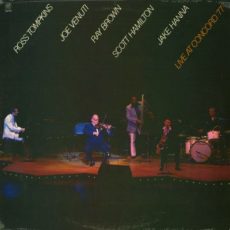
Ross Tompkins was born in Detroit, Michigan on May 13, 1938 and went on to attend the New England Conservatory of Music. This he followed with a move to New York City in 1960 where he worked and recorded with Kai Winding from 1960 to 1967.
During the Sixties he also performed with Eric Dolphy, Wes Montgomery, Bob Brookmeyer & Clark Terry, Benny Goodman, and Bobby Hackett, Al Cohn and Zoot Sims into the Seventies. A move to Los Angeles, California in 1971 found him playing and recording with Louie Bellson, Joe Venuti, and Red Norvo through the 1970s and Jack Sheldon in the 1980s.
He was best known for his longtime association with The Tonight Show Band under the leadership of Doc Severinsen, becoming a member of the band from 1971 until Carson’s retirement in 1992. He recorded for Concord Jazz as a leader in the second half of the 1970s.
He recorded for Concord Records as a leader in the second half of the Seventies decade, and in the eighties and Nineties recorded for Famous Door, Progressive, HD and Arbors record labels, culminating in a dozen albums. As a sideman he recorded 53 albums with J.J. Johnson, Tommy Newsom, Herb Ellis, Snooky Young, Bill Watrous, Joe Newman, Tony Mottola, Howard Roberts, Lorraine FEather, Peanuts Hucko, Red Norvo, Bob Cooper, Harry “Sweets” Edison, Jack Lemmon, Conte Candoli, Polly Podewell and Plas Johnson among others.
Pianist Ross Tompkins passed away of lung cancer at the age of 68 on June 30, 2006.
Sponsored By
Bronze Lens
#preserving genius
More Posts: piano
Daily Dose Of Jazz…
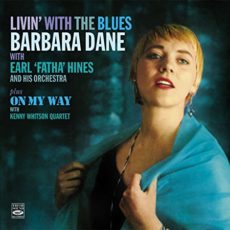
Barbara Dane was born May 12, 1927 in Detroit, Michigan. Out of high school she began singing regularly at demonstrations for racial equality and economic justice and while still in her teens, she sat in with bands around town and won the interest of local music promoters. Getting an offer to tour with Alvino Rey’s band, she turned it down in favor of singing at factory gates and in union halls.
Moving to San Francisco,California in 1949, Dane began raising her own family and singing her folk and topical songs around town as well as on radio and television. When a jazz revival was then shaking the town by the 1950s she became a familiar figure at clubs along the city’s Embarcadero with her own versions of women’s blues and jazz tunes. New Orleans jazz musicians like George Lewis and Kid Ory and locals like Turk Murphy, Burt Bales, Bob Mielke and others regularly invited her onto the bandstand.
Her first professional jazz job was with Turk Murphy at the Tin Angel in 1956. Ebony Magazine did a seven page spread on the alto voiced songstress who would moan of trouble, two-timing men and freedom aided and abetted by some of the oldest names in jazz who helped give birth to the blues, with photos of her performing with Memphis Slim, Willie Dixon, Muddy Waters, Clara Ward, Mama Yancey, Little Brother Montgomery and others.
By 1959 she appeared with Louis Armstrong on the Timex All-Star Jazz Show hosted by Jackie Gleason. She went on to tour the East Coast with Jack Teagarden, appeared in Chicago with Art Hodes, Roosevelt Sykes, Otis Spann and others, played New York with Wilbur De Paris and his band, and appeared on The Tonight Show Starring Johnny Carson as a solo guest artist. She would guest perform on The Steve Allen Show, Bobby Troop’s Stars of Jazz, and Alfred Hitchcock Presents.
In 1961, the singer opened her own club, Sugar Hill: Home of the Blues, on San Francisco’s Broadway in the North Beach district, with the idea of creating a venue for the blues in a tourist district where a wider audience could hear it. There Dane performed regularly with her two most constant musical companions: Kenny “Good News” Whitson on piano and cornet and Wellman Braud, former Ellington bassist.
During the Sixties while working as a solo performer on the coffeehouse circuit Barbara also became an activist in the peace and civil rights movements, touring around the nation and performing at demonstrations and anti-war establishments worldwide and became the first U.S. musician to tour post-revolutionary Cuba.
In 1970 Dane founded Paredon Records with husband Irwin Silber, a label specializing in international protest music. She produced 45 albums, including three of her own, over a 12-year period. The label was later incorporated into Smithsonian-Folkways, a label of the Smithsonian Institution, and is available through their catalog. Arhoolie Records, Tradition Records, Runt Distribution, and DBK Works label have issued a compact discs of her music within the last twenty years. She as well has released her earlier blues and jazz recordings on CD on the Barbara Dane CDs site.
At 90 years old vocalist Barbara Dane has retired from music but has left these accolades in her wake: Jazz critic Leonard Feather wrote “Bessie Smith in stereo,” in the late 1950s, Time Magazine stated “The voice is pure, rich … rare as a 20 karat diamond” and quoted Louis Armstrong’s exclamation upon hearing her at the Pasadena Jazz Festival: “Did you get that chick? She’s a gasser!”
Sponsored By

#preserving genius