

Daily Dose Of Jazz…
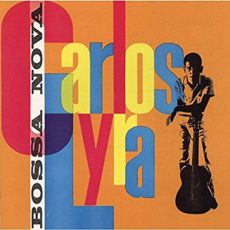
Carlos Lyra was born on May 11, 1939 in Botafogo, Rio de Janeiro, Brazil. His first song to be recorded was Menina (Girl) in 1954, released as a single by Sylvia Telles in 1955, with Foi a noite (It Was The Night)by Antonio Carlos Jobim on the other side of the record. The composers met for the first time because of this single, when Jobim called Lyra, the other side of the record. Both were composing their own music and writing lyrics and created a colloquial and completely new style. Writing about their own experiences and feelings was a completely different lyrical style from most songs written at that time.
His first compositions from 1954 to 1956 included Quando chegares (When you Arrive), Barquinho de Papel (Paper Boat), Ciúme (Jealuosy), Criticando (Criticizing) and Maria Ninguém (Maria Nobody). By 1957 Carlos began collaborating with the lyricist Ronaldo Bôscoli, songs such as Lobo bobo, Saudade fez um samba (Saudade Made A Samba) and Se é tarde me perdoa (If it’s Late Forgive Me).
In 1958 wrote Aruanda and Quem quiser encontrar o amor (Whoever Want To Find Love), with Geraldo Vandré. In 1960 he started to compose together with Vinicius de Moraes, songs as Você e eu (You And Me), Coisa mais linda (Most Beautiful Thing), Sabe você? (Do You Know), Samba do Carioca (Samba From Rio), Maria Moita (Maria Bush) and many others. They wrote together a musical play in 1962 called Pobre Menina Rica (Poor Little Rich Girl Blue).
In 1959 Carlos and Antonio Carlos Jobim, were the first two music composers, together with lyricists Vinicius de Moraes and Ronaldo Boscoli, to be recorded by João Gilberto on his first LP titled Chega de Saudade, (Enough Of Saudade) which was called the first generation of Bossa Nova.
1961 saw Lyra as one of the five founders of Center of Popular Culture aka CPC, where he started to write songs for cinema and theater. He also wrote the song Influência do Jazz (Influence Of Jazz), one of the songs he sang at the Bossa Nova Concert at Carnegie Hall in 1962.
Composer, lyricist, guitarist and vocalist Carlos Lyra, who penned many bossa nova and Música popular brasileira classics, continues to compose, record, and perform today.
Sponsored By


#preserving genius
More Posts: guitar
Daily Dose Of Jazz…
Eddie Preston was born in Dallas, Texas on May 9, 1925 and didn’t begin playing in the big bands until after World War II. From 1955 to 1972 he did stints with Lionel Hampton, Ray Charles, Louis Jordan, Duke Ellington, and Count Basie.
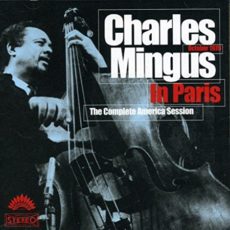
He played with Charles Mingus between 1963 and 1965 and again in 1969–72. During this period in between his working with Mingus, Eddie spent time freelancing with musicians such as Sonny Stitt and Frank Foster. He returned once more to work with Ellington in 1971 and then led a few groups, as well as working with Roland Kirk in 1977 and Archie Shepp in 1979.
Trumpeter Eddie Preston, who never released an album as a leader, passed away on June 22, 2009 in Palm Coast, Florida.

#preserving genius
More Posts: trumpet
Daily Dose Of Jazz…
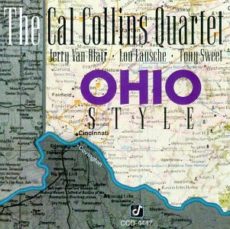
Cal Collins was born on May 5, 1933 in Medora, Indiana and first played the mandolin professionally as a bluegrass musician in the early 1950s. After service in the Army, a move to Cincinnati, Ohio that lasted twenty years, saw him switching to jazz guitar after hearing swing guitarists Charlie Christian, Irving Ashby, and Oscar Moore.
Benny Goodman hired him in 1976 at the age of 43 and he spent three years with the orchestra and then three years making albums for Concord Records. As a sideman, Cal worked with Scott Hamilton, Warren Vache, Rosemary Clooney, Ross Tompkins, Woody Herman, John Bunch, and Marshal Royal.
By the early 1980s, Collins returned to Cincinnati and slowed down his career. He joined the Masters of the Steel String Guitar Tour in 1993 with Jerry Douglas and Doc Watson and recorded his last album in 1998.
Guitarist Cal Collins, who recorded from eleven albums as a leader, passed away of liver failure on August 27, 2001
Sponsored By

#preserving genius
More Posts: guitar
Daily Dose Of Jazz…
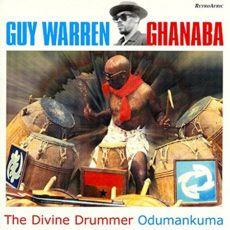
Guy Warren, also known as Kofi Ghanaba was born Warren Gamaliel Kpakpo Akwei in Accra, Ghana on May 4, 1923. Educated at the Government Boys’ School, his interest in music had him playing in the school band. After passing with distinction he enrolled as a student/founder at Ordorgonno Secondary School in 1940 and also joined the Accra Rhythmic Orchestra under Yeboah Mensah as a drummer.
He won a government teacher training scholarship to Achimota College, Accra, in 1941 with the intention of becoming a teacher at his father’s school. By 1943 Warren had enlisted in the Office of Strategic Services, a branch of the United States Army that dealt with overt and covert operations in World War II. Returning to Accra he went on to become a reporter and then held various journalistic positions before beginning to broadcast jazz programmes while working at the Gold Coast Broadcasting Service under the name Guy Warren, which he continued using for the next three decades.
Teaming up with E. T. Mensah and others they formed The Tempos, considered the greatest jazz band in Africa. In 1955 Guy left for Chicago, Illinois to join the Gene Esposito Band as co-leader, percussionist and arranger. With them he recorded his first album, Africa Speaks, America Answers on the Decca label in 1956. And confirmed his reputation as the musician who established the African presence in jazz. During his American stay, he met and worked with Duke Ellington, Max Roach, Charlie Parker, Louis Armstrong and many other leading jazz musicians.
By 1974 he had returned to Ghana, and changed his name to Ghanaba. In the 1990s, he played a role in the film Sankofa, Ghanaba continued to make music until his death. Drummer Guy Warren, pioneer of the African renaissance and author of I Have A Story To Tell that chronicled his sojourn in America, passed away on December 22, 2008.
Sponsored By
#preserving genius
Daily Dose Of Jazz…
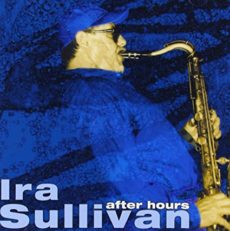
Ira Sullivan was born May 1, 1931 in Washington, D.C. and was taught trumpet by his father, saxophone by his mother and played both in the 1950s Chicago, Illinois with Charlie Parker, Lester Young, Wardell Gray and Roy Eldridge, garnering a reputation as a fearsome bebop soloist. After playing briefly with Art Blakey in 1956, he mastered alto and baritone saxophone before moving south to Florida and out of the spotlight in the early Sixties.
Sullivan was reluctant to travel which limited his opportunities to play with musicians of the first rank, but he continued to play in the Miami area, often in schools and churches. Hanging out with local younger players Jaco Pastorius and Pat Metheny, led to teaching and to broadening of his own musical roots to include the lessons of John Coltrane’s music and elements of jazz rock.
Adding flute and soprano saxophone to his armoury, Ira moved to New York City and in 1980 formed a quintet with legendary bop trumpeter Red Rodney where they worked on new material and fostered young talent to produce some fresh and stimulating music. He and his longtime friend and collaborator jazz pianist and vibraphonist Stu Katz, co-led a multi-night performance with at Joe Segal’s Jazz Showcase in Chicago.
Ira has performed and/or recorded with Red Rodney, Erin McDougald, Rob Block, Art Blakey, Frank Catalano, Kelly Sill, Charles Heath, Eddie Harris, Roland Kirk, Marc Berner, Lin Halliday, J. R. Monterose, Rita Reys and Billy Taylor and numerous others.
Trumpeter, flugelhornist, flautist, saxophonist, and composer Ira Sullivan has recorded as a leader and taught at the Young Musicians Camp each summer at the University of Miami passed away on September 21, 2020, of metastatic pancreatic cancer in his Miami, Florida home at age 89
Sponsored By
Voices From The Community
#preserving genius
More Posts: bandleader,flugelhorn,flute,history,instrumental,jazz,music,saxophone,trumpet