

Daily Dose Of Jazz…
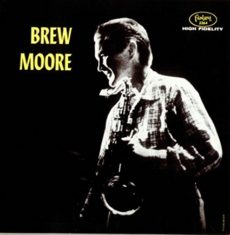
Milton Aubrey “Brew” Moore was born March 26, 1924 in Indianola, Mississippi where his formal musical training began at twelve, first on trombone, and then clarinet before switching to tenor saxophone. Inspired by the style of Lester Young, he even held his horn at the same unorthodox 120 degree angle. He got his first professional experience playing in a Texas territorial band the summer before entering college.
Moore left the University of Mississippi in his first year to pursue a performing career, with stints in New Orleans, Louisiana, Memphis, Tennessee and twice in New York City between 1942-47. It was in New York that he first heard the new music called bebop. Combining Young’s and Charlie Parker’s style he was able to create his own thing. Returning to New York in 1948, he became a fixture on the city’s vibrant jazz scene, cutting his first album Brew Moore and His Playboys as a leader on the Savoy Records label.
He went on to work with Machito’s orchestra, Claude Thornhill’s Big Band, the Kai Winding sextet, Stan Getz and George Wallington among others. In 1949 he joined Getz, Zoot Sims and Al Cohn, three of the four brothers from Woody Herman’s Second Herd plus Allen Eager and recorded the album The Brothers on Prestige Records. The early 50s saw Brew gigging with Bird and other beboppers of note before leaving New York in 1954 for the West Coast, settling eventually in San Francisco, California. Fitting well into the beat generation culture, however by 1959 the heavy drinking that had early on given him his nickname took its toll, and he withdrew from the scene.
Resurfacing in Copenhagen, Denmark, he would, with the exception of three years in New York from 1967 to 1970, continue to perform there for the rest of his life. He teamed with Kenny Drew, Sahib Shihab, Alex Riel and Niels-Henning Ørsted Pedersen among others. Following a trip home to settle his late father’s affairs and coming into a substantial inheritance, he fell down a flight of stairs in Tivoli Gardens after a characteristically bibulous night and suffered the injuries that caused his death. Tenor saxophonist Brew Moore passed away on August 19, 1973.
Sponsored By

www.whatissuitetabu.com

#preserving genius
More Posts: saxophone
Daily Dose Of Jazz…
Larry Gales was born Lawrence Bernard Gales on March 25, 1936 in New York City and began playing bass at age 11. He attended the Manhattan School of Music in the late 1950s. Moving into the early Sixties he worked with J.C. Heard, Eddie “Lockjaw” Davis, Johnny Griffin, Herbie Mann, Junior Mance and Joe Williams.
From 1964 to 1969 Larry was a member of the Thelonious Monk Quartet, and as such, recorded extensively and toured worldwide. After 1969, he relocated to Los Angeles, California where he worked frequently on the local scene with Erroll Garner, Willie Bobo, Red Rodney, Sweets Edison, Benny Carter, Blue Mitchell, Clark Terry, Teddy Edwards, and Kenny Burrell.
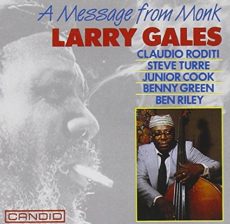
He recorded with Buddy Tate, Bennie Green, Sonny Stitt, Mary Lou Williams, Jimmy Smith, Sonny Criss, Charlie Rouse, Johnny Lytle and Big Joe Turner, among others. His first session as a leader was A Message From Monk, released in 1990 on Candid Records that comprised one original and five Thelonious Monk tunes.
Double-bassist Larry Gales passed away on September 12, 1995 in Sylmar, California at 59 years old.
Discography[edit]
Sponsored By

#preserving genius
More Posts: bass
Daily Dose Of Jazz…
Steve Kuhn was born on March 24, 1938 in Brooklyn, New York City and began studying piano at the age of five. He studied under Boston, Massachusetts piano teacher Margaret Chaloff, mother of jazz baritone saxophonist Serge Chaloff. She taught him the Russian style of piano playing and at an early age he began improvising classical music.
As a teenager Steve appeared in jazz clubs in the Boston area with Coleman Hawkins, Vic Dickenson, Chet Baker, and Serge Chaloff. After graduating from Harvard University, he attended the Lenox School of Music where he became associated with Ornette Coleman, Don Cherry, and Gary McFarland. His professors included Bill Evans, George Russell, Gunther Schuller, and the members of the Modern Jazz Quartet. This experience with some of the most forward-thinking innovators of jazz improvisation and composition culminated with his joining trumpeter Kenny Dorham’s group for an extended time and for a brief time in John Coltrane’s quartet at New York’s Jazz Gallery club.
Kuhn has appeared or recorded with Stan Getz, Art Farmer, Oliver Nelson, Gary McFarland, Art Farmer, Joe Henderson, Scott LaFaro, Harvie Swartz, Pete LaRoca, Sheila Jordan, Billy Drummond, David Finck, and Miroslav Vitous. In 1967 he moved to Stockholm, Sweden where he worked with his own trio throughout Europe until 1971. Moving back to New York City he formed a quartet while continuing to play European gigs and appearing at the Newport Jazz Festival.
Known as an avant-garde pianist in his early career, he was associated with bassist Steve Swallow and drummer Pete La Roca during the Sixties that produced several notable recordings. He was part of the quartet on the landmark recording Sound Pieces led by saxophonist, composer, and arranger Oliver Nelson with bassist Ron Carter and drummer Grady Tate. Among other critically acclaimed recordings there was The October Suite composed by Gary McFarland for Kuhn and an ensemble which included strings, woodwinds, and reeds.
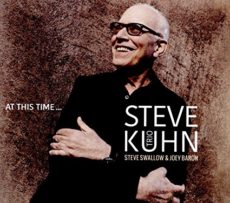
For decades he has led all-star trios that have included such players as bassists Ron Carter and David Finck, and with drummers Al Foster, Jack DeJohnette, and Joey Baron. Pianist Steve Kuhn is the composer of the jazz standard The Saga of Harrison Crabfeathers, has recorded several live albums at New York City jazz clubs and continues to lead a trio and compose.
Sponsored By

#preserving genius
More Posts: piano

Daily Dose Of Jazz…
Fred Anderson was born on March 22, 1929 in Monroe, Louisiana and learned to play the saxophone by himself when he was a teenager. Moving with his family to Evanston, Illinois in the 1940s he studied music formally at the Roy Knapp Conservatory in Chicago, Illinois and had a private teacher for a short time.
He was one of the founders of the Association for the Advancement of Creative Musicians (AACM) and an important member of the musical collective. In the early 1960s Fred formed his own group and performed his original compositions with drummer Vernon Thomas, bassist Bill Fletcher, and his partner for many years, trumpeter Billy Brimfield.
During this period he recorded several notable avant garde albums as a sideman with saxophonist Joseph Jarman, As If It Were the Seasons and Song For which included one of his composition Little Fox Run. By 1972 he put together the Fred Anderson Sextet, with trombonist George Lewis, reedist Douglas Ewart, bassist Felix Blackman, drummer Hamid Drake and Iqua Colson on vocals. Throughout the Seventies he toured Europe, recorded in Austria, and recorded his first record as leader, Another Place in Germany.
He opened the short-lived performance-workshop space Birdhouse in honor of Charlie Parker, and in 1983 took over ownership of the Velvet Lounge in Chicago, which quickly became a center for the city’s jazz and experimental music scenes. The club expanded and relocated in the summer of 2006. Before that, his eclectic Beehive bar in west Chicago was a draw where musicians from around the world drank beer and played, mostly for each other.
Though remaining active as a performer, Anderson rarely recorded for about a decade beginning in the mid-1980s but by the Nineties he resumed a more active recording schedule, both as a solo artist, and as a collaborator with younger performers. He mentored a host of young musicians not limited to Hamid Drake, Harrison Bankhead, David Boykin, Nicole Mitchell, Justin Dillard, Aaron Getsug, Josh Abrams, Fred Jackson, Jr., George Lewis, Karl E. H. Seigfried, Isaiah Sharkey, and Isaiah Spencer.
Chicago avant-garde tenor saxophonist Fred Anderson, who was rooted in the swing and hard bop idioms but incorporated innovations from free jazz, passed away on June 24, 2010.
Sponsored By

#preserving genius
More Posts: saxophone
Daily Dose Of Jazz…
Gene Taylor was born Calvin Eugene Taylor on March 19, 1929 in Toledo, Ohio. Beginning his career in Detroit, Michigan he worked with Horace Silver from 1958 until 1963, then joined the Blue Mitchell Quintet, with whom he recorded and performed until 1965.
From 1966 until 1968, he toured and recorded with Nina Simone, including a Taylor composition she recorded titled Why? (The King of Love is Dead), written following the assassination of Martin Luther King, Jr. He then began teaching music in New York City public schools.
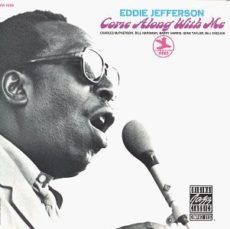
Working with Judy Collins from 1968 until 1976, Gene made numerous television appearances accompanying Simone and Collins. He went on to record with Junior Cook, Barry Harris, Coleman Hawkins, Junior Mance, Eddie Jefferson, Eric Kloss and Duke Pearson.
Double-bassist and songwriter Gene Taylor never led a recording session before passing away on December 22, 2001 in Sarasota, Florida where he had been living since 1990.
Sponsored By
www.whatissuitetabu.com
#preserving genius
More Posts: bass