

Daily Dose Of Jazz…
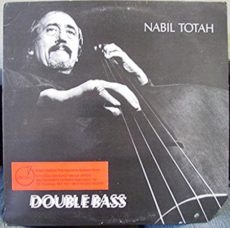
Knobby Totah was born Nabil Marshall Totah on April 5, 1930 in Ramallah, Palestine. He emigrated to the United States in 1944 and began playing the bass in 1953. He first worked in Japan with Toshiko Akiyoshi and Hampton Hawes in 1953 and ‘54, then with Bobby Scott , Johnny Smith and with Charlie Parker, Gene Krupa, Woody Herman and Eddie Costa.
From 1956 he played with Zoot Sims and Al Cohn, with whom he played with until 1959. Around 1957 Knobby performed with Tal Farlow, Bobby Jaspar and George Wallington. From 1958-1961 he worked with Herbie Mann and with Slide Hampton, then with Bobby Hackett, Teddy Wilson, Stephanie Nakasian, Johnnie Ray and with Gene Krupa through the Sixties and in 1973, played on his last album.
Totah recorded two trio albums as a leader in the mid-Eighties and late Nineties, working with Mike Longo and Ray Mosca, in addition to his recording and performing as a sideman.
Double bassist Knobby Totah passed away on June 7, 2012 in York, Pennsylvania.
Sponsored By


#preserving genius
More Posts: bass
Daily Dose Of Jazz…
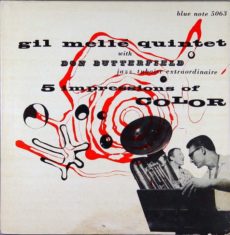
Don Butterfield was born on April 1, 1923 in Centralia, Washington and though he wanted to play trumpet in high school, the band director assigned him to tuba instead. After serving in the U.S. Military from 1942-46 he went on to study the instrument at the Juilliard School.
Butterfield started his professional career in the late 1940s playing for the CBS and NBC radio networks. He played in orchestras, including the American Symphony and on albums by Jackie Gleason until he became a full time member at the Radio City Music Hall.
By the 1950s, Don had switched to jazz, backing such artists as Dizzy Gillespie, Frank Sinatra, Charles Mingus, Rahsaan Roland Kirk, Jimmy Smith, and Moondog. He fronted his own sextet for a 1955 album on Atlantic Records and played the 1958 Newport Jazz Festival.
The mid 1960s saw him taking a temporary, nearly unpaid, position conducting an amateur group of musicians known as the Gloria Concert Band, located in upstate New Jersey. In the Seventies he worked as a session musician playing on recordings for a variety of artists, and on television and film soundtracks, including The Godfather Part II.
As a sideman he recorded with Cannonball Adderley, Nat Adderley, David Amram, Bob Brookmeyer, Kenny Burrell, Donald Byrd, Teddy Charles, Jimmy Cleveland, Bill Evans, Art Farmer, Maynard Ferguson, Dizzy Gillespie, Jimmy Heath, Roland Kirk, John Lewis, Arif Mardin, Gil Mellé, Charles Mingus, Modern Jazz Quartet, James Moody, Wes Montgomery, Lee Morgan, Oliver Nelson, Oscar Peterson, Sonny Rollins, Lalo Schifrin, Jimmy Smith, Billy Taylor, Clark Terry, The Thad Jones / Mel Lewis Orchestra and Stanley Turrentine
Suffering a stroke in 2005 left him unable to no longer play the tuba and on November 27, 2006 tubist Don Butterfield passed away in Clifton, New Jersey from a stroke-related illness.
Sponsored By

Bronze Lens
#preserving genius
More Posts: tuba
Daily Dose Of Jazz…
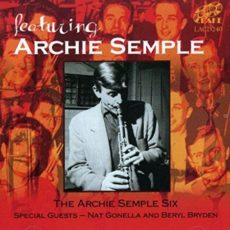
Archie Semple was born Archibald Stuart Nisbet Semple on March 31, 1928 in Edinburgh, Scotland and played locally in Edinburgh at the start of his career, often with his trumpeter brother John.
Semple led several of his own bands before joining Mick Mulligan in 1952. He then worked with Freddy Randall in 1953-54, Roy Crimmins and Alex Welsh from 1955 to 1963, becoming one of Welsh’s most important sidemen.
He recorded as a leader in the late 1950s and early 1960s as well, but retired due to an encroaching drinking problem that led to health issues in the middle of the decade.
A very distinctive player with a rich and quirky musical imagination, Semple was one of the most strikingly individualistic musicians to emerge from the sometimes predictable British trad scene. His presence in the already formidable Welsh band helped to create much memorable music.
Clarinetist Archie Semple, whose influences included Edmond Hall and Pee Wee Russell passed away on January 26, 1974 in London, England.
Sponsored By

#preserving genius
More Posts: clarinet
Daily Dose Of Jazz…
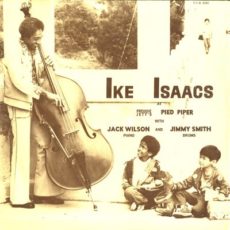
Ike Isaacs was born Charles Isaacs on March 28, 1923 in Akron, Ohio and played trumpet and tuba as a child before settling on bass. Serving in the Army during World War II, he took lessons from Wendell Marshall.
After being discharged Ike played with Tiny Grimes from 1948 to 1950, then with Earl Bostic until 1953, followed by Paul Quinichette in ‘53 and Bennie Green in 1956. He led a band locally in Ohio in 1956, then played for two years in the trio of Carmen McRae, whom he married late in the decade.
Throughout the Sixties Isaacs went on to work and recorded with Lambert, Hendricks and Ross, then with Count Basie, Gloria Lynne, Ray Bryant, Maxine Sullivan, Eddie “Lockjaw” Davis, Harry “Sweets” Edison and Erroll Garner, as well as with his own small groups.
Bassist Ike Isaacs only recorded once as a leader in 1967 for RGB Records. With him on the date were Jack Wilson on piano and Jimmy Smith on drums. He passed away on February 27, 1981.

#preserving genius
More Posts: bass
Daily Dose Of Jazz…
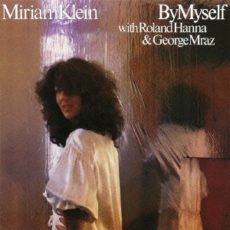
Miriam Klein was born on March 27, 1937 in Basel, Switzerland and after a training at the music school in Vienna, Austria she went back to Switzerland and has been singing since 1963 in groups formed with her husband Oscar Klein. She, however, became famous when she appeared in Paris, France with Pierre Michelot, Don Byas and Art Simmons in the 1950s.
In the 1960s and 1970s she became internationally known as a singer and during this period recorded an album of Bessie Smith tunes. In 1973 the breakthrough came with the album Lady Like dedicated to Billie Holiday. She was accompanied by musicians Roy Eldridge , Dexter Gordon and Slide Hampton. She also recorded a record with Albert Nicholas.
Klein worked with the Fritz Pauer Trio in 1977, with Sir Roland Hanna and George Mraz in 1978 on their album By Myself. At the Frankfurt Jazz Festival 1980 she was accompanied by Hans Kollers International Brass Company. Through 1981/82 she toured with Kenny Clarke, Hanna and Isla Eckinger.
2001 saw Miriam involved in the recording of the album My Marilyn by her son David Klein. Though she fashioned her vocal style after Billie Holiday, she found herself not copying her but singing the way Billie did but in her own way. Vocalist Miriam Klein occasionally continues to perform and record.
Sponsored By

Voices From The Community
#preserving genius
More Posts: vocal