


Daily Dose Of Jazz…
Alvin Owens “Red” Tyler was born on December 5, 1925 and raised in New Orleans, Louisiana. He was known as “Red” because of his light tanned skin.He grew up listening to the city’s marching bands but didn’t begin playing saxophone until after he joined the US Navy in 1945. After his discharge he joined the Grunewald School of Music and by 1949 he started his career by joining the Dave Bartholomew’s R&B band, whose other members included Ernest McLean, Frank Fields, and Earl Palmer.
Red made his recording debut on Fats Domino’s first session at Cosimo Matassa’s studio, when he recorded The Fat Man. He went on to play on recording sessions for Little Richard, Lloyd Price, Aaron Neville, Lee Dorsey, and numerous other rhythm and blues artists, often helping with the songs’ arrangements. In 1955, he began working for Johnny Vincent’s Ace Records as an A&R man, overseeing sessions by Huey “Piano” Smith, Frankie Ford and others. He also recorded an album, Rockin’ and Rollin’, credited to Alvin ‘Red’ Tyler and the Gyros, with a band that included Fields, Allen Toussaint, and James Booker.
Leaving Ace in 1961, Tyler helped Harold Battiste found his AFO (All For One) record label, which had a hit with Barbara George’s I Know in 1962. He then moved to California where he recorded with Sam Cooke, Larry Williams and others, before returning to New Orleans in the mid-1960s. He co-owned Parlo Records, which found success in 1967 with Aaron Neville’s Tell It Like It Is. He is listed as one of three songwriters of the instrumental, Java, originally recorded by Allen Toussaint. Covered by New Orleans trumpet player Al Hirt, it eventually reached the charts in 1964 and peaked at #4.
Though he primarily played R&B during th early part of his career, during this period Red also played jazz in club jam sessions and regarded himself as primarily a jazz musician. From the mid-1960s Red worked as a liquor salesman and began leading his own jazz band, the Gentlemen Of Jazz, in clubs and hotel residencies in New Orleans, and played with other jazz musicians including Ellis Marsalis.
The baritone saxophone had been his primary instrument during his years as a studio musician, but his jazz playing gradually came to rely on the tenor saxophone. He recorded two jazz albums, Graciously and Heritage In the mid-1980s, with vocals by Johnny Adams and Germaine Bazzle, on the Rounder Records label. In 1994, he recorded the album The Ultimate Session with Toussaint, Earl Palmer, Mac Rebennack, and other New Orleans musicians.
Red Tyler passed away at age 72 in New Orleans on April 3, 1998. After his death, the New Orleans Jazz Festival organised a concert in his honor, featuring many New Orleans leading musicians.

Give A Gift Of Jazz – Share

More Posts: saxophone
Daily Dose Of Jazz…
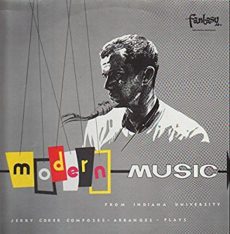
Jerry Coker was born on November 28, 1932 in South Bend, Indiana and picked up the clarinet and tenor saxophone long before going to study at Indiana University.
At the beginning of the 1950s he played tenor saxophone in the Fred Dale Big Band, but in 1953 he interrupted his studies to become a member of the Woody Herman Orchestra. During this time he also played in the Nat Pierce / Dick Collins Nonet and was a part of the formation of The Herdsman with Cy Touff and Ralph Burns in 1954. Jerry followed this musical relationship with joining the septet of Mel Lewis two years later and then with other musicians in the West Coast Jazz movement.
Coker also worked as a freelance musician and led his own bands in the second half of the 1950s. His first recordings made under his own name were recorded in Bloomington, Indiana, San Francisco, California and Paris, France.
The early 1960s saw his return to his studies and by the middle of the decade a return to Indiana University as a lecturer and active in the jazz field. With his educator hat on he headed the Duke Jazz Ensemble at Duke University from 1976 – 77 and later taught at the University of Miami, North Texas State University and the University of Tennessee .
He has written several books on improvisation, jazz keyboard and jazz history. Clarinetist, saxophonist, lecturer and author Jerry Coker continues to perform, record, tour and educate.
Give The Gift Of Knowledge
Daily Dose Of Jazz…
Jack T. Perciful was born on November 26, 1925 in Moscow, Idaho and began playing the piano at the age of seven. During his high school years he was already part of the University of Idaho Jazz Band. From 1943 he served in the military in California, and from 1945 to 1946 in the Army orchestras in Japan.
Returning to the U.S. after his discharge he continued his studies at the University of Idaho, earning a Master in Music Education. After a few years, of giving music lessons, he moved into the music business, initially in Spokane, Washington. 1952 saw Jack in Los Angeles, California playing piano initially working as a studio musician, but also played with Dicky Wells, Ernie Andrews and Charlie Barnet.
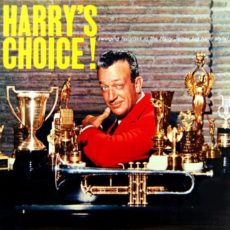
Harry James brought Perciful into his big band in Las Vegas, Nevada as a pianist and arranger, contributing to a total of 25 albums. He toured with the band throughout Europe, Latin America and Japan. As a sideman he appeared in 1970 on the album Two More Tenors: Boots and Corky by Boots Randolph and Corky Corcoran. After 18 years with the James outfit, he moved Olympia, Washington in 1974 and played at one of the local clubs, Tumwater Conservatory, accompanying soloists like Ernestine Anderson, and played with Bert Wilson and other local musicians. 1989 to 1991 he was a member of the Buddy Catlett Trio.
In subsequent years, he was on several albums on the Pony Boy label recording with Lance Buller and Charlie May. Perciful also appeared on the Ed Sullivan and Johnny Carson shows, performed with James in the Jerry Lewis film The Ladies’ Man in 1961 and in 2008 he was inducted into the Seattle Jazz Hall of Fame. Pianist and arranger Jack Perciful, who never recorded as a leader, passed away on March 13, 2008.
Sponsored By

More Posts: piano
Daily Dose Of Jazz…
Mel Wanzo was born Melvin F. Wanzo, November 22, 1930 in Cleveland, Ohio. At the age of twenty-two he served in the 36th Army Band with the Adderley Brothers and Junior Mance during the Korean conflict from 1952-54. After his discharge he returned home and joined Joe Cooper’s All-Stars at the Ebony Lounge, that hosted most of the national acts coming through the city.
By 1956 he was gaining experience playing with Choker Campbell’s band who baked such R&B-oriented singers as Joe Turner and Ruth Brown in the Fifties, after which he worked mainly with big bands. Leaving Campbell, he studied at Cleveland Institute of Music and then joined the studio band at WEWS TV.
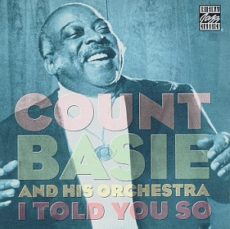
The latter-day big band trombonist played with the Glenn Miller Orchestra under the direction of Ray McKinley from 1966-1968. Woody Herman in the ’60s before joining Count Basie, with whom he worked from 1969-1980. He also recorded with the Capp-Pierce Juggernaut in 1981.
Wanzo rejoined the Basie band after its leader’s death in 1984. He continued with the group during the ’80s and ’90s under leaders Thad Jones, Frank Foster, and Grover Mitchell.
As an educator he was a mentor to the Wayne State University Trombone Ensemble from 1997 to 2002, and the Jazz Lab I Band beginning 2000. For the over forty years he has spent on the road he has performed with Duke Ellington, Ella Fitzgerald, Frank Sinatra and Sarah Vaughan among other jazz luminaries.
Trombonist Mel Wanzo, who has had command performances for the Queen of England, King of Thailand, the President of Finland and has performed at six Grammy Awards retired from the Basie band, moved to Detroit and remained active until his passing away on September 9, 2005.
Sponsored By

Voices From The Community
More Posts: trombone
Daily Dose Of Jazz…
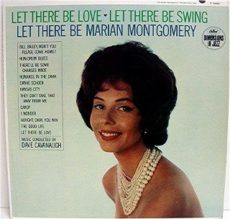
Marion Montgomery was born Marian Maud Runnells on November 17, 1934 in Natchez, Mississippi. She began her career in Atlanta, Georgia working clubs before moving on to Chicago, Illinois where singer Peggy Lee heard her on an audition tape and suggested she should be signed by Capitol Records. From the early to mid-1960 she released three albums for the label. During this early part of her career, she became Marian Montgomery, having previously gone by the nickname of Pepe, and eventually changing her name to Marion.
In 1965, she came to Britain to play a season with John Dankworth and met and married English pianist and musical director Laurie Holloway, thus beginning a long and productive association in which they both became very well known to British audiences. In the Seventies she became the resident singer on the British chat show hosted by Michael Parkinson.
By the 1980s she collaborated a series of concerts and albums with composer and conductor Richard Rodney Bennett. Her recording of the song Maybe the Morning was used by Radio Luxembourg to close out each evening broadcast, and when the station closed its doors.
Her final studio recording was That Lady from Natchez, released in 1999 and continued to perform including a sold-out three weeks at London’s Pizza on the Park two months before her death. Never categorizing herself purely as a jazz singer, rather simply as a singer of various styles who left the world a catalogue of two-dozen albums, vocalist Marion Montgomery passed away on July 22, 2002 in Bray, Berkshire, England after a ten-year battle with lung cancer.
Sponsored By

#preserving genius
More Posts: vocal