

Daily Dose Of Jazz…
Lisle Arthur Atkinson was born on September 16, 1940 in New York City and his mother played piano, his father played bass. He began his music lessons on the violin and later switched to bass, attended the High School of Music and Art and the Manhattan School of Music .
Lisle began his career working with Freddy Cole, from 1959 to 1961. From 1962 to 1966 he accompanied Nina Simone and contributed to several of their albums with such Broadway Blues Ballads . The late Sixties saw him performing alongside Norman Simmons and Al Harewood backing Betty Carter and joined with her in 1970 at the Village Vanguard. He has performed and recorded with Michael Fleming, Milt Hinton, Richard Davis, Ron Carter, Sam Jones and with Bill Lee’s New York Bass Violin Choir.
In the early 1970s he worked with Stanley Turrentine, Wynton Kelly, Billy Taylor, Kenny Burrell, Dakota Staton, Frank Foster, Horace Parlan, Grady Tate, Howard McGhee, Johnny Hartman and Joe Williams.
In 1976 he played with Walt Dickerson and Andrew Cyrille. In the early 1980s he worked with Charles Sullivan, Nancy Wilson, Eddie Harris and played 1985 in the formation of Neo Brass Ensemble. In the second half of the 80s he played with Benny Carter in which Grover Mitchell Big Band, with Lee Konitz and in the quintet of Ernie Wilkins and Joe Newman . In 1995 he worked in a trio with Cyrille and James Newton on Good to Go with a Tribute to Bu.
Since 1971, Atkinson taught in the Jazz Mobile project. He also participated in recordings of Richard Wyands, George Coleman , Helen Humes and Hal Singer. In 1979 he recorded as a leader on Storyville Records album Bass Contrabass with Wyands and Al Harewood. Bassist Lisle Atkinson continued to perform and record until he passed away on March 25, 2019, at the age of 78.
Sponsored By

Voices From The Community

More Posts: bass
Daily Dose Of Jazz…
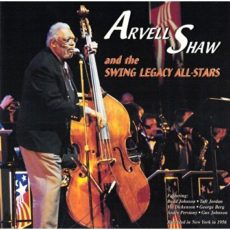
Arvell Shaw was born on September 15, 1923 in St. Louis, Missouri and learned to play tuba in high school, but switched to bass soon after. In 1942 he worked with Fate Marable on the Mississippi riverboats, then served in the Navy from 1942 to 1945.
After his discharge Arvell played with Louis Armstrong’s last big band, from 1945 to 1947. He and Sid Catlettthen joined the Louis Armstrong All-Stars until 1950, when he left to study music. He returned to play with Armstrong from 1952 to 1956, and performed in the 1956 musical High Society.
Following this he worked at CBS with Russ Case, did a stint in the Teddy Wilson Trio, recorded with Red Allen in 1957 and played with Benny Goodman at the 1958 Brussels World’s Fair. After a few years living and performing in Europe, he played again with Goodman on a tour of Central America in 1962. From 1962–64 Shaw played again with Armstrong, and occasionally accompanied him through the end of the 1960s.
After the Sixties he mostly freelanced in New York and kept playing until his death. He recorded only once as a leader, a live concert from 1991 of his Satchmo Legacy Band. Double-bassist Arvell Shaw, who recorded with Armstrong and Wilson, passed away on December 5, 2002 in Roosevelt, New York.

Give A Gift Of Jazz – Share
More Posts: bass
Daily Dose Of Jazz…
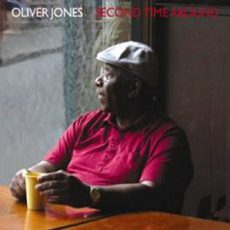
Oliver Jones was born Oliver Theophilus Jones on September 11, 1934 in Little Burgundy, Montreal, Quebec, Canada. He began his career as a pianist at the age of five, studying with Mme Bonner in Little Burgundy’s Union United Church, made famous by Trevor W. Payne’s Montreal Jubilation Gospel Choir. He continued developing his talent through studies with Oscar Peterson’s sister Daisy Peterson Sweeney starting at eight years old. In addition to church, as a child he performed at the Cafe St. Michel, other clubs and theaters in the Montreal area.
He started his early touring in Vermont and Quebec with a band called Bandwagon, and in 1953–63 played mainly in the Montreal area, with tours in Quebec. From 1964 to 1980 Jones was music director for the Jamaican calypso singer Kenny Hamilton, based out of Puerto Rico. By late 1980 he teamed up with Montreal’s Charlie Biddle, working in and around local clubs and became the resident pianist at Charlie’s jazz club Biddles from 1981 to 1986. He recorded his debut album, Live at Biddles in 1983, and was the first record on the Justin Time record label.
By the mid-1980s he was travelling throughout Canada, appearing at festivals, concerts and clubs, either as a solo artist or with the trio of Skip Bey, Bernard Primeau and Archie Alleyne. His travels also took him to Europe during this period, then on to a tour of Nigeria that became the subject of a 1990 National Film Board of Canada documentary, Oliver Jones in Africa.
Oliver is also an educator having taught music at Laurentian University, McGill University and mentored jazz artist Dione Taylor through the Governor General’s Performing Arts Awards Mentorship Program. He was named an Officer of the Order of Canada and has been bestowed the National Order of Québec, with the rank of Chevalier (Knight). He has won a Juno, four Felix awards, voted keyboardist of the year, received the Governor General’s Performing Arts Award and became the second recipient of the Oscar Peterson Award after Oscar himself.
Pianist, composer and bandleader Oliver Jones has recorded twenty-four albums as a leader, worked with Ranee Lee, Herb Ellis, Ray Brown, Clark Terry and Oscar Peterson, among others, and continues to perform and tour.
Take A Dose On The Road
More Posts: piano
Daily Dose Of Jazz…
Norris Turney was born on September 8, 1921 in Wilmington, Ohio. He began his career in the Midwest, playing in territory bands such as the Jeter-Pillars Orchestra. He played with Tiny Bradshaw in Chicago, Illinois before moving to New York City, where he played with the Billy Eckstine Orchestra from 1945 to 1946.
Turney had little luck in New York and returned to Ohio to play in local ensembles through the 1950s. He toured with Ray Charles in 1967, then was hired by Duke Ellington, staying from 1969 to 1973. He was hired to play alto saxophone as an “insurance policy” due to the failing health of Johnny Hodges. He also played tenor saxophone and was the first flute soloist to ever play in Ellington’s orchestra.
Following his tenure with Ellington, he joined the Savoy Sultans, the Newport All-Stars and played in several pit orchestras. By the 1980s, he toured and recorded as a member of the Oliver Jackson Quintet, with Ali Jackson, Irvin Stokes, and Claude Black.
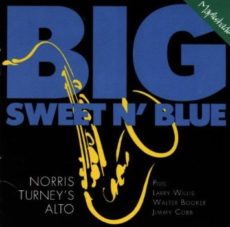
He recorded as a leader between 1975 and 1978, with I Let A Song with Booty Wood, Aaron Bell, Sam Woodyard and Raymond Fol. He released Big, Sweet ‘n Blue in 1993 with Larry Willis, Walter Booker and Jimmy Cobb. As a sideman he recorded with Randy Weston, Oliver Jackson and Red Richards. Flautist and saxophonist Norris Turney passed away of kidney failure on January 17, 2001, Kettering, Ohio.
Put A Dose In Your Pocket
Daily Dose Of Jazz…
Charles Moffett was born on September 6, 1929 in Fort Worth, Texas, and attended I.M. Terrell High School with Ornette Coleman. Before switching to drums, he began his musical career as a trumpeter. At age 13, he played trumpet with Jimmy Witherspoon and later formed a band, the Jam Jivers, with fellow students Coleman and Prince Lasha. After switching to drums, Moffett briefly performed with Little Richard.
Upon discharge from the United States Navy, Charles pursued a short career in boxing before studying music at Huston-Tillotson College in Austin, Texas. In 1953 he began teaching music at a Rosenberg, Texas public school.
1961 saw him moving to New York City to work with Coleman but the saxophonist soon went into a brief retirement period. Moffett worked with Sonny Rollins, recorded with Archie Shepp on the album Four for Trane, and led a group that included Pharoah Sanders and Carla Bley.
Upon Coleman’s return to performing in 1964, he formed a trio with bassist David Izenzon and Moffett,who also performed on vibraphone. He began teaching music again at New York Public Schools as a way to make ends meet when Coleman made only sporadic performances. He then moved to Oakland, California, where he served as the city’s music director, and was later the principal of the alternative Odyssey public school in Berkeley in the mid-1970s.
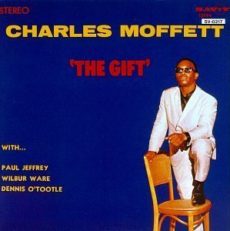
The title of his first solo album as a leader was The Gift, a reference to his love of teaching music. His then 7-year-old son Codaryl played drums on that album. Moffett later returned to Brooklyn, New York and taught at PS 142 Stranahan Junior High School. He would go on to record two more albums as a leader and another 28 as a sideman working with Coleman, Shepp, Eric Dolphy, Harold McNair, Joe McPhee, Charles Tyler Ensemble, Bob Thiele Emergency, Frank Lowe, Ahmed Abdullah, Sonny Simmons, Keshavan Maslak and Kenny Millions.
Free jazz drummer Charles Moffett passed away on February 14, 1997 but left us his legacy in his music and his children, double bassist Charnett Moffett, drummer Codaryl “Cody” Moffett, vocalist Charisse Moffett, trumpeter Mondre Moffett, and saxophonist Charles Moffett, Jr.
Uplift Someone’s World
More Posts: drums