

Daily Dose Of Jazz…
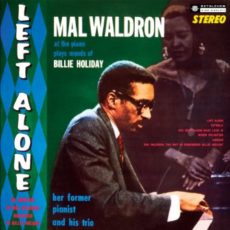
Malcolm Earl Waldron was born on August 16, 1925 in New York City to West Indian immigrants, his father was a mechanical engineer., however they moved out of the city to Jamaica, Long Island when he was four. His parents discouraged his initial interest in jazz, but he was able to maintain it by listening to swing on the radio. He started classical piano lessons around age seven but by 16 he became inspired to play jazz on tenor saxophone after hearing Coleman Hawkins’ 1939 recording of Body and Soul, but unable to afford a tenor he settle for an alto saxophone. He played alto for local bands that performed for dances, bar mitzvahs, Spanish weddings, frequently taking over the pianist’s role when other musicians took their solos.
In 1943 Waldron being called up by the Army was based at West Point, allowing him to listen to the greats of jazz in clubs on 52nd Street. After two years of service he returned as a student to Queens College where he studied under composer Karol Rathaus, making his final decision to switch from saxophone to piano. After college he worked for a short time in rhythm and blues bands, including with Big Nick Nicholas.
In 1950 Mal went on to work with Ike Quebec in New York, made his recording debut with the saxophonist in 1952 and played at Café Society Downtown on Mondays for six or seven months. Over the next couple of years he worked frequently with Charles Mingus, recording on several Mingus albums, including Pithecanthropus Erectus, a key development in the movement towards freer collective improvisation in jazz. He would go on to work with Lucky Millinder and Lucky Thompson, form his own band Idrees Sulieman, Gigi Gryce, Julian Euell, and Arthur Edgehill. This group recorded Waldron’s debut release as a leader, Mal-1, in 1956.
Waldron was Billie Holiday’s regular accompanist from 1957 until her death in 1959, and Introduced by Jackie McLean, he became the house pianist for Prestige Records. Other leaders he worked under at Prestige included Gene Ammons, Kenny Burrell, John Coltrane and Phil Woods. His most famous, Soul Eyes, written for Coltrane, became a widely recorded jazz standard. A prolific composer he has estimated composing more than 400 pieces of music during his time with Prestige.
He went on to perform with Abbey Lincoln, Max Roach, Eric Dolphy and Booker Little, and wrote for is own band, scores for modern ballet, and film scores with his score for The Cool World becoming one of the first attempts to stress improvisation rather than composition in a jazz-based film score. In 1963 Waldron having a major breakdown caused by a heroin overdose causing him to lose the ability to remember his name or play the piano, requiring shock treatments and a spinal tap to bring him back. He had to relearn his skills, in part by listening to his own records. Recovery was a slow process, taking over two years till all his faculties fully returned.
From the mid-1960s on, Waldron lived in Paris, Rome, Bologna and Cologne, before moving permanently to Munich. He scored full-length and short films, for television and Amiri Baraka’s theater production The Slave & Dutchman, and played with Ben Webster and Kenny Clarke. He toured and recorded throughout Europe and Japan, stopping in the U.S. playing solo piano but also with Joe Henderson, Herbie Lewis, Freddie Waits, Charlie Rouse, Calvin Hill and Horacee Arnold and Cameron Brown.
The ‘90s saw Mal recording several albums with vocalist Jeanne Lee. Two of his final recordings were duets with saxophonists David Murray and Archie Shepp. Diagnosed with cancer in 2002 he continued to perform until his death on December 2nd of that year in a hospital in Brussels, due to complications resulting from the cancer. He was 77.

Give The Gift Of Knowledge

More Posts: piano
Daily Dose Of Jazz…
Bruz Freeman was born Eldridge Freeman on August 11, 1921 in Chicago, Illinois. Also known as “Buzz” Freeman with his brothers, guitarist George Freeman and tenor saxophonist Von Freeman, he played for several years in the house band at the Pershing Hotel.
In 1950, he was a member of John Young’s trio with bassist LeRoy Jackson and recorded with Young’s orchestra backing vocalist Lurlean Hunter.
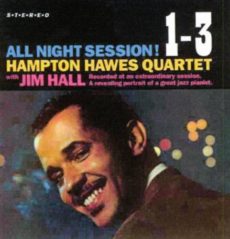
By the mid-1950s, Bruz became a member of the Hampton Hawes Quartet, with Red Mitchell and Jim Hall, and with line-ups led by Herb Geller. In 1950, with his brothers George and Von, LeRoy Jackson, and Chris Anderson, he played with Charlie Parker shortly before his death. This jam session was recorded at Bird’s apartment and was later released in 1960 by Savoy Records.
He went on to record with Clora Bryant in the late Fifties and John Carter, Bobby Bradford, Bob Thiele in the Sixties. Fro 1977-1978 he joined a short-lived band based in California led by Kenny Mann and with Britt Woodman on trombone. Drummer Bruz Freeman never recorded as a leader and passed away on November 21, 2005 at age 84 in Boulder City, Nevada.
Sponsored By

Voices From The Community
More Posts: drums
Daily Dose Of Jazz…
Charles Edward Haden was born on August 6, 1937 in Shenandoah, Iowa into a musical family who performed on the Haden Family radio show. He made his professional debut as a singer on the radio show when he was just two years old. He continued singing with his family until he was 15 but a bulbar form of polio affecting his throat and facial muscles sidelined him but a year earlier he had become interested in jazz after hearing Charlie Parker and Stan Kenton in concert.
Recovering from his bout with polio, Charlie began concentrating on the bass and soon set his sights on moving to Los Angeles, California to pursue his dream of becoming a jazz musician and in 1957 he realized his dream turning down a full scholarship at Oberlin College, which had no established jazz program at the time and attended Westlake College of Music.] His first recordings were made that year with Paul Bley, with whom he worked until 1959. He also played with Art Pepper for four weeks in 1957, and from 1958 to 1959, with Hampton Hawes whom he met through his friendship with bassist Red Mitchell and for a time shared an apartment with the bassist Scott LaFaro.
In May 1959, he recorded his first album with the Ornette Coleman Quartet, the seminal The Shape of Jazz to Come. Later that year, the Ornette Coleman Quartet moved to New York City, secured a six-week residency at the Five Spot Café that would represent the beginnings of free or avant-garde jazz.
By 1960, Haden’s narcotics addiction forced him to leave Coleman’s band, go into rehabilitation in 1963 in California, met his first wife and moved to the Upper West Side of New York City. He resumed his career in 1964, working with John Handy, Denny Zeitlin’s trio, performed with Archie Shepp in California and Europe and freelanced with Henry “Red” Allen, Pee Wee Russell, Attila Zoller, Bobby Timmons, Tony Scott, the Thad Jones/Mel Lewis Orchestra, Roswell Rudd, and returned to Ornette Coleman’s group in 1967.
Charlie went on to work with Keith Jarrett’s trio and his American Quartet, organized the collective Old and New Dreams, which consisted of Don Cherry, Dewey Redman, and Ed Blackwell from Coleman’s band. He founded his first band, the Liberation Music Orchestra at the height of the Vietnam War, working with arranger Carla Bley, exploring free jazz and political music. The original lineup consisted of Haden and Bley and Gato Barbieri, Dewey Redman, Paul Motian, Don Cherry, Andrew Cyrille, Mike Mantler, Roswell Rudd, Bob Northern, Howard Johnson and Sam Brown.
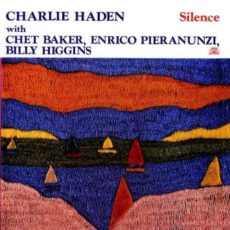
Over the course of his half-century career he established the Jazz Studies Program at California Institute of the Arts in Valencia, been honored as Jazz Educator of the Year and as a leader has won several Grammy Awards, recorded forty-six albums as well as 134 albums as a sideman with Geri Allen, Ray Anderson, Ginger Baker, Bill Frisell, Kenny Barron, Beck, Paul Bley, Jane Ira Bloom, Michael Brecker, Henry Butler, Alice Coltrane, John Coltrane, Robert Downey Jr., Dizzy Gillespie, Jim Hall, Tom Harrell, Joe Henderson, Fred Hersch, Laurence Hobgood, Rickie Lee Jones, Lee Konitz, Brad Mehldau, David Liebman, Abbey Lincoln, Helen Merrill, Pat Metheny, Bheki Mseleku, Yoko Ono, Joe Pass, Enrico Pieranunzi, Joshua Redman, Gonzalo Rubalcaba, John Scofield, Wadada Leo Smith, Ringo Starr and Masahiko Togashi.
Double bassist, bandleader, composer, educator and NEA Jazz Master Charlie Haden, who revolutionized the harmonic concept of bass playing in jazz passed away in Los Angeles, California on July 11, 2014, at the age of 76 after suffering from effects of post-polio syndrome and complications from liver disease.
Take A Dose On The Road
More Posts: bass
Daily Dose Of Jazz…
Roy Crimmins was born on August 2, 1929 in London, England of Irish and English descent. Originally self-taught, he was later mentored by the American bass trombonist Ray Premru of the Philharmonic Orchestra, and Ted Heath’s principal trombonist Don Lusher.
Crimmins turned professional in 1952 when he joined the Mick Mulligan band and over a career spanning 50 years he has played and collaborated with Duke Ellington, Louis Armstrong, Archie Semple, Freddy Randall, Harry Gold and Lennie Hastings to name a few notables.
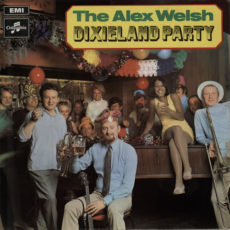
Collaborating with Alex Welsh in 1954, they started their own band and recorded with clarinettist Pee Wee Russell and Wild Bill Davison. The band was active for the following decade until Roy moved to Germany in 1965 where he kept a consistent lineup and a regular group. From 1970 until 1977 he lived in Switzerland again putting together a group using the pseudonym of Roy King and recorded three albums.
During this period he toured Europe extensively, had his own television show in Vienna for five years, and In the late 1970s, Crimmins went back to England and worked once again with Welsh until his death in 1982.
By the mid 1980s, Crimmins was approached by Bob Wilber to join his Benny Goodman and Duke Ellington orchestras, interpreting the original Lawrence Brown, Tricky Sam Nanton and Juan Tizol trombone solos, performing at the Nice and North Sea Jazz Festivals.
He was integral in establishing what is now known as the Red Sea Jazz Festival in Israel, moved to Tel Aviv, started the Israel Jazz Ensemble, and composed a commissioned concerto for Musica Nova that premiered at the Tel Aviv Museum of Art to great acclaim. His music is still broadcasted regularly.
Trombonist, composer and arranger Roy Crimmins, who composed some two dozen original compositions, passed away at the age of 85 on August 27, 2014 in London, England.

More Posts: trombone
Daily Dose Of Jazz…
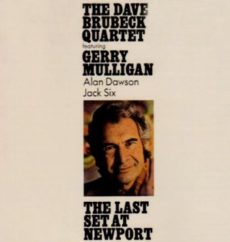
Jack Six was born on July 26, 1930 in Danville, Illinois. He studied trumpet between 1945-1947 and worked in Chicago, Los Angeles and New York City where he spent a year studying composition at the Juilliard School in 1955.
As a bassist he played in the Tommy Dorsey Ghost Band led by Warren Covington, then in the big bands of Claude Thornhill and Woody Herman while he continued his studies. He spent several years in groups led by Herbie Mann and also Don Elliott . From 1968 to 1974 he was a part of the Dave Brubeck Trio with drummer Alan Dawson and this tenure Jack followed with Jim Hall.
After a few years in television shows and the musical director of a hotel band from 1989-1998, Six returned to work with Brubeck on tour. Over the course of a forty year career he recorded some 77 jazz sessions with Maxwell Davis,Tal Farlow, Jack Reilly, Dave Pike, Marlene Verplanck, Gerry Mulligan, Susannah McCorkle, Dick Meldonian, Johnny Rae’s Afro-Jazz Septet, Marco Di Marco and Marty Grosz among numerous others.
Bassist Jack Six, a consummate sideman who never led his own recording session, passed away on February 24, 2015.
Dose A Day-Blues Away
#preserving genius
More Posts: bass