

Daily Dose Of Jazz…
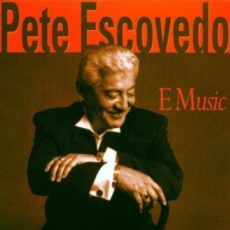
Peter Michael Escovedo was born on July 13, 1935 in Pittsburg, California of Mexican heritage. With his two brothers, he formed the Escovedo Brothers Latin Jazz Sextet, before Santana hired him and his brother Coke to play in his band.
Long well known on the San Francisco Bay Area music scene for several decades, in 2002 Pete made a notable national television appearance on the “By the Hand of the Father” episode of the PBS Austin City Limits program. He would go on to lead the 14-24 piece Latin big band Azteca.
Escovedo, along with his sons Juan and Peter Michael recorded with Latin Rock group El Chicano and their 3 piece percussion is featured on the studio album.
Percussionist Pete Escovedo has recorded eleven albums as a leader for Concords Jazz, Crossover and Picante labels, Fantasy and EsGo/Fantasy. He continues to tour, perform and record Latin Jazz at 80 years old.
Sponsored By

More Posts: percussion
Daily Dose Of Jazz…
Edward Lee Morgan was born on July 10, 1938 in Philadelphia, Pennsylvania, the youngest of Otto Ricardo and Nettie Beatrice Morgan’s four children. Originally interested in the vibraphone, he soon showed a growing enthusiasm for the trumpet and at thirteen his sister gave him his first trumpet, but he also knew how to play the alto saxophone. His primary stylistic influence was Clifford Brown, with whom he took a few lessons as a teenager.
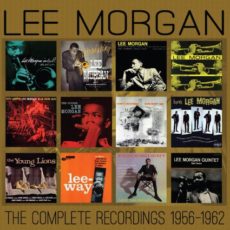
He joined the Dizzy Gillespie Big Band at 18, and remained for a year and a half, until Dizzy to disband the unit in 1958. Lee began recording for Blue Note Records in 1956, eventually recording 25 albums as a leader for the label, with more than 250 musicians. He also recorded on the Vee-Jay label and one album for Riverside Records on its short-lived Jazzland subsidiary.
He was a featured sideman on several early Hank Mobley records, as well as on John Coltrane’s Blue Train, joining Art Blakey’s Jazz Messengers in 1958 further developed his talent as a soloist and composer. When Benny Golson left the Jazz Messengers, Morgan persuaded Blakey to hire tenor saxophonist Wayne Shorter to fill the chair. This version of the Jazz Messengers, including pianist Bobby Timmons and bassist Jymie Merritt, recorded the classic The Freedom Rider album. However, in 1961 the drug problems of Morgan and Timmons forced them to leave the band.
Returning to New York City two years later he recorded The Sidewinder which became his greatest commercial success and was the background theme for Chrysler television commercials during the 1963 World Series. Due to the crossover success of the album’s boogaloo beat, Morgan repeated the formula several times with compositions such as Cornbread and Yes I Can, No You Can’t.
He would go on to record a string of more than twenty albums as a leader and perform and record as a sideman with Shorter, Grachan Moncur III, Stanley Turrentine, Freddie Hubbard, Joe Henderson, McCoy Tyner, Lonnie Smith, Elvin Jones, Jack Wilson, Reuben Wilson, Larry Young, Clifford Jordan, Andrew Hill, as well as on several albums with Art Blakey and the Jazz Messengers. Together with John Gilmore, this lineup was filmed by the BBC for seminal jazz television program Jazz 625.
He became more politically involved in the last two years of his life, becoming one of the leaders of the Jazz and People’s Movement. The group demonstrated during the taping of talk and variety shows during 1970-71 to protest the lack of jazz artists as guest performers and members of the programs’ bands. His working band during those last years featured reed players Billy Harper or Bennie Maupin, pianist Harold Mabern, bassist Jymie Merritt and drummers Mickey Roker or Freddie Waits and were featured on the three-disc, Live at the Lighthouse, recorded during a two-week engagement at the Hermosa Beach, California club in 1970.
Hard bop trumpeter and composer Lee Morgan passed away in the early hours of February 19, 1972 at Slug’s Saloon in the East Village of New York City. Following an altercation between sets, Morgan’s common-law wife Helen More shot him and though not immediately fatal, he bled to death, due to a heavy snowfall and the ambulance’s lengthy arrival time. He was 33 years old.

Uplift Someone’s World
More Posts: trumpet
Daily Dose Of Jazz…
Roy Babbington was born July 8, 1940 in Kempston, Bedfordshire, England. He started his musical career in 1958, playing double bass in local jazz bands and at the age of 17 he took up the post of double bass, doubling on electric guitar with The Leslie Thorp Orchestra at the Aberdeen Beach Ballroom. While there he honed his sight reading skills and after a move to London in 1969, he joined the band Delivery, one of the side roots of the Canterbury scene with Phil Miller, Pip Pyle and Lol Coxhill.
Babbington began to work as a session musician with jazz/fusion musicians like Michael Gibbs and The Keith Tippett Group with Elton Dean. He was part of the recording session on their album Dedicated To You But You Weren’t Listening in 1970, Tippett’s big band project Centipede in ‘71 and Dean’s album Just Us. Post Delivery in 1971 after Carol Grimes’ album Fools Meeting, he joined the group Nucleus.
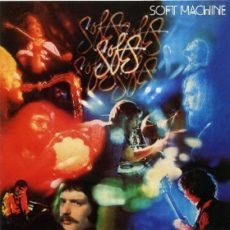
He would go on to perform and record with Alexis Korner, Harvey Andrews, Mike d’Abo, Chris Spedding and as a part time member of the bands Schunge, Solid Gold Cadillac, Ovary Lodge and Soft Machine. Remaining active on the UK jazz scene he played with Barbara Thompson’s Paraphernalia, Intercontinental Express, various bands led by pianist Stan Tracey and sat in on the album session Welcome to the Cruise by Judie Tzuke.
By the 1980s and 90s, Roy returned to his roots playing the double bass and pure jazz, so much, he became affectionately known by the musical community as the Jazz Handbrake. He also worked with Elvis Costello, Carol Grimes, Mose Allison and the BBC Big Band. Since 2008, bassist Roy Babbington, who has played big band and fusion jazz, continues to perform with Soft Machine Legacy, replacing Hugh Hopper as their electric bassist in 2009.
Sponsored By
Voices From The Community
More Posts: bass
Daily Dose Of Jazz…
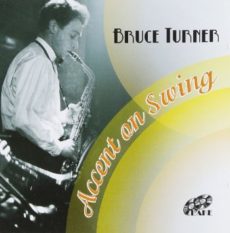
Bruce Turner was born Malcolm Bruce Turner on July 5, 1922 in Saltburn, England. Educated at Dulwich College, he learned to play the clarinet as a schoolboy and began playing alto sax while serving in the Royal Air Force in 1943 during World War II. He played with Freddy Randall from 1948–53, and worked on the Queen Mary in a dance band and in a quartet with Dill Jones and Peter Ind.
He briefly studied under Lee Konitz in New York City in 1950 then joined Humphrey Lyttelton’s outfit from 1953 to 1957. After leaving Lyttelton he led his own Jump Band from 1957–65 and was featured and arranged the music in the 1961 film Living Jazz. In 1961, Turner and his band recorded the LP Jumpin’ At The NFT (National Film Theatre) coinciding with the film’s release. Two years later he took part in the largest trad jazz event to be staged in Britain with George Melly, Diz Disley, Acker Bilk, Chris Barber, Kenny Ball, Ken Colyer, Monty Sunshine, Bob Wallis, Alex Welsh and Mick Mulligan.
He returned to work with Randall from 1964–66, and played with Don Byas in 1966 and Acker Bilk from 1966 to 1970. He continued to work with Lyttelton and Ind in the 1960s, 1970s and 1980s, and played with the Jump Band every so often. He worked with Wally Fawkes, John Chilton, Stan Greig, Alex Welsh, and Dave Green through the Seventies. He led his own small ensembles in the 1990s, up until his death.
He was noted for his very quiet voice and his autobiography Hot Air, Cool Music was published in 1984. He also wrote a column on jazz for the Daily Worker. Saxophonist, clarinetist, and bandleader Bruce Turner passed away on November 28, 1993 in Newport Pagnell.
Sponsored By

www.whatissuitetabu.com
Daily Dose Of Jazz…
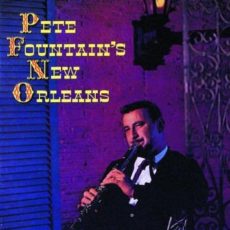
Pete Fountain was born Pierre Dewey LaFontaine, Jr. in a Creole cottage style frame house on July 3, 1930 in New Orleans, Louisiana. His father later changed his name to Peter and added Junior. He started playing clarinet as a child due to suffering from weakened lungs from a respiratory infection. Choosing the clarinet, his lungs became strengthened after receiving a doctor’s advice to play an instrument that he would have to blow into.
He took private lessons but also learned to play jazz by playing along with phonograph records of first Benny Goodman and then Irving Fazola. Early on he played with the bands of Monk Hazel and Al Hirt. Fountain founded The Basin Street Six in 1950 with his longtime friend, trumpeter George Girard . Four years later the band broke up and he was hired to join the Lawrence Welk orchestra and became well known for his many solos on the television show, The Lawrence Welk Show.
Post Welk, Pete was hired by Decca Records A&R head Charles “Bud” Dant and went on to produce 42 hit albums with Dant. He returned to New Orleans, played with The Dukes of Dixieland, then began leading bands under his own name. On the Sixties and Seventies he owned his own club in the French Quarter and later acquired Pete Fountain’s Jazz Club at the Riverside Hilton. He would lead a quintet comprised of bassist Don Bagley, vibist Godfrey Hirsch, pianist Merle Koch, and double bass drummer Jack Sperling. He played the Hollywood Bowl and appeared on The Tonight Show Starring Johnny Carson 56 times.
Over the course of his career his club would host Cliff Arquette, Jonathan Winters, Frank Sinatra, Phil Harris, Carol Lawrence, Robert Goulet, Keely Smith, Robert Mitchum, Brenda Lee, among many others. He would play and/or record with Oliver “Sticks” Felix, John Probst, Paul Guma, Godfrey Hirsch, Jack Sperling, Don Bagley, Morty Corb, Godfrey Hirch, Merle Kock, Stan Wrightsman and Al Hirt, who had a club down the street. He performed his last show at the Hollywood Casino in 2010.
He is a founder and the most prominent member of the Half-Fast Walking Club, one of the best known marching Krewes that parade in New Orleans on Mardi Gras Day. He has been honored with induction into the Louisiana Music Hall of Fame, given a star on the Delta Music Museum Walk of Fame, and received an honorary degree from Loyola University New Orleans. Clarinetist Pete Fountain, who played jazz, Dixieland, pop jazz, honky-tonk jazz, pop, and Creole music, passed away in his hometown on August 6, 2016 from heart failure at the age of 86.
Take A Dose On The Road
More Posts: clarinet