

Daily Dose Of Jazz…
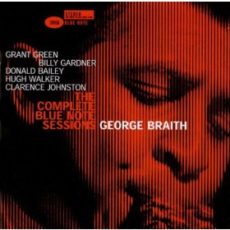
George Braith was born George Braithwaite on June 26, 1939 in New York City. Picking up the baritone saxophone in the seventh grade, by his teen years he had his union card. playing with the thirteen-piece Dickens LaRoca band. He would later become a leader in his own right, sharing the bill with musicians like Bud Powell, Roy Ayers and Freddie Hubbard.
His epiphany about the double-horn came in the early 1960s when one night in Harlem, while playing at the Purple Manor, Roland Kirk hit the stage blowing multiple instruments at once and blew George off the stage. They quickly became friends, though the relationship became a little more competitive when George was signed by Blue Note Records.
Known for playing multiple horns at once, a technique pioneered by Rahsaan Roland Kirk, in 1976 Braith invented the Braithophone, two different horns, straight alto and soprano mended together by extensions, valves and connections. He took his invention to Central Park and later to Broadway and 50th Street, where he perfected the sound and attracted crowds. It has become a mainstay for the soul-jazz saxophonist who continues to feature the instrument in performances at various jazz clubs in town, as well as on recordings he produces on his own label, Excellence Records.

Give A Gift Of Jazz – Share

More Posts: saxophone
Daily Dose Of Jazz…
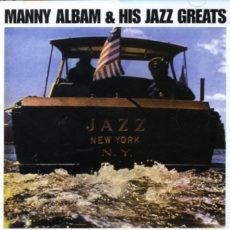
Manny Albam was born on June 24, 1922 in Samana, Dominican Republic. Growing up in New York City he became interested in jazz after hearing Bix Beiderbecke and at sixteen dropped out of school to play for Dixieland trumpeter-leader Muggsy Spanier, but it was his membership in a group led by Georgie Auld that turned his career around.
While playing with Auld group, saxophonist Budd Johnson mentored Albam as an arranger. By 1950, Albam put down his baritone sax and began to concentrate strictly on arranging, writing, and leading. Within a few years, he became known for a bebop-oriented style that emphasised taut and witty writing with a flair for distinctive shadings. Flute-led reed sections became his trademark.
He became known for his work for bandleaders Charlie Barnet and Charlie Spivak, before moving forward to collaborate with Count Basie, Stan Getz, Bob Brookmeyer, Coleman Hawkins, Dizzy Gillespie, Freddie Hubbard, Hank Jones, Mel Lewis, Art Farmer, Urbie Green, and Milt Hinton, among others.
Manny found an entree into the classical music world when he arranged Leonard Bernstein’s score for West Side Story in 1957. Bernstein was said to have been so impressed that he invited him to write for the New York Philharmonic, and, in due course, write such works as Concerto for Trombone and Strings, became musical director for United Artists-Solid State Records, composed the score for a few films and television programs, and recording the albums The Blues is Everybody’s Business, The Drum Suite, The Jazz Workshop, Jazz New York, Something New, Something Blue and his jazz suite The Soul of the City.
As an educator Manny started teaching summer workshops at the Eastman School of Music in Rochester, New York in 1964. He later joined the faculties of Glassboro State College in New Jersey and the Manhattan School of Music in New York. By 1988 he helped establish the BMI Jazz Composer’s Workshop to foster young composers and arrangers. In 1991 he eventually took over as director from Bob Brookmeyer and has as long list of former students throughout the music industry and in higher education, a pursuit he continued until his death.
Baritone saxophonist,composer,arranger, producer and educator Manny Albam passed away of cancer on October 2, 2001 in Croton-on-Hudson, New York.
Sponsored By

www.whatissuitetabu.com
More Posts: saxophone

Daily Dose Of Jazz…
Donald Dean was born on June 21, 1937. ) He attended the University of Kansas, studying drums and Music Therapy, and playing snare drums in the marching band. He also played tympani, marimba, bells and snare drum in the university’s Symphony Orchestra. While matriculating, he played in a quartet with Nathan Davis on reeds, Elaine Brown Davis on piano, and trumpeter Carmel Jones.
His most famous recording was with Les McCann, Leroy Vinegar and Eddie Harris on the soul jazz album Swiss Movement, recorded live on June 21, 1969 at The Montreux Jazz Festival. He would go on to record a total of eight albums with McCann including Second Movement and Layers. Dean appeared as a jazz musician in the Tom Cruise/Jamie Foxx movie Collateral, has worked with Kenny Dorham, Jimmy Smith, George Gilliam, Carmel Jones and harold Land to name a few.
The Los Angeles Jazz Institute houses The Donald Dean Collection that includes reel to reel tapes of Sunday sessions at The Lighthouse that he recorded between 1952 and 1955. The collection also features over 700,000 photographic prints and negatives documenting both the southern and northern California scene from the mid 1960s through the late 1990s.
He has recorded on the Atlantic, Verve, Fresh Sound and Posi-Tone record labels, releasing two albums as a leader or co-leader. Drummer Donald Dean continues to perform at the age of 79 leading his own quartets and quintets.
Sponsored By

More Posts: drums
Daily Dose Of Jazz…
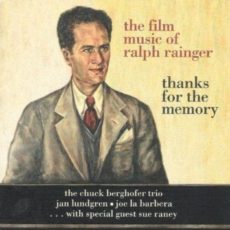
Chuck Berghofer was born Charles Curtis Berghofer on June 14, 1937 in Denver, Colorado. His interest in music began early coming from his grandfather who played with John Philip Sousa and his uncle who played tuba with the St. Louis Symphony. At eight he played trum and tuba in grade school until settling on the bass at the age of eighteen.
As a young adult he began venturing out to jazz clubs, gained an admiration to Ralph Peña and convinced him to take him on as a student. Berghofer played in high school trumpet and tuba and moved at eighteen to the double bass. Heavily influenced by Leroy Vinnegar, Paul Chambers and Ray Brown, he also admired the work of Scott LaFaro.
He went on to play with the Skinnay Ennis Orchestra, then joined Bobby Troup, Pete Jolly, Nick Martinis, Shelly Manne, Jack Sheldon, Conte Candoli, Frank Rosolino, Rahsaan Roland Kirk, Philly Joe Jones and was a member of the Abnuceals Emuukha Electric Symphony Orchestra.
He had a lengthy career in film, Berghofer, was also quite accomplished as a house jazz musician forming a semi-regular house band at Donte’s in Los Angeles with pianist Frank Strazzeri and drummer Nick Ceroli. They played with Roger Kellaway, Larry Bunker, Zoot Sims, Ray Charles, Bob Cooper, Ella Fitzgerald, Stan Getz, Peggy Lee, Shelly Manne, Gerry Mulligan, Art Pepper, Frank Rosolino, Carmen McRae, Seth MacFarlane, Barbra Streisand, Glen Campbell, Mel Torme and Frank Sinatra. Double bassist Chuck Berghofer continues to perform and record.
Inspire A Young Mind
More Posts: bass
Daily Dose Of Jazz…
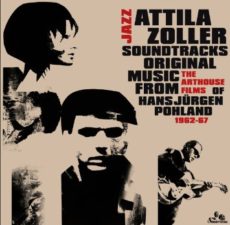
Attila Cornelius Zoller was born on June 13, 1927 in Visegrád, Hungary and as a child was taught classical violin by his father, who was a professional violinist. By his teens, he switched to flugelhorn, then bass, and finally guitar.
Quitting school during the Russian occupation of Hungary following World War II, Attila began playing professionally in Budapest jazz clubs. He escaped Hungary in 1948 just before the permanent Soviet blockade of the country and began his serious music career after moving to Vienna in 1948. He formed a jazz group with accordionist and vibraphonist Vera Auer.
In 1954 Zoller left Austria for Germany in 1954, where he played with pianist Jutta Hipp, saxophonist Hans Koller and trombonist Albert Mangelsdorff. He was encouraged by Oscar Pettiford and Lee Konitz to move to America and did so in 1959 after winning a scholarship to the Lenox School of Jazz. There he studied with Jim Halland, roomed with Ornette Coleman and Don Cherry, whose influence sparked Zoller’s interest in free jazz.
Attila would go on to play and record with Chico Hamilton, Benny Goodman and Herbie Mann, Shirley Scott, Cal Tjader, Tony Scott, Jimi Hendrix, Stan Getz, Fred Nelson, Red Norvo, Jimmy Raney, Dave Pike, Herbie Hancock and Ron Carter, among others.
Zoller was the founding president of the Vermont Jazz Center (1985) where he also taught music until 1998. In 1995, he received the Lifetime Achievement Award from the New England Foundation for the Arts for his lifelong musical contribution to jazz. He was also a designer of musical instruments, patenting a bi-directional pickup for guitars in 1971 and helping to design his own signature line of guitars with different companies.
Guitarist Attila Zoller passed away on January 25, 1998 in Townshend, Vermont. He recorded more than two-dozen albums as a leader with Martial Solal, Hans Koller, Barre Phillips, Santi Debriano, Yoron Israel, Lee Konitz and Larry Willis among numerous others.
Enja Records released the tribute album of his music, Message To Attila in 2015 with Ron Carter, John Abercrombie, Mike Stern, Peter Bernstein, Pat Metheny, Jim Hall, Gene Bertoncini. He was awarded the Deutscher Filmpreis for Beste Filmmusik (best score) in Germany for the film Das Brot der frühen Jahre in 1962 and the Lifetime Achievement Award from the New England Foundation for the Arts.
Sponsored By
www.whatissuitetabu.com
More Posts: guitar