

Daily Dose Of Jazz…
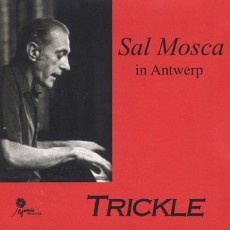
Sal Mosca was born April 27, 1927 in Mount Vernon, New York and studied piano with Lennie Tristano. After playing in the United States Army Band during World War II, he studied at the New York College of Music under the G.I. Bill.
Mosca began working with Lee Konitz in 1949 and also worked with Warne Marsh. He spent much of his career teaching and was relatively inactive since 1992; however, new CDs were released in 2004, 2005, and 2008.
Pianist Sal Mosca, who predominately performed in the cool jazz and post-bop genres, passed away on July 28, 2007 in White Plains, New York.

Give The Gift Of Knowledge

More Posts: piano
Daily Dose Of Jazz…
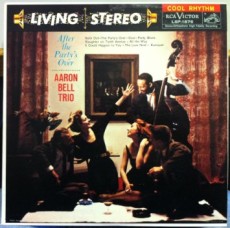
Aaron Bell was born Samuel Aaron Bell on April 24, 1921 in Muskogee, Oklahoma. As a child, he played piano and went on to learn brass instruments in high school. He attended Xavier University where he began playing bass, graduating in 1942 and joining the Navy until 1946.
After his discharge he became a member of Andy Kirk’s band and the next year enrolled at New York University to complete his Master’s degree. Aaron then joined Lucky Millinder’s band followed by gigging with Teddy Wilson.
During the 1950s, Bell appeared on Billie Holiday’s album Lady Sings The Blues and recorded with Lester Young, Stan Kenton, Johnny Hodges, Cab Calloway, Carmen McRae and Dick Hyman. Leaving Haymes in 1960 he took a chair opposite drummer Sam Woodyard in the Duke Ellington Orchestra.
He left Ellington in 1962 to spend time with Dizzy Gillespie before taking pit musician jobs on Broadway. He also recorded with Johnny Griffin, Sonny Stitt and Randy Weson as well as recording as a leader. Bell and Ellington collaborated once more in 1967, on a tribute to Billy Strayhorn. He held a residence at the La MaMa Experimental Theatre Club in New York City from 1969 to 1972.
Aaron was also an educator and began teaching at Essex College in Newark, New Jersey in 1970, remaining there until 1990. During this period he also toured with Norris Tumey, Harold Ashby and Cat Anderson. In the 1980s he returned to piano playing, and retired from active performance in 1989. Double bassist Aaron Bell passed away on July 28, 2003.
Jazz Is Global – Share
;
More Posts: bass

Daily Dose Of Jazz…
Don Menza was born on April 22, 1936 and raised in Buffalo, New York where he began playing tenor saxophone when he was 13. He studied with musician and teacher John Sedola.
After serving in the U. S. Army, Menza went to work in 1960 with the Maynard Jackson Orchestra for two years as both a soloist and an arranger. A short tenure with Stan Kenton and a year leading a quintet in Buffalo preceded a four-year period living in Germany (1964–68).
Later, he returned to the United States and joined Buddy Rich’s 1968 big band in the jazz tenor chair, recording the famous solo cadenza on Channel One Suite live at Caesar’s Palace in Las Vegas, Nevada. His utilization circular breathing during that performance has become known as a classic among music educators and musicians alike.
In the late 1960s, Don settled in California and performed with Elvin Jones and Louie Bellson. He also recorded with Keely Smith, Natalie Cole, Nancy Sinatra, Cold Blood, Pat Boone and Leonard Cohen.
Menza’s compositions, specifically Groovin’ Hard and Time Check have become standard repertoire in jazz studies programs at colleges and universities worldwide. He continues to be a prolific sideman and has recorded as a leader In addition to numerous recordings as a sideman Menza has recorded as a leader for Saba, Discwasher, Realtime, Palo Alto and Verve, working with John Klemmer, Carmen McRae, Lalo Schifrin, Bobby Shew, Lanny Morgan, Les Demerle, Frank Strazzeri, Don Rader, SWR Big Band and his own big band.
In 2005 Don Menza was inducted into the Buffalo Music Hall of Fame. He continues to perform, record and tour.
Inspire A Young Mind
More Posts: saxophone
Daily Dose Of Jazz…
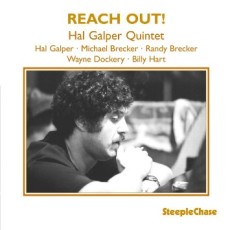
Harold “Hal” Galper was born April 18, 1938 in Salem, Massachusetts. He studied classical piano as a boy, but switched to jazz while studying at Berklee College of Music from 1955 to 1958. He hung out at Herb Pomeroy’s club, the Stable, hearing local Boston musicians such as Jaki Byard, Alan Dawson and Sam Rivers.
He started sitting in and became the house pianist at the Stable and later on, at Connelly’s and Lenny’s on the Turnpike. Eventually, Galper went on to work in Pomeroy’s band.
As his career progressed he worked with Chet Baker, Stan Getz and Nat Adderley and accompanied vocalists Joe Williams, Anita O’Day and Chris Connor. Between 1973-1975, Galper played in the Cannonball Adderley Quintet replacing George Duke.
Performing in New York and Chicago jazz clubs in the late 1970s, around this time, Hal recorded several times with guitarist John Scofield on the Enja label. The decade of the Eighties saw him as a member of the Phil Woods Quintet but left to pursue touring and recording with his own trio with drummer Steve Ellington and bassist Jeff Johnson.
As an educator Galper is internationally known, having theoretical and practical articles appear in six editions of Down Beat magazine. His scholarly article on the psychology of stage fright, originally published in the Jazz Educators Journal, has subsequently been reprinted in four other publications.
Pianist, composer, arranger, bandleader, educator and writer Hal Galper is currently on the faculty of Purchase College and the New School for Jazz and Contemporary Music.
Put A Dose In Your Pocket
More Posts: piano
Daily Dose Of Jazz…
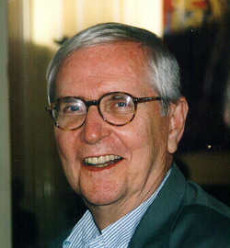
Whitney Lyon Balliett was born in Manhattan, New York on April 17, 1926. He was raised in Glen Cove, Long Island and attended Phillips Exeter Academy, where he learned to play drums. There he became part of a band that played “baggy Dixieland” and during the summer played gigs at a Center Island yacht club.
Drafted into the Army in 1946, interrupting Whitney’s freshman year at Cornell University, he returned to finish his degree in 1951. While matriculating he was a member of The Delta Phi Fraternity and after graduating went to work at The New Yorker, hired by Katherine White, one of the magazine’s fiction editors.
Among his many jazz wittings were: Such Sweet Thunder: 49 Pieces on Jazz, Super-drummer: A Profile of Buddy Rich, Alec Wilder and His Friends, Improvising: Sixteen Jazz Musicians and Their Art, Night Creature: A Journal of Jazz 1975-1980, American Musicians: Fifty-Six Portraits in Jazz, American Singers: Twenty-seven Portraits in Song, and Collected Works: A Journal of Jazz 1954-2000.
Acclaimed for his literary writing style, jazz critic, book reviewer and author Whitney Balliett passed away on February 1, 2007, aged 80, from cancer.
Uplift Someone’s World
More Posts: writer