

Daily Dose Of Jazz…
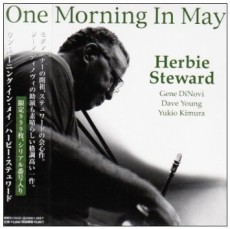
Herbie Steward was born Herbert Bickford Steward on May 7, 1926 in Los Angeles, California. He was widely known for being one of the tenor saxophones in the Four Brothers, alongside Stan Getz, Zoot Sims and Serge Chaloff in Woody Herman’s Second Herd.
Having a nice tone, Steward interacted well and was an above-average soloist. He also played alto saxophone, soprano saxophone and clarinet and was active from the 1940s to the Sixties and played in the swing and big band jazz genres. During his active years he recorded or performed with Earle Spencer, Smith Dobson, Tecumseh “Tee” Carson, Eddie Duran, John Mosher, Eddie Moore, Gene DiNovi, Sir Charles Thompson, David Young, Yukio Kimura, Kohnosuke Saijoh, Al Cohn, Stan Kenton, Chaloff and Sims.
Tenor saxophonist Herbie Steward, who has only a few albums as a leader in print at present, passed away on August 9, 2003 in Clearlake, California.

Take A Dose On The Road

More Posts: saxophone
Daily Dose Of Jazz…
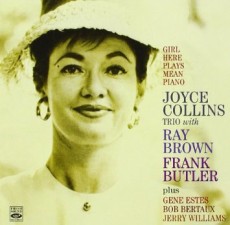
Joyce Collins was born on May 5, 1930 in Battle Mountain, Nevada. She began playing piano professionally at the age of 15 while still attending Reno High School. While studying music and teaching at San Francisco State College she played in groups and solo at various jazz clubs, eventually touring with the Frankie Carle band.
By the late 1950s, Collins settled in Los Angeles, California, working there Reno and in Las Vegas she became the first woman to conduct one of the resort’s show bands. During this period she worked in film and television studios, spending 10 years in the band on the Mary Tyler Moore and Bob Newhart shows.
In 1975, she recorded with Bill Henderson garner Grammy nominations for their Street Of Dreams and Tribute To Johnny Mercer albums. Joyce continued to work in films, coached the Bridges brothers for their roles in The Fabulous Baker Boys. She appeared twice on Marian McPartland’s Piano Jazz radio show.
She performed mostly in solo, duo and trio work but occasionally sat in with big bands, such as that led by Bill Berry. She has recorded with Paul Horn and under her own name releasing her debut album in 1961, followed by her sophomore release Moment To Moment, after a long gap. She was an accomplished composer, arranger and singer with a delicate understanding of the lyricist’s intentions.
As an educator, in 1975 she taught jazz piano at the Dick Grove Music School. She wrote and arranged extensively, including a program, performed live and on radio, tracing the involvement of women in jazz as composers and lyricists. Pianist, singer and educator Joyce Collins passed away on January 3, 2010.
Put A Dose In Your Pocket
Daily Dose Of Jazz…
Sonny Payne was born on May 4, 1926 in New York City. His father was Wild Bill Davis’ drummer Chris Columbus. After early study with Vic Berton, in 1944 he started playing professionally around New York with the Dud and Paul Bascomb band, Hot Lips Page, Earl Bostic, Tiny Grimes and Lucille Dixon through the decade.
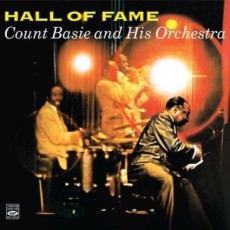
From 1950 to 1953, Payne played with Erskine Hawkins’ big band and led his own band for two years, but in late 1954 he made his most significant move, joining Count Basie’s band for more than ten years of constant touring and recording. He recorded Counting Five In Sweden with Joe Newman in 1958 on the Metronome label..
Leaving Basie in 1965, he again led his own trio and toured with Illinois Jacquet in 1976. He went Frank Sinatra’s personal drummer for all of the singer’s appearances with the Count Basie Orchestra in 1965 and 1966, and he later rejoined Basie as the regular drummer from 1973–1974. Most of the rest of his career, however, was spent in the Harry James band, which he joined in 1966, and with whom he was working when he passed away of pneumonia at the age of 52 on January 29, 1979 in Los Angeles, California. Harry James paid all of his medical bills and subsequent funeral costs.
Uplift Someone’s World
More Posts: drums
Daily Dose Of Jazz…
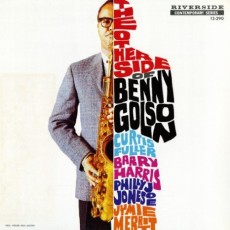
Jymie Merritt was born James Raleigh Merritt on May 3, 1926 in Philadelphia, Pennsylvania. His mother was a choral director, voice and piano teacher and his father a businessman and author. After serving in the U.S. Army during WWII from 1944 to 1946 he returned home to work for a short time in his father’s real estate business. After a brief flirtation with the clarinet he was inspired by a Duke Ellington recording featuring bassist Jimmy Blanton. Encouraged by his mother he studied with Philadelphia Orchestra double bassist Carl Torello and at the Ornstein School of Music
Over the course of his career Merritt has worked in jazz, R&B and blues. In the early 1950s he toured with rock and roll pioneers Bullmoose Jackson and Chris Powell moving on to work with legendary bluesman B.B. King from 1955 to 1957. In 1957 he moved to Manhattan to work with Art Blakey and the Jazz Messengers featuring his friend Benny Golson, as well as Bobby Timmons and Lee Morgan. He touring and recording with Blakey extended until 1962, when an unknown ailment forced him to stop touring.
By 1964 Merritt was back, working with the trumpeter and vocalist Chet Baker and is featured prominently in Baker’s unfinished autobiography published under the title As Though I Had Wings: The Lost Memoir. From 1965 to 1968 he worked with drummer, composer and activist Max Roach, not only in the rhythm section but as a composer, recording his Downbeat Magazine Critic Poll for Best Jazz Composer “Nommo” on Roach’s critically acclaimed 1966 Atlantic album The Drum Also Waltzes. He left in the late 1960s to work with Dizzy Gillespie and appear with him on the Dick Cavett Show.
One of Jymie most productive showcases as a composer was his reuniting recording of trumpeter Lee Morgan’s 1970 Blue Note release Live at the Lighthouse featuring his composition Absolutions that has become a jazz classic. In 1962 he formed and fronted the Forerunners with Odean Pope, Kenny Lowe, Donald Bailey and September Wrice and they evolved into a music cooperative exploring his system of chord inversions, harmonics, and unique approaches to composition and rehearsals, producing a lexicon of its own known as the Forerunner system or concept.
This group performed regularly in and around Philadelphia for five years, until he joined Roach’s band. Pope would also join Roach’s band, playing with him into the 1970s. Forerunner was on and off periodically from the 1960s through the 1980s, depending on what band Merritt was playing with at the time as well as how his health was. Of the second incarnation in 1982 saxophonist Bobby Zankel, Alan Nelson, Odean Pope, Julian Pressley, Colmore Duncan and Warren McLendon. Approaching his 90th birthday Merritt continues to rehearse and perform with the current incarnation of The Forerunners, many of whom have been with the ensemble from its inception.
In 2013, along with bassist Reggie Workman, he received the Clef Club of Philadelphia’s Living Legend Jazz Award as well as the Jazz Heritage Award and the Don Redman Heritage Award. Double-bassist electric-bass pioneer, bandleader and composer Jymie Merritt, who mainly performed as a sideman with Art Blakey, Sonny Clark, Curtis Fuller, Benny Golson, Lee Morgan and Jimmy Witherspoon, passed away on April 10, 2020 of liver cancer in Philadelphia, aged 93.
Jazz Is Global – Share
More Posts: bass

Daily Dose Of Jazz…
John Martin Tchicai was born on April 28, 1936 in Copenhagen, Denmark to a Danish mother and a Congolese father. The family moved to Aarhus where he studied violin in his youth, but in his mid-teens began playing clarinet and alto saxophone, focusing on the latter. By the late 1950s he was travelling around northern Europe, playing with many musicians.
A move to New York City in 1963, found Tchicai joining Archie Shepp’s New York Contemporary Five and the New York Art Quartet. He played on John Coltrane’s Ascension album and Albert Ayler’s New York Eye and Ear Control, both influential free jazz recordings. Following his work in New York, he returned to Denmark in 1966, and shortly thereafter focused most of his time on music education.
John formed the small orchestra Cadentia Nova Danica with Danish and other European musicians, collaborating with Musica Elletronica Viva and performed in multi-media events. He was a founding member of the Amsterdam’s Instant Composers Pool in 1968, and in 1969 took part in the recording of John Lennon’s Unfinished Music No. 2: Life with the Lions.
On August 30, 1975, his appearance at the Willisau Jazz Festival was recorded with Swiss pianist Irène Schweizer and released later that year as Willi The Pig. Tchicai returned to a regular gigging and recording schedule in the late 1970s. In the early 1980s he switched to the tenor saxophone as his primary instrument. In 1990 he was awarded a lifetime grant from the Danish Ministry of Culture.[3]
Tchicai relocated to Davis, California in 1991, where he led several ensembles. He was awarded a National Endowment for the Arts fellowship in 1997, was a member of Henry Kaiser and Wadada Leo Smith’s Yo Miles band, a loose aggregation of musicians exploring Miles Davis’ electric period.
In 2001 he returned to Europe to live near Perpignan in southern France. On June 11, 2012, free jazz alto and tenor saxophonist and composer John Tchicai suffered a brain hemorrhage in an airport in Barcelona, Spain. While recovering he passed away on October 8, 2012, aged 76.
Take A Dose On The Road