

Daily Dose Of Jazz…
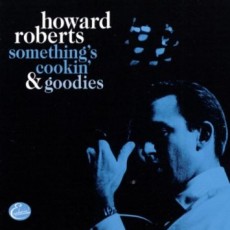
Howard Roberts was born on October 2, 1929 in Phoenix, Arizona and began playing guitar at the age of 8. By the time he was 15 he was playing professionally locally. He moved to Los Angeles in 1950 and with the help of Jack Marshall he began working with musicians, arrangers and songwriters including Neal Hefti, Henry Mancini, Bobby Troup, Chico Hamilton, George Van Eps and Barney Kessell.
Around 1956 Troup signed Howard to Verve Records as a solo artist and he he decided to concentrate on recording. He recorded both as a solo artist and “Wrecking Crew” session musician, a direction he would continue until the early 1970s. He would go on to play guitar on television themes such as The Twilight Zone, The Munsters, Bonanza, The Brady Bunch, Green Acres, Get Smart, Batman, Beverly Hillbillies, Andy Griffith, Peter Gunn, Mannix, Dick Van Dyke, I Dream of Jeannie, The Odd Couple and Mission Impossible among others. He also performed the theme for the classic Steve McQueen film Bullitt.
In 1961, Roberts designed a signature guitar, which was originally produced by Epiphone, a division of Gibson. The Howard Roberts signature was borne by two other models made by Gibson: the Howard Roberts Custom and the Howard Roberts Fusion III.
By 1963, Roberts recorded Color Him Funky and H.R. Is A Dirty Guitar Player, his first two albums after signing with Capitol Records. They both featured the same quartet with Roberts (guitar), bassist Chuck Berghofer, Earl Palmer on drums and Paul Bryant alternating with Burkley Kendrix on organ. He would go on to record nine albums with Capitol before signing with ABC Records/Impulse Records.
Over the course of his career he recorded with David Axelrod, June Christy, Buddy Collette, Milt Jackson, Hank Jones, John Klemmer, Charles Kynard, Herbie Mann, Thelonious Monk, Lalo Schifrin, Bud Shank, Bob Cooper, Gabor Szabo and Larry Williams, to name a few. As a member of the Wrecking Crew, he was a part of Phil Spector’s ‘Wall of Sound’ and played guitar on some of the most famous songs in pop music history.
From the late 1960s, Roberts began to focus on teaching rather than recording. He traveled around the country giving guitar seminars, and wrote several instructional books. For some years he also wrote an acclaimed column called “Jazz Improvisation” for Guitar Player magazine. he developed accelerated learning concepts and techniques, which led to the founding of Playback Music Publishing and the Guitar Institute of Technology. As a co-founder of GIT, now known as the Musicians Institute, his philosophy remains an integral part of the curriculum.
Guitarist Howard Roberts, who played rhythm and lead guitar, bass and mandolin, passed away of prostate cancer in Seattle, Washington on June 28, 1992. His life in music inspired the opening of Roberts Music Institute in Seattle, Washington, which is currently owned by his son, Jay Roberts.

Jazz Is Global – Share
Daily Dose Of Jazz…
John Gilmore was born on September 28, 1931. Growing up in Chicago, Illinois he played clarinet from the age of 14 and took up the tenor saxophone while serving in the United States Air Force from 1948 to 1952. He then pursued a musical career, playing briefly with pianist Earl Hines before encountering Sun Ra in 1953.
For the next four decades, he recorded and performed almost exclusively with Sun Ra. This was puzzling to some, who noted Gilmore’s talent, and thought he could be a major star like John Coltrane or Sonny Rollins. Despite being five years older than Gilmore, Coltrane was impressed with his playing, and took informal lessons from him in the late 1950s. His epochal, proto-free jazz “Chasin’ the Trane” was inspired partly by Gilmore’s sound.
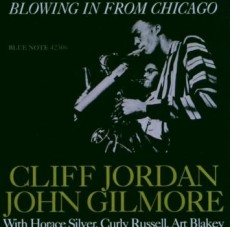
In 1957 he co-led with Clifford Jordan a hard bop Blue Note date Blowing In from Chicago with Horace Silver, Curly Russell and Art Blakey providing the rhythm section. In the mid-1960s John toured with the Jazz Messengers and participated in recording sessions with Paul Bley, Andrew Hill, Pete La Roca, McCoy Tyner, Freddie Hubbard, Elmo Hope, Phil Upchurch and others. By 1970 he was co-leading a recording with Jamaican trumpeter Dizzy Reece. Throughout his years of playing he mainly focused on the avant-garde with the Sun Ra Arkestra.
Gilmore’s devotion to Sun Ra was due, in part, to the latter’s use of harmony which he considered both unique and a logical extension of bebop. He occasionally doubled on drums and also played bass clarinet until Sun Ra hired Robert Cummings as a clarinet specialist in the mid-1950s. However, the tenor saxophonist made a huge contribution to Sun Ra’s recordings and was the Arkestra’s leading sideman, being given solos on almost every track on which he appeared.
John is known for his straight ahead post-bop running changes and fluency with a rhythmic and motive approach in addition to his long passages based exclusively on high-register squeals in the more abstract. His fame shrouded in the relative anonymity of Sun Ra’s Arkestra membership, his straight ahead post-bop talents are exemplified in his solo on the Arkestra’s rendition of “Blue Lou,” as seen on Mystery, Mr. Ra. Avant-garde tenor saxophonist John Gilmore led the Arkestra for a few years after SunRa’s death and up until his own of August 19, 1995.
Take A Dose On The Road
More Posts: saxophone
Daily Dose Of jazz…
Hank Levy was born Henry Jacob Levy September 27, 1927 in Baltimore, Maryland. He studied composition with George Thaddeus Jones at Catholic University in Washington, DC. He became interested in odd meters used by Maurice Ravel, Paul Hindemith and Igor Stravinsky, pre-dating Dave Brubeck’s 1959 Time Out album.
A prolific arranger of jazz standards, though few of them were published during his lifetime, Hank was especially fond of the music of the Broadway stage as it came through bebop by composers Cole Porter, George Gershwin and Jerome Kern. However, in his last years, he more frequently turned to bebop originals by Charlie Parker, Dizzy Gillespie and Tadd Dameron, sans odd meters but displaying distinctive creativity.
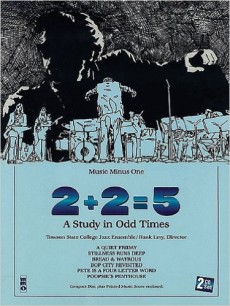
Levy began his full-time college teaching career at Towson State University in late 1967 creating The Towson State Jazz Ensemble. By 1970, his hard work and passion for teaching brought the band to national prominence when his Towson State Jazz Ensemble competed and won the outstanding band honors at the Notre Dame Jazz Festival. They recorded “2 + 2 = 5”, an album of six of his compositions and would go on to recorded several others over the years. Upon retirement in 1992 he founded the Hank Levy Legacy Band and recorded two albums for Sonority Records, Hank At Home and An Odd Time Was Had By All.
The 2014 jazz film Whiplash takes its title from Levy’s composition which originally appeared on the 1973 album Soaring by Don Ellis and portions of which are played several times during the course of the picture by the classroom Big Band ensemble. Composer, arranger and saxophonist Hank Levy, best known for his work with Stan Kenton and Don Ellis Orchestras, passed away in Parkville, Maryland on September 18, 2001.
Give The Gift Of Knowledge
More Posts: saxophone
Daily Dose Of Jazz…
Gary Bartz was born on September 26, 1940 in Baltimore, Maryland. E graduated from the Baltimore City College High School and Juilliard School and got his break playing saxophone into the music industry in his father’s club with Art Blakey, making his debut recording on Blakey’s 1965 Soul Finger album.
Bartz joined the Charles Mingus Jazz Workshop from 1962-1964 where he worked with Eric Dolphy and McCoy Tyner. This was followed with stints with Abbey Lincoln and Max Roach in the mid-Sixties. By ’68 he was a part of McCoy’s Expression band.
Gary has played with Jackie McLean, and with Miles Davis on his Live-Evil project. He formed the group Ntu Troop, and has combined soul, funk, African music, hard bop and avant-garde jazz. He has recorded more than 40 solo albums and over 200 as a guest artist with the likes of the Rance Allen Group, Gene Ammons, Kenny Burrell, Donald Byrd, Norman Connors, Antonio Hart, Phyllis Hyman, Barney McAll, Alphonse Mouzon, Grachan Moncur III, Rare Silk, Pharoah Sanders and Woody Shaw amongst others.
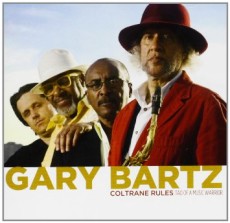
Post-bop alto saxophonist Gary Bartz who also plays soprano saxophone and clarinet has won a Grammy Award in 2005 for his playing on McCoy Tyner’s Illuminations and currently teaches at the Oberlin Conservatory of Music in Ohio when not touring and recording.
Put A Dose In Your Pocket
Daily Dose Of Jazz…
Ray Wetzel was born on September 22, 1924 and played lead trumpet for Woody Herman from 1943 to 1945 and then with Stan Kenton from 1945 to 1948. In 1947 he recorded with the Metronome All-Stars, Vido Musso and Neal Hefti. The same year he married bass player Bonnie Addleman in 1949.
While with the Charlie Barnet Orchestra he played trumpet alongside Maynard Ferguson, Doc Severinsen and Rolf Ericson. He played with his wife in Tommy Dorsey’s ensemble in 1950 and with Kenton again in 1951. While touring with Dorsey on August 17,1951, he was killed in a car crash at the age of 27.
Ray Wetzel, the greatly admired by his fellow trumpeters, never got the opportunity to record as a leader. He is credited with composing the Stan Kenton tune ‘Intermission Riff’.
Dose A Day – Blues Away
More Posts: trumpet