

Daily Dose Of Jazz…
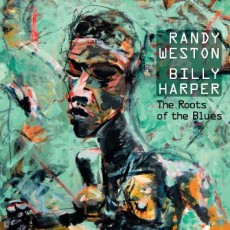
Randy Weston was born April 6, 1926 in Brooklyn, New York of Jamaican heritage and studied classical piano and dance as a child. He attended and graduated from Boys High School in Bedford-Stuyvesant taking piano lessons from Professor Atwell who allowed him to play outside the classical music paradigm. Among his piano heroes are Count Basie, Nat King Cole, Art Tatum, Duke Ellington and his cousin Wynton Kelly but it was Thelonious Monk who had the greatest impact.
After serving in the Army during World War II he ran a restaurant that was frequented by many of the leading bebop musicians. In the late 1940s Weston began gigging with bands including Bullmoose Jackson, Frank Culley and Eddie “Cleanhead” Vinson. He worked with Kenny Dorham in 1953 and Cecil Payne in ’54 before forming his own trio and quartet. That same year he recorded and released his debut as a leader, Cole Porter In A Modern Mood.
In 1955 Randy was voted “New Star Pianist” in Down Beat magazine’s International Critics’ Poll. Several fine albums followed, with the best being Little Niles near the end of that decade for which trombonist Melba Liston provided arrangements for a sextet playing his compositions.
By the 1960s, Weston’s music prominently incorporated African elements, and again teamed up with arranger Melba Liston on two albums, a large-scale suite Uhuru Afrika and Highlife. During these years his band often featured the tenor saxophonist Booker Ervin, traveled throughout Africa, settled in Morocco, running the African Rhythm Club in Tangier from 1967 to 1972 and produced a best-selling record for CTI titled Blue Moses on which he plays electric keyboard.
For a long stretch Weston recorded infrequently on smaller record labels but in 1992 he released a two-CD recording The Spirits of Our Ancestors featuring once again arrangements by his long-time collaborator Melba Liston as well as Dizzy Gillespie and Pharoah Sanders guest playing. He would go on to produced a series of albums in a variety of formats: solo, trio, mid-sized groups, and collaborations with the Gnawa musicians of Morocco.
Among his many honors and awards he has received the French Order of Arts and Letters, Japan’s Swing Journal Award, the Black Star Award, the NEA Jazz Master. Randy has been given honorary degrees from Brooklyn College, City University of New York and Colby College, was the recipient of a Guggenheim Fellowship, has been honored by King Mohammed VI of Morocco, and he has been celebrated in a “Giant of Jazz” concert with all-star musicians Monty Alexander, Geri Allen, Cyrus Chestnut,, Barry Harris, Mulgrew Miller, and Billy Taylor.
After more than five decades devoted to music, pianist and composer Randy Weston continues to perform throughout the Americas, Africa, Asia, the Caribbean, and Europe and uses Ghananian master drummer Kofi Ghanaba’s composition “Love, the Mystery Of…” as his theme song for some 40 years.

Jazz Is Global – Share
More Posts: piano
Daily Dose Of Jazz…
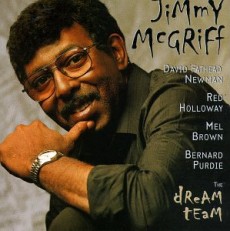
Jimmy McGriff was born James Harrell McGriff on April 3, 1936 in Germantown, Pennsylvania and started playing piano at the age of five. By his teens he learned to play vibes, alto saxophone, drums and upright bass. His first group was as bassist in a piano trio. When he joined the United States Army he served as an MP during the Korean War, later became a police officer in Philadelphia for two years.
Music kept drawing McGriff’s attention away from the police force. His childhood friend, Jimmy Smith began earning a substantial reputation and he became entranced by the organ sound while Richard Groove Holmes played at his sister’s wedding. Holmes went on to become his teacher and friend.
Buying his first Hammond B-3 organ in 1956, spent six months learning the instrument, and then studied at New York’s Juilliard School. Influenced by Count Basie, Howard “The Demon” Whaley, Austin Mitchell and Milt Buckner with whom he studied privately and as well with Jimmy Smith and Sonny Gatewood.
Forming a combo Jimmy played around Philadelphia often featuring tenor saxophonist Charles Earland, who soon switched to the instrument. During this time, McGriff also accompanied such artists as Don Gardner, Arthur Prysock, Candido and Carmen McRae, who came through town for local club dates.
In 1961, McGriff’s trio recorded an instrumental version of Ray Charles’ hit “I Got A Woman” for Jell Records, and after the record received substantial local airplay, Sue Records picked it up and recorded a full album of McGriff’s trio, released in 1962. The album established his credentials as a fiery blues-based organist, well versed in gospel, soul and “fatback groove”.
McGriff would recorded a series of popular albums by the mid Sixties ending with what still stands as one of his finest examples of blues-based jazz, Blues for Mister Jimmy. Over the next decade he went on to continue recording for Solid State, opened his own supper club “The Golden Slipper” in Newark, New Jersey and performed regularly performed with the Buddy Rich Band.
Though he retired from the music industry in 1972 to start a horse farm in Connecticut his records were being issued at three to four a year by Sonny Lester’s Groove Merchant label. By 1973, Jimmy was touring relentlessly and actively recording again and though disco was gaining a hold it did little to stop the organist. He produced some of his best music during this period: Stump Juice, Red Beans and Outside Looking In.
The 1980s saw McGriff working with Rusty Bryant, Al Grey, Red Holloway, David “Fathead” Newman, Frank Wess and Eric Alexander, and started a longtime partnership with Hank Crawford. Into the new millennium he experimented with the Hammond XB-3 and organ synthesizer with Midi enhancements. Along with his soul jazz sound, forming the Dream Team group he recorded and released his last album, McGriff Avenue in 2001.
On May 24, 2008 at the age of 72, hard bop and soul jazz organist and bandleader Jimmy McGriff, who left a catalogue of 57 albums to posterity, passed away in Voorhees Township, New Jersey from complications due to multiple sclerosis.
Take A Dose On The Road
More Posts: organ
Daily Dose Of Jazz…
Herbert Alpert was born on March 31, 1935 and raised in the Boyle Heights section of East Los Angeles, California. His family was Jewish, emigrating from Radomyshl, now present day Ukraine and Romania. His father, a talented mandolin player, his mother taught violin, and his older brother a drummer. He began trumpet lessons at the age of eight and played at dances as a teenager. Acquiring an early wire recorder in high school, he experimented on this crude equipment.
Following graduation in 1952, he joined the U.S. Army and frequently performed at military ceremonies. After his service in the Army, Alpert tried his hand at acting, but eventually settled on pursuing a career in music. While attending the University of Southern California he became a member of the USC Trojan Marching Band, and appeared in the un-credited role as “Drummer on Mt. Sinai” in the film The Ten Commandments in 1056. In 1962, he had an un-credited part in a scene in the film Mr. Hobbs Takes A Vacation, playing a solo in a dance band.
In 1957, Alpert teamed up with Rob Weerts, co-wrote a number of Top 20 hits including Baby Talk for Jan & Dean and Wonderful World for Sam Cooke. By 1960 he was signed with RCA Records as a vocalist under the name of Dore Alpert.
In 1962 along with Jerry Moss they founded A&M Records and their very first hit was “The Lonely Bull” adapted from the mariachi bands and the cheers of bullfighting spectators. The title song reached No. 6 on the Billboard Pop Singles chart and became A&M’s first album with the original release number being #101.
By the end of 1964, with top session players he began touring with the Tijuana Brass. Television specials followed by 1967, as well as two albums, Whipped Cream and Other Delights and Going Places. The single “A Taste Of Honey” won a Grammy Award for Record of the Year.
The Brass would go on to perform the title tack to the first movie version of Casino Royale in 1967. His music would be used on The Dating Game, bringing him greater exposure. The band would win six Grammy Awards, fifteen of their albums went gold, fourteen platinum, and in 1966 outsold the Beatles.
Alpert’s only No. 1 single during this period, and the first No. 1 hit for his A&M label, was a solo effort of “This Guy’s In Love With You” by Bacharach/David. In the 1970s, 1980s, and 1990s, Alpert enjoyed a successful solo career. In 1979 he had his biggest instrumental hit titled “Rise”. He would go on to work with Jimmy Jam, Terry Lewis, Janet Jackson and Lisa Keith. He performs with Gato Barbieri, Rita Coolidge, Brian Culbertson, and others. With his wife kani Hall (Sergio Mendes fame), they have released the live album Anything Goes. In 2013, he released a new album, Steppin’ Out which won a Grammy.
Herb and Moss received a Grammy Trustees Award, a Grammy Lifetime Achievement Award, he was awarded the National Medal of Arts by President Obama in 2013, has a star on the Hollywood Walk Of Fame, and received the “El Premio Billboard” for his contributions to Latin music. Trumpeter, pianist, vocalist, composer, arranger, songwriter, record producer of jazz, Latin and pop music continues to perform, record and tour.
Give A Gift Of Jazz – Share
Daily Dose Of Jazz…
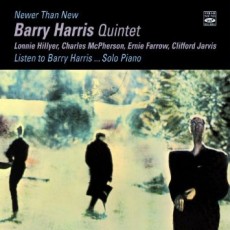
Lonnie Hillyer was born on March 25, 1940 in Monroe, Georgia but moved with his family to Detroit at age three, and began studying music at 14 under Barry Harris. By 1960, he moved to New York City where he played with Charles Mingus, Yusef Lateef and Clifford Jarvis. His association with Mingus lasted more than a decade, performing on records such as “My Favorite Quintet” and “Let My Children Hear Music”.
In 1966, Lonnie and fellow Detroit friend Charles McPherson formed a quintet performed together during the years following. Around 1983 he and former Monk tenor saxophonist Charles Rouse formed a jazz quintet “Bebop Quintessence”, with drummer Leroy Williams, pianist Hugh Lawson and bassist Ben Brown.
Over the years of his career Hillyer performed with Thelonious Monk, Art Blakey, Philly Joe Jones, Willie Bobo, Barry Harris, Walter Davis Jr., Abbey Lincoln, Eric Dolphy and Pharoah Sanders among others.
Jazz trumpeter Lonnie Hillyer, who was strongly influenced by Dizzy Gillespie, Charlie Parker and Thelonious Monk and other bebop legends of the era, passed away of cancer on July 1, 1985 in New York City.
Inspire A Young Mind
More Posts: trumpet
Daily Dose Of Jazz…
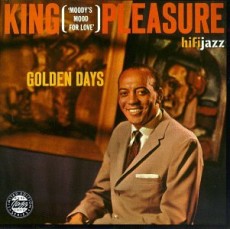
King Pleasure was born Clarence Beeks on March 24, 1922 in Oakdale, Tennessee. He moved to New York City in the mid-1940s and while working as a bartender, he became a fan of bebop music. He first achieved popularity by singing the Eddie Jefferson penned vocalese classic Mood’s Mood For Love, based on a 1949 James Moody saxophone solo to “I’m In The Mood For Love”. On a night in late 1951 at Amateur Night at the Apollo Theater, he won the competition and where Clarence Beeks became King Pleasure that night in Harlem.
Pleasure’s 1952 recording, featured vocalist Blossom Dearie, was his first after signing a contract with Prestige Records and is considered a jazz classic. He and Betty Carter also recorded a famous vocalese version of “Red Top”, a jazz classic penned by Kansas City’s Ben Kynard and recorded by Gene Ammons and others. Other notable recordings include “Parker’s Mood”, the year before Charlie Parker died in 1955, and Ammons’s “Hittin’ The Jug”, retitled as “Swan Blues” in 1962.
He would record with the Modern jazz Quartet, sans Milt Jackson, J.J. Johnson, Kai Winding, Lucky Thompson, with backup vocals by Eddie Jefferson and Jon Hendricks along with The Three Riffs. In Los Angeles in 1960 he was recording with Teddy Edwards and Harold Land. But by this time his popularity was waning and he faded into obscurity. However, his early work influenced Jon Hendricks, Annie Ross, Bob Dorough, Mark Murphy, Al Jarreau, The Manhattan Transfer and others.
Jazz vocalist King Pleasure, an early master of vocalese, where a singer sings words to a famous instrumental solo passed away on March 21, 1982, three days before his 60th birthday.
Give A Gift Of Jazz – Share
More Posts: vocal