

Daily Dose Of Jazz…
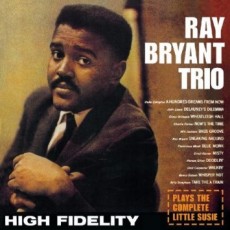
Ray Bryant was born Raphael Homer Bryant on December 24, 1931 in Philadelphia, Pennsylvania and began playing piano at age six. He played bass in junior High School. Turning professional before his age of maturity, he made a name for himself in his hometown playing a steady gig at the Blue Note Club.
From the late 1950s, he led a trio, performing throughout the world, and also worked solo. He recorded his first album with Betty Carter in 1955 titled “Meet Betty Carter and Ray Bryant” that marked his initial ascent. His first solo piano album “Alone With The Blues” in 1958 became the precursor to many more solo projects.
A noted jazz composer, with well-known themes such as “Cubano Chant,” “Monkey Business,” “Little Susie” and “The Madison Time,” the latter being resurrected in the 1988 movie Hairspray and subsequently used in the Broadway show.
Ray has performed and recorded with such players as Miles Davis, Sonny Rollins, Melba Liston, Coleman Hawkins, Charlie Parker, Carmen McRae and Aretha Franklin. Along with his brother Tommy and Oz Perkins he formed a trio as the back-up band in 1964 for the off-Broadway run of the comedy show Cambridge Circus starring John Cleese.
Ray Bryant, sensitive yet firm pianist who was comfortable with tonalities of gospel and blues and excelled as both sideman and leader passed away at age 79 on June 2, 2011.

Give The Gift Of Knowledge
More Posts: piano
Daily Dose Of Jazz…
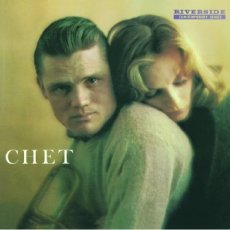
Chet Baker was born Chesney Henry Baker, Jr. on December 23, 1929 in Yale, Oklahoma. Raised in the musical household of a professional guitar player, he began his musical career singing in church, and then introduced to the trombone, but proved to large it was replaced with the trumpet.
Baker received some musical education at Glendale Junior High School, but left school at age 16 in 1946 to join the Army, serving in the 298th Army band. After his discharge in 1948, he studied theory and harmony at El Camino College in Los Angeles, dropped out in his second year and re-enlisting joined the army band at the Presidio but was soon spending time in San Francisco jazz clubs such as Bop City and the Black Hawk. Once again discharged he pursued his career as a professional musician.
Chet’s earliest notable professional gigs were with saxophonist Vido Musso band and with Stan but earned much more renown in 1951 when Charlie Parker chose him to play a series of West Coast engagements. In 1952, Baker joined the Gerry Mulligan Quartet, which was an instant phenomenon due to contrapuntal touches.
With Mulligan serving a sentence on drug charges, Pacific Jazz picked up Baker in 1956 releasing Chet Baker Sings to the consternation of purists, but it increased his profile. He would go on to perform and record with Russ Freeman, Carson Smith, Joe Mondragon, Jimmy Bond, Art Pepper and Shelley Manne among others, win the Downbeat Jazz Poll, make his acting debut in Hell’s Horizon, front his own combos, and become an icon in the West Coast cool jazz movement.
However successful Baker became his lifelong battle with heroin brought a decline to his musical career, pawning instruments, serving prison sentences, encountering expulsion and deportation from European countries, savagely beaten and losing his teeth and ability to play. Chet’s comeback came with being fitted with dentures, relocating to New York and Europe, playing with Philip Catherine, Phil Markowitz, Stan Getz and returning with his most prolific recording era between 1978 and 1988, though on mostly small European labels that never reached wide audience attention.
Chet Baker, composer, flugelhornist and trumpeter who popularity was due in part to his matinee-idol good looks and well publicized drug habit, and who was associated most prominently with his rendition of My Funny Valentine and his documentary Let’s Get Lost, passed away on May 13, 1988 in Amsterdam, Netherlands.
Take A Dose On The Road
More Posts: flugelhorn,trumpet,vocal
Daily Dose Of Jazz…
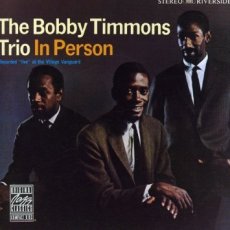
Bobby Timmons was born Robert Henry Timmons on December 19, 1935 in Philadelphia, Pennsylvania. Studying piano from the age of six by the age of 19 he was moving to New York, playing with the likes of Kenny Dorham’s Jazz Prophets, Chet Baker, Sonny Stitt and Maynard Ferguson. He became a member of Art Blakey’s Jazz Messengers from 58-59 touring Europe and became well known for his composition “Moanin”.
He joined Cannonball Adderley for a year, recorded two soul-jazz compositions that became hits “This Here” and “Dat Dere” and rejoined Blakey for a brief stint in the Sixties. Over the course of his career he recorded some 16 albums for Riverside, Milestone and Prestige record labels and recorded another twenty-three as a sideman with Art Blakey, Hank Mobley, Lee Morgan, Donald Byrd, Curtis Fuller, Nat Adderley, Kenny Burrell and the Young Lions.
However sophisticated and versatile a pianist he proved to be, Timmons’ success of his compositions, which have become jazz standards, could not compensate for his artistic frustrations and his battle with alcoholism. Pianist and composer Bobby Timmons passed away from cirrhosis at the age of 38 on March 1, 1974.
Jazz Is Global – Share
More Posts: piano,vibraphone
Daily Dose Of Jazz…
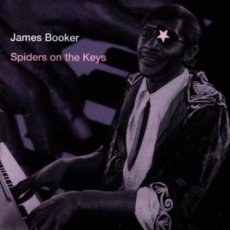
James Carroll Booker III was born on December 17, 1939 in New Orleans, Louisiana to piano playing Baptist ministers. He spent most of his childhood on the Mississippi Gulf Coast, where his father pastored and got a saxophone from his mother. However his interest lay stronger with the keyboard and he started playing organ in his father’s church.
Returning to New Orleans in his early teens, Booker attended the Xavier Academy Preparatory School, learning some elements of his keyboard style and playing Bach and Chopin among other classical composers, in addition to memorizing solos by Errol Garner and Liberace. He became a masterful interpreter of jazz and other pop music styles combining performance elements of stride, blues, gospel and Latin piano styles.
Booker made his recording debut in 1954 on the Imperial label, with “Doin’ the Hambone” and “Thinkin’ ‘Bout My Baby.” This led to some session work with Fats Domino, Smiley Lewis and Lloyd Price. In 1958, when just 18, James had the opportunity to play and astonish Arthur Rubenstein who revealed he could never play at that tempo. He would go on to matriculate through Southern University, record a few moderately successful singles, hit the Billboard charts, and venture into the drug world ultimately serving a brief sentence.
By the 70s he was recording for Paramount, then Island Records, performing at the Nice, Montreux and New Orleans Jazz & Heritage Festivals, touring Europe, house pianist at the Maple Leaf Bar, played and toured with Jerry Garcia, and his “Let’s Make A Better World” would be the last record produced in the former East Germany.
James Booker died on November 8, 1983, while seated in a wheelchair, waiting to be seen at the emergency room at New Orleans Charity Hospital. The cause of death was renal failure due to his life-long struggle with drug abuse and alcoholism.
Give The Gift Of Knowledge
Daily Dose Of Jazz…
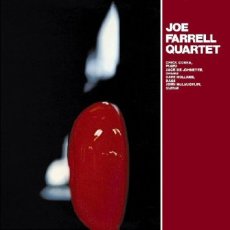
Joe Farrell was born Joseph Carl Firrantello on December 16, 1937 in Chicago Heights, Illinois and learned to play saxophone and flute. During the Sixties he played with The Thad Jones/Mel Lewis Orchestra and recorded with Charles Mingus, Andrew Hill, Jaki Byard, Players Association, and Elvin Jones.
In the 80s Joe released two albums with the group Fuse One, played sax and oboe on pop recordings by Hall & Oates, played with Airto and Flora Purim, his final recordings making their “Three-Way Mirror” project. He is best known for his series of albums as a leader for the CTI record label and for being an original member of Chick Corea’s Return To Forever.
Kanye West, Method Man, Redman and Common have sampled Farrell’s music “Upon This Rock”, without approval that subsequently resulted in a lawsuit by his daughter.
Tenor and soprano saxophonist and flautist Joe Farrell died of bone cancer on January 10, 1986 in Los Angeles, California at age 48.
Take A Dose On The Road