

Daily Dose Of Jazz…
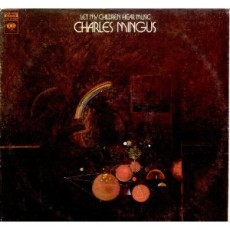
Charles Mingus Jr. was born on April 22, 1922 in Nogales, Arizona of Chinese, English, African and Swedish heritage. His mother allowed only church-related music in their home, but Mingus developed an early love for jazz, especially the music of Duke Ellington. He first studied trombone, later adding cello, which prepared him for the double bass in high school. He studied five years with H. Rheinshagen, principal bassist of the New York Philharmonic and compositional techniques with Lloyd Reese.
Beginning in his teen years, Mingus was writing quite advanced pieces incorporating elements of classical music. A number of them were recorded in 1960 with conductor Gunther Schuller and released as “Pre-Bird”, referring to Charlie “Bird” Parker. Mingus was one of many musicians whose perspectives on music were altered by Parker into “pre- and post-Bird” eras.
Gaining a reputation as a bass prodigy, his first major professional job was playing with former Ellington clarinetist Barney Bigard. This followed by a tour with Louis Armstrong in 1943 that led to his recording in a band led by Russell Jacquet that included Teddy Edwards and Chico Hamilton. He went onto record with Howard McGhee and into the late ‘40s played with Lionel Hampton’s band performing several of his pieces.
A popular Mingus trio had Red Norvo and Tal Farlow in tow in the early 50s with considerable acclaim but his mixed heritage caused problems with club owners and he left the group. Charles was briefly a member of Ellington’s band until his temper got him fired. He went on to record and play with Max Roach, Bud Powell, Dizzy Gillespie, Charlie Parker, Pepper Adams, Jaki Byard, Horace Parlan, Booker Ervin, John Handy, Charles McPherson, Eric Dolphy and Johnny Coles among others through the Sixties and into the next decade. By the mid-1970s, Mingus was suffering from Lou Gehrig’s disease that eventually stopped his playing, leaving him to continue composing and supervising recordings prior to his death on January 5, 1979 at age 56 in Cuernavaca, Mexico.
Composer, bandleader, bassist and civil rights activist Charles Mingus left a legacy of an autobiography, Mingus Big Band, Mingus Dynasty, Mingus Orchestra, the Charles Mingus High School Competition, the catalogue of Mingus compositions in the Music Division of the New York Public Library and the collected papers of Charles Mingus housed at the Library of Congress in Washington, DC.

Take A Dose On The Road
More Posts: bandleader,bass,composer
Daily Dose Of Jazz…
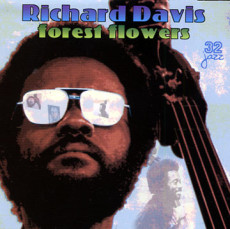
Richard Davis was born in Chicago, Illinois on April 15, 1930 who began his musical career as a singer with his brothers. Davis sang bass in his family vocal trio in addition he began studying the double bass in high school with his music theory and band director, Captain Walter Dyett. After graduation, he went on to study the double bass with Rudolf Fahsbender of the Chicago Symphony Orchestra while attending Vandercook College.
After college, Davis performed in dance bands making a name for himself around Chicago, making connections that led him to pianist Don Shirley. In 1954 he and Shirley moved to New York City, performed together until 1956, when he began playing with the Sauter-Finegan Orchestra.
Richard then toured and recorded as part of Sarah Vaighan’s band, worked with Dorothy Ashby, Jaki Byard, Booker Ervin, Charles Lloyd, Candido Camero, Jimmy Forrest and Thad Jones/Mel Lewis Jazz Orchestra among others. Some of his most famous contributions were Eric Dolphy’s 1964 “Out To Lunch”, Andrew Hill’s “Point Of Departure” and Van Morrison’s “Astral Weeks”, Laura Nyro’s “Smile” and Bruce Springsteen’s “Born To Run”.
He has recorded fifteen albums as a leader and over a hundred as a sideman. A long-time educator, he has been a professor at the University of Wisconsin-Madison since 1977 where he teaches bass, jazz history, and improvisation. Bassist Richard Davis received the 2014 NEA Jazz Masters award.
Take A Dose On The Road
More Posts: bass

Daily Dose Of Jazz…
Milton “Shorty” Rogers was born Milton Rajonsky on April 14, 1924 in Great Barrington, Massachusetts. He worked first as a professional trumpeter with Will Bradley and Red Norvo. For two years beginning in 1947 he worked extensively with Woody Herman and then from 1950 to1951 he played with Stan Kenton.
Rogers appeared on Shelly Manne’s 1954 album “The Three and the Two” along with Jimmy Guiffre, later recording with Guiffre showing his experimental side, resulting in an early form of avant-garde jazz. Settling in Los Angeles in the early fifties, by 1953 he was recording as a leader with RCA through 1962 that incorporated avant-garde, cool jazz and the “hot” style of Count Basie, who was a great inspiration for him.
Shorty’s composer credits include Mr. Magoo cartoon “Hotsy Footsy” and the Looney Tune “Three Little Bops”, scored the Brando film “The Wild One” and the Sinatra vehicle “The Man With The Golden Arm”. Becoming better known for his skills as a composer and arranger than as a trumpeter in the early ‘60s he stopped performing on trumpet, left the jazz scene and concentrated on writing for television and film for many years.
In 1982, he returned to the trumpet and jazz and by the 1990s formed a Lighthouse All Stars group with Bud Shank, Bill Perkins and Bob Cooper. Trumpeter, composer and arranger Shorty Rogers, a figurehead in the West Coast era of “cool jazz” passed away on November 7, 1994.
Dose A Day-Blues Away
More Posts: trumpet
Daily Dose Of Jazz…
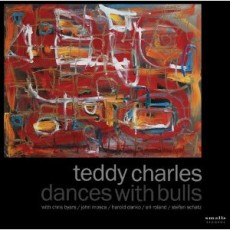
Teddy Charles was born Theodore Charles Cohen on April 13, 1928 in Chicopee Falls, Massachusetts. He began his musical career studying at Julliard School of Music as a percussionist. Later he started recording and making personal appearances as Teddy Cohen with various bands as a vibraphonist, writing, arranging and producing records and in 1951 he changed his last name to Charles.
He was one of many jazz musicians who hung out at an apartment building at 821 Sixth Avenue in New York City known as the Jazz Loft rented by photographer and artist David X. Young who in turn sublet an apartment to Charles’ mentor, Hall Overton. Teddy developed into a skillful musician not only on vibraphone but piano and drums as well and was known for his open-minded approach to more advanced sounds as well as his playing.
Known as an innovator, his main body of work was recorded in the 1950s. Teddy also did session work with musicians and singers as varied as Miles Davis, Oscar Pettiford, Roy Eldridge, Slim Gaillard, Artie Shaw, Benny Goodman, Buddy De Franco and Dion. From 1953-55 he was a member of the Jazz Composer’s Workshop along with Charles Mingus and Teo Macero. This collaboration opened his style to the influences of classical music and freer improvising.
An avid seaman, Charles is the Captain of the Skipjack Pilgrim out of Greenport, Long Island, New York where he performs music locally. After spending years at sea, vibraphonist Teddy Charles started performing again until his passing on April 16, 2012 in Riverhead, New York.
Inspire A Young Mind
More Posts: percussion,piano,vibraphone
Daily Dose Of Jazz…
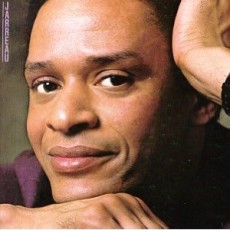
Alwin Lopez Jarreau was born March 12, 1940 in Milwaukee, Wisconsin to a minister/singer father and church pianist mother. He started out sing church concerts and benefits with his family and PTA meetings with his mother. He attended Ripon College where he sang with a group called the Indigos but graduated in 1962 with a Bachelor of Science degree in Psychology and went on to earn his Masters in Vocational Rehabilitation from the University of Iowa. He then worked as a Rehabilitation Counselor in San Francisco and moonlighted with a jazz trio led by George Duke.
By 1967, Al found success with acoustic guitarist Julio Martinez and the duo became the star attraction at Gatsby’s, a small Sausalito nightclub, which ultimately guided his decision to make singing his profession. Heading south the duo hit the L.A. hotspots, appeared on Johnny Carson, Merv Griffin, Mike Douglas and David Frost shows, and sang at The Improv between rising star comics like Bette Midler, Jimmie Walker and John Belushi.
Jarreau made jazz his primary occupation and in 1975 he signed with Warner Brothers dropping his critically acclaimed debut album, “We Got By”, that catapulted him to international fame and was soon followed by his second release “Glow”. He wrote and performed the Grammy-nominated theme to the 1980s television show “Moonlighting” and is also well known for his scat singing and the ability to imitate conventional guitar, bass, and percussive instrumentation.
Al was a featured vocalist on USA for Africa’s “We Are The World”, toured extensively, got his symphony program under way, performed on the Broadway production of “Grease” and signed with Verve. He has toured and performed with Joe Sample, Kathleen Battle, Miles Davis, David Sanborn, Rick Braun and George Benson among others. The seven-time Grammy winner in jazz, pop and R&B categories received a star on the Hollywood Walk of Fame. Al Jarreau continued to tour, perform and record until February 12, 2017, when he passed away of respiratory failure, at the age of 76, just two days after announcing his retirement, and one month before his 77th birthday.
\>
Give A Gift Of Jazz – Share
More Posts: vocal