
Daily Dose Of Jazz…
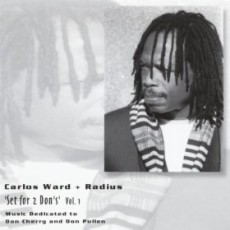
Carlos Ward was born on May 1, 1940 in Ancon, Panama and was raised in Panama City. His first instrument was the ukulele and by age 12 he took to the clarinet. His early influences were his aunt and uncle, both pianist, the former classical. He listened to Bob Crosby’s Dixieland clarinet on the radio as were as calypso.
By 1952 his family relocated to Seattle, Washington where his friend Marion Evans introduced him to the alto saxophone. Through high school he hung out with drummer Doug Robinson and the rock group The Playboys. Ward would go on to attend the Navy School of Music and worked with Albert Mangelsdorff when he was stationed in Germany.
He listened to Monk and Coltrane but it was Ornette Coleman’s “The Shape of Jazz to Come” that made the greatest impression on him. After a prophetic meeting with John Coltrane, in 1965 he took his advice and moved to New York. This led to his first major effort was his work with John Coltrane’s unrecorded octet in the period between 1965-66. He had a long-lasting association with Don Cherry from 1973 to 1980 and beyond. His duet association with pianist Abdullah Ibrahim has also been significant to his career.
Ward was a member of Cecil Taylor’s group in the period immediately after altoist Jimmy Lyons death in 1986. He also was a member of The Ed Blackwell Project and led his own quartet in 1987.
Alto saxophonist and flautist Carlos Ward has four albums as a leader and has some 15 as a sideman while working with Carla Bley, Roswell Rudd and the Jazz Composers Orchestra, Karl Berger, Abdullah Ibrahim, Paul Motian, Sunny Murray, Sam Rivers, Rashied Ali and Don Pullen & The African-Brazilian Connection.
It is unfortunate for the industry that an injury to his playing hand has sidelined this musician for many years. However, Ward is readying himself for a return to the scene and hopefully we will hear from future generations of players who will partake of the opportunity to glean knowledge from this master.

Put A Dose In Your Pocket
Daily Dose OF Jazz…
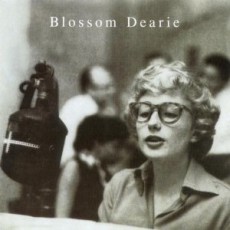
Blossom Dearie was born April 28, 1924 in East Durham, New York and as a child she studied Western classical piano but switched to jazz in her teens. After high school Dearie moved to New York City to pursue a music career and began to sing in groups such as the Blue Flames with the Woody Herman Orchestra and the Alvino Rey’s Blue Reys before starting her solo career.
She moved to Paris in 1952 and formed a vocal group, the Blue Stars of Paris, which included Michel Legrand’s sister Christine and Bob Dorough. In 1954 the group had a hit in France with a French version of “Lullaby of Birdland”. The Blue Stars would later evolve into the Swingle Sisters. Interestingly, on her first solo album released two years later, she plays the piano but does not sing.
After returning to the U.S. Blossom, Dearie made her first six American albums as a solo singer and pianist for Verve Records in the late 1950s and early 1960s, mostly in a small trio or quartet setting. In 1962, she recorded a radio commercial for Hires Root Beer. Through the Sixties she recorded with orchestra, performed in supper clubs around New York, appeared at Ronnie Scott’s in London and recorded four albums in the UK.
After a period of inactivity, by the ‘’70s she established her own label, Daffodil Records, lent her voice to “Mother Necessity” and “Figure Eight” on “Schoolhouse Rock!” and she collaborated with Johnny Mercer on one of his final songs “My New Celebrity Is You”. Her voice and songs have been featured in such films as Kissing Jessica Stein, The Squid and the Whale, My Life Without Me and The Adventures of Felix.
Blossom Dearie, vocalist, pianist and one of the last remaining supper-club performers, continued to perform in clubs until shortly before she passed away on February 7, 2006 at age 84 in Greenwich Village, New York.
Dose A Day-Blues Away
Daily Dose Of Jazz…
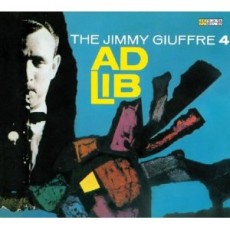
James Peter Giuffre was born on April 26, 1921 in Dallas, Texas. A graduate of Dallas Technical High School and North Texas Teachers College, he first became known as an arranger for Woody Herman. He would become a central figure in West Coast jazz and cool jazz, and was a member of Shorty Roger’s groups before going solo. Giuffre played clarinet, as well as tenor and baritone saxophones, but eventually focused on clarinet.
His first trio in 1957 consisted of Giuffre, guitarist Jim Hall and double bassist Ralph Pena, later replace by Jim Atlas. With minor hit with Giuffre’s “The Train and the River” featured on a television special The Sound of Jazz, he was matched with Pee Wee Russell for a leisurely jam session. When Atlas left the trio, Jimmy replaced him with valve trombonist Bob Brookmeyer. By 1961, Giuffre formed a new trio with Paul Bley and Steve Swallow and exploring free jazz hushed and quiet focus more resembling chamber music. The trio’s early ‘60s explorations of melody, harmony and rhythm are still as striking and radical as any in jazz.
Throughout the ‘60s Giuffre, Bley and Swallow eventually explored wholly improvised music, several years ahead of the free improvisation boom in Europe. By the early 1970s, Giuffre formed a new trio and utilized different instrumentation configurations as he ventured into electric and synthesizers. During this decade he headed the jazz ensemble at New York University, taught private lessons in saxophone and music composition. This continued through the ‘90s at the New England Conservatory of Music.
Jimmy Giuffre, who continually wrote creative and unusual arrangements and who was most notable for his development of forms of jazz which allowed for free interplay between the musicians, anticipating forms of free improvisation, passed away in Pittsfield, Massachusetts on April 24, 2008 of pneumonia, just two days shy of his 87th birthday.
Give A Gift Of Jazz – Share
Daily Dose Of Jazz…
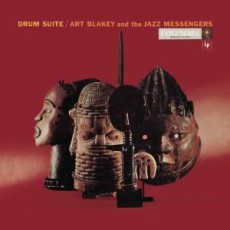
Jimmy “Spanky” DeBrest was born on April 24, 1937 in Philadelphia, Pennsylvania. He took up the bass and during his early years in Philadelphia he played with Lee Morgan’s earliest band while the virtuoso trumpeter was still a teenager. In 1957 he was a member of Ray Draper’s Quintet, Jackie McLean, pianist Mal Waldron and drummer Ben Dixon.
Spanky’s most famous affiliation was with master drummer Art Blakey until 1958 on a series of recordings that includes a spellbinding collaboration with pianist and composer Thelonious Monk. His performance credits include work with John Coltrane, Clifford Jordan and J. J. Johnson. He continually recorded until 1971.
Bassist Spanky DeBrest passed away on March 2, 1973 leaving the world his legacy of seventeen recording sessions as a sideman predominately with Art Blakey and the Jazz Messengers.
Put A Dose In Your Pocket
More Posts: bass
Daily Dose Of Jazz…
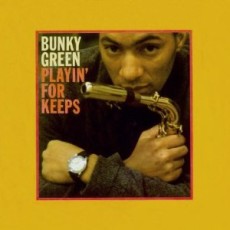
Vernice “Bunky” Green was born on April 23, 1935 in Milwaukee, Wisconsin. Originally strongly influenced by Charlie Parker, it was Charles Mingus’ sparing use of notation and his belief that there was no such thing as a wrong note that made a deep impression and had a lasting influence on Green’s own style.
Green began playing the alto saxophone around Milwaukee, mainly at a local club called “The Brass Rail.” His first big break came when he was hired in New York City by Charles Mingus to replace Jackie McLean in the 1960s. This was followed by a move to Chicago, Illinois that gave him the opportunity to perform with Sonny Stitt, Louie Bellson, Andrew Hill, Yusef Lateef and Ira Sullivan.
Gradually withdrawing from the public eye to develop a career as a leading jazz educator, Bunky taught at Chicago State University from 1972-1989 and in the 1990s took up the directorship of the Jazz Studies Program at the University of North Florida in Jacksonville. He also served a term as the president of the IAJE/International Association for Jazz Education and has been elected to the Jazz Education Hall of Fame.
Green recorded several fine albums beginning in the 1960s working with Wynton Kelly, Jimmy Cobb, Elvin Jones, Jason Moran and Lonnie Plaxico; was leader of the Vanguard label in the 70s, and awarded the coveted 5 Star Review from Down Beat Magazine for his 1989 commemoration of his parents death with “Healing The Pain”. Bunky Green continues to record and pursue his educator endeavors. He is currently Professor Emeritus and Director of Jazz Studies Emeritus at the University of North Florida.
Give The Gift Of Knowledge