

Daily Dose Of Jazz…
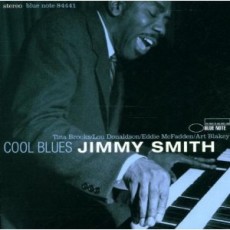
Jimmy Smith was born James Oscar Smith on December 8, 1925 in Norristown, Pennsylvania. He began as a pianist but switched to organ after hearing Wild Bill Davis, purchasing his first Hammond, renting a warehouse and emerging a year later with a fresh new sound. He was instrumental in revolutionizing the playing of the instrument. It only took one time for Alfred Lion to hear him play before signing him to Blue Note in 1956. It was the second album, “The Champ” that established him as a new star on the jazz scene, followed by “The Sermon”, “Home Cookin’” “Midnight Special” and “Back at the Chicken Shack”.
Forty sessions later Jimmy left Blue Note for Verve Records dropping his first album Bashin’ with a big band led by Oliver Nelson. With this album selling well he went on to collaborate over the next decade with Lalo Schifrin, Wes Montgomery, Kenny Burrell, Lou Donaldson, Lee Morgan, Stanley Turrentine, Grady Tate, Jackie McLean, George Benson and many other jazz greats of the day.
In the 1970s, Smith opened a supper club in Los Angeles where he played regularly; his career resurged in the 80s recording for Blue Note, Verve, Milestone and Elektra with Quincy Jones, Frank Sinatra, Michael Jackson, Dee Dee Bridgewater, B.B. King, Etta James and Joey DeFrancesco.
Smith’s virtuoso improvisation technique popularized the Hammond B3 and his style on fast tempo pieces combined bluesy “licks” with bebop-based single note runs, ballads had walking bass lines and up-tempo tunes he played the bass line on the lower manual with use of the pedals for emphasis of a string bass. He influenced the likes of Jimmy McGriff, Brother Jack McDuff, Richard “Groove” Holmes, Larry Goldings and Joey DeFrancesco as well as many rock keyboardists like Brian Auger or more recently The Beastie Boys.
Jimmy Smith, Hammond B3 pioneer in the hard bop, mainstream, funk and fusion jazz genres, was honored as an NEA Jazz Master shortly before his death on February 8, 2005 in Scottsdale Arizona.

More Posts: organ
Daily Dose Of Jazz…
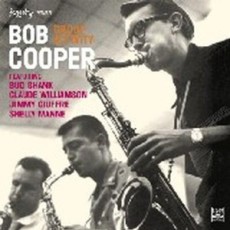
Bob Cooper was born on December 6, 1925 in Pittsburgh, Pennsylvania. He began to study the clarinet in high school and the following year he began working on the tenor saxophone. By 1945 he was joining Stan Kenton’s outfit when he was just 20, and as the new tenor saxophone player played alongside vocalist June Christy on “Tampico” that was to be a Kenton million-selling record. He would marry Christy two years later in Washington, DC.
Coop, as he was affectionately known, stayed with Kenton until he broke up the band in 1951. A naturally swinging jazz musician, Cooper and some other ex- Kenton men were hired to play at the Lighthouse Cafe in Los Angeles by the bassist Howard Rumsey. The Lighthouse became one of the most famous jazz clubs in the world, and the band, Howard Rumsey’s Lighthouse All Stars made history.
With a steady job he could work from home and he expanded his study of the oboe and English horn. While at the Lighthouse he made many momentous recordings, unique amongst them oboe and flute with Bud Shank, and composing a 12-tone octet for woodwind. Bob would go on to lead record sessions as part of a series of long-playing albums under “Kenton Presents” for Capitol Records.
His writing and playing on the album and its successor, “Shifting Winds” in 1955, were seminal in the creation of what was to become known as West Coast jazz. Imaginative writing and a well lubricated polish characterized the session and Cooper’s singing and stomping tenor style on his arrangement of “Strike Up The Band” boosted the record sales considerably.
Cooper would go on to tour Europe, South Africa and Japan with Christy, work as a studio musician in Hollywood, further develop his writing and compose film scores, join Kenton’s huge Neophonic Orchestra and have his composition ‘Solo For Orchestra’ premiered at one of its concerts. Much in demand for his beloved big-band work, he played regularly in other Los Angeles orchestras led by Shorty Rogers, Terry Gibbs, Bill Holman, Bill Berry, Bob Florence and Frankie Capp / Nat Pierce.
Bob Cooper, the West Coast jazz musician known primarily for playing tenor saxophone was also one of the first to play solos on oboe, passed away on August 5, 1993 in Los Angeles, California. Though maturing into one of the finest but least praised tenor saxophonists, he easily ranked with Stan Getz, Zoot Sims and Al Cohn in his talents. His last studio recording, released the year of his death, was on Karrin Allyson’s album Sweet Home Cookin on which he played tenor saxophone.
More Posts: arranger,composer,english horn,oboe,saxophone,vocal
Daily Dose Of Jazz…
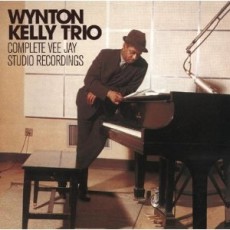
Wynton Kelly was born December 2, 1931 in Jamaica but grew up in Brooklyn, New York from age four when his parents emigrated to the United States. He started playing piano professionally as a teenager in R&B groups led by Eddie “Cleanhead” Vinson and Eddie “Lockjaw” Davis, then went on to work with Lee Abrams, Cecil Payne, Dinah Washington and Dizzy Gillespie.
Kelly recorded fourteen titles for Blue Note with a trio in 1951, worked with Dinah Washington, Dizzy Gillespie, and Lester Young during 1951-1952 followed by serving in the military. After his discharge he again worked with Washington, Charles Mingus and the Dizzy Gillespie big band but he would be most famous for his stint in the late 50s with the Miles Davis Quintet from 1959 – 63 and was part of the seminal “Kind Of Blue” replacing Bill Evans on “Freddie Freeloader”, along with notable albums “At The Blackhawk” and “Someday My Prince Will Come”. He would later replace Tommy Flanagan on the “Naima” on Coltrane’s “Giant Steps”.
Wynton left Davis in 1963 and took the rest of the rhythm section bassist Paul Chambers and drummer Jimmy Cobb with him to form his trio. He recorded as a leader for Blue Note, Riverside, Vee-Jay, Verve and Milestone.
Pianist Wynton Kelly passed away on April 12, 1971 in Toronto, Ontario, Canada of an epileptic seizure. At 39, he was one of the most prolific sideman pianists of his era, performing on scores of jazz albums and a superb accompanist and distinctive soloist who would decades later influence a new generation of jazz pianists.
More Posts: piano

Daily Dose Of Jazz…
Hadley Caliman was born December 1, 1932 in Los Angeles, California. While at Jefferson High School he studied with his fellow classmates trumpeter Art Farmer and saxophonist Dexter Gordon, and was known in the Central Avenue corridor as “Little Dex”. It was here during the 50s and by the 60s where he primarily gigged and the tenor was soon seen playing with Mongo Santamaria, the Gerald Wilson Big Band, Willie Bobo and Don Ellis and was briefly a member of a jazz-rock fusion group led by Ray Draper.
By the Seventies Hadley had moved to San Francisco and was performing and/or recording with Joe Henderson, Nancy Wilson, Carlos Santana, Joe Pass, Hampton Hawes, Bobby Hutcherson, Flora Purim, Elvin Jones, Freddie Hubbard, Jon Hendricks, Earl Andreza, Phoebe Snow and Patrice Rushen among others. He later moved to Seattle, Washington where he had been on the faculty of the Cornish College of the Arts and a featured soloist with the Seattle Repertory Jazz Orchestra.
Though one can hear Coltrane’s influence in his playing, it never overshadowed the earlier West coast bop or the myriad of musical genres he played that created his modern jazz sound. Tenor saxophonist and flautist Hadley Caliman passed away on September 8, 2010 at age 78 in Seattle, Washington where he had been an active player leading both a quartet and quintet.
More Posts: saxophone
Daily Dose Of Jazz…
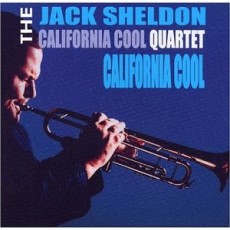
Jack Sheldon was born November 30, 1931 in Jacksonville, Florida became a professional trumpet player at the age of thirteen. It was during his teen years he moved to Los Angeles and subsequently joined the air force playing in military bands in Texas and California. He first gained recognition as part of the West Coast jazz movement in the 1950s performing and recording with Art Pepper, Gerry Mulligan and Curtis Counce.
Sheldon played the trumpet, sang, performed and was the sidekick and comedic foil on the Merv Griffin show. During the sixties he ventured further into television as an actor on such shows as Dragnet, The Girl With Something Extra, the Cara Williams Show and Run Buddy Run. He was also the voice used for “Conjunction Junction” and “I’m Just A Bill” on Schoolhouse Rock. He voice later appeared on such sitcoms as The Simpsons and Family Guy.
He has played with Jimmy Guiffre, Herb Geller, Mel Torme, Wardell Gray, Helen Humes, Gary Burton, June Christy, Rosemary Clooney and the big bands of Stan Kenton, Bill Berry, Tom Kubis and Benny Goodman.
Jack performed the trumpet solo for the theme song “The Shadow Of Your Smile” on the soundtrack of the 1965 movie, The Sandpiper, appeared in the Oscar-nominated documentary “Let’s Get Lost” about the life of fellow jazz trumpeter Chet Baker, performed a trumpet solo in the Coppola film “One From The Heart”, appeared as an ill-fated trumpeter in Radioland Murders, and is the subject of an award winning feature documentary, “Trying to Get God: The Jazz Odyssey of Jack Sheldon”. The trumpeter continued to be an active performer of the bebop and cool jazz schools until his transition on December 27, 2019.
Give A Gift Of Jazz ~ Share

#preserving genius
More Posts: trumpet