

Daily Dose Of Jazz…
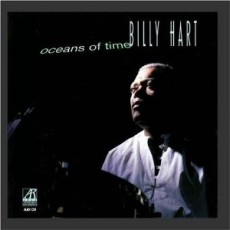
William “Billy” Hart was born November 29, 1940 in Washington, D.C. is a drummer who worked first with soul groups Sam & Dave and Otis Redding then later with locals Buck Hill and Shirley Horn. This led to work as a sideman with the Montgomery Brothers, Jimmy Smith, and Wes Montgomery prior to his death in 1968.
Hart moved to New York and started playing with Eddie Harris, Pharoah Sanders, Marian McPartland and recording with McCoy Tyner, Wayne Shorter and Zawinul. In 1969 he became a member of Herbie Hancock’s sextet followed by another stint with McCoy Tyner, then Stan Getz, Quest and Miles Davis along with extensive freelancing. In the nineties he worked with Charles Lloyd, Joe Lovano, Tom Harrell and performed with the Three Tenors – Dave Liebman, Joe Lovano and Michael Brecker.
Billy Hart is one of the most in-demand jazz drummers and educators alive and has recorded more than 500 albums as a sideman. Since the early 1990s has spent considerable time at the Oberlin Conservatory of Music, is an adjunct professor at the New England Conservatory of Music and at Western Michigan University. He conducts private lessons through The New School and New York University. He also often contributes to the Stokes Forest Music Camp and the Dworp Summer Jazz Clinic in Belgium, while leading a quartet Mark Turner, Ethan Iverson and Ben Street.
More Posts: drums
Daily Dose Of Jazz…
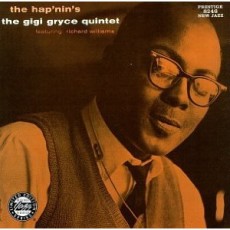
Gigi Gryce was born George General Grice, Jr. on November 28, 1925 in Pensacola, Florida but grew up in Hartford Connecticut. He studied classical composition at the Boston Conservatory, studied with private teachers, then won a Fulbright scholarship and continued his studies in Paris.
His performing career was relatively short in comparison to other musicians of his generation, his work little known, however, several of his compositions have been covered extensively – “Minority,” “Social Call,” and “Nica’s Tempo” are frequently heard in mainstream jazz venues. Gigi’s compositional bent includes harmonic choices similar to those of Benny Golson, Tadd Dameron and Horace Silver in the contemporaneous period. Gryce’s playing, arranging, composing is consonant with the hard bop classic period was generally considered to be 1953-1965.
During the 1950s he achieved some renown for his innovative bebop playing, his primary instrument being the alto saxophone. Among the musicians with whom Gryce performed were Thelonious Monk, Tadd Dameron, Lionel Hampton, D, Howard McGhee, Clifford Brown, Art Farmer, Lee Morgan, Max Roach, Oscar Pettiford, Teddy Charles and Benny Golson. In 1955, Gryce formed the Jazz Lab Quintet, which included trumpeter Donald Byrd.
In the mid-1950s he converted to Islam and adopted the name Basheer Qusim. By the 60s he stopped using the name Gigi Gryce partly due to personal problems that took their toll on his financial and emotional state, withdrawing from performing. During this last period of his life he taught at a series of public schools in Long Island and New York City and the Community Elementary School 53 on 168th Street in the Bronx, the last school renamed the Basheer Qusim School in his honor.
Gigi Gryce, saxophonist, flautist, clarinetist, composer, arranger, educator, and big band leader died of an apparent epileptic seizure on March 14, 1983 in Pensacola, Florida.
Daily Dose Of Jazz…
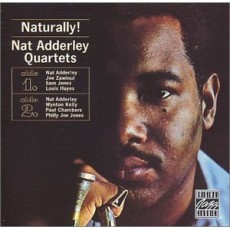
Nathaniel Adderley was born on November 25, 1931 in Tampa, Florida but grew up in Tallahassee when both his parents were hired to teach at Florida A&M University. While living in Tallahassee in the early 40s, he and his brother Julian played with Ray Charles, in the ‘50s he worked with his brother’s original group, and with Lionel Hampton and J. J. Johnson.
In 1959 joined his brother’s new quintet and stayed with it until Cannonball’s death in 1975. It was during this tenure that Nat composed “Work Song,” “Jive Samba,” and “The Old Country” for this group that have since become jazz standards.
After his brother’s death he led his own groups and recorded extensively working with Ron Carter, Sonny fortune, Johnny Griffin, Antonio Hart and Vincent Herring, among others. Adderley moved to Harlem in the 1960s, Teaneck, New Jersey in the 1970s, before moving to Lakeland, Florida where he was instrumental in the founding and development of the annual Child of the Sun Jazz Festival, held annually at Florida Southern College.
Nat Adderley, cornetists and trumpeter in the hard bop and soul jazz genres, lived with diabetes throughout his career, an illness that resulted in his death from complications on January 2, 2000. He left the jazz world a body of work that has been memorialized by a host of jazz musicians.
Daily Dose Of Jazz…
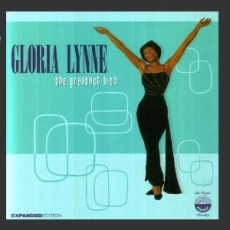
Gloria Lynne was born Gloria Wilson on November 23, 1931 in New York City and grew up in Harlem. Her professional career began in 1951 after winning first prize at the “Amateur Night” at the Apollo Theater. She shared the stage with contemporary nightclub vocal ensembles as well as with Ella Fitzgerald. During the Fifties she recorded as part of such groups as The Enchanters, The Del Tones and recording as a soloist under her birth name. However, most of her work was released under her stage name on both Everest and Fontana record labels.
Gloria showed much promise early on, especially after TV appearances, including the Harry Belafonte Spectacular, but her development suffered through poor management, some unscrupulous recording executives who profited while she was left virtually penniless, saved only by the fact that she was able to work steadily and earn her money from performance.
Throughout the 1960s she had several hits including “June Night”, “Love I Found You,” and “I Wish You Love” in 1964 that became a big hit and her signature song, “I’m Glad There Is You” and a pop tune “(You don’t have to be a) Tower Of Strength” that proved her versatility. Lynne went on to record such albums as “Soul Serenade”, “Love And A Woman”, “Where It’s At”, and “Here, There And Everywhere” all of which showcased her versatility in jazz, R&B, soul and melodic “pop”.
During her earlier years on-the-road she shared bills with Ray Charles, Billy Eckstine, Johnny Mathis, Ella Fitzgerald and Harry Belafonte. As Lynne moved into jazz in her later career she worked with top-flight musicians and arrangers and performed with many of the jazz greats, including Quincy Jones, Bobby Timmons, Philly Joe Jones and Harry “Sweets” Edison. She penned lyrics with Herbie Hancock for his “Watermelon Man” and “All Day Long” with Kenny Burrell.
She has been inducted into the National Black Sports and Entertainment Hall of Fame, honored with a Pioneer Award by the Rhythm & Blues Foundation, with Gloria Lynne Day in New York City, received the National Heritage Award, the Prestigious Eagle Award and Outstanding Achievement In Jazz at the New York MAC Awards.
Vocalist Gloria Lynne continued to record, perform and write until passing away on October 15, 2013 at age 83 in Newark, New Jersey.
More Posts: vocal

Daily Dose Of Jazz…
James M. Knepper was born November 22, 1927 in Los Angeles, California. He began playing trombone at nine, started playing professionally at 15 and worked with the big bands Freddie Slack, Roy Porter, Charlie Spivak, Charlie Barnet, Woody Herman and Claude Thornhill during the late forties and early ‘50s.
A good friend and arranging/transcribing partner of bassist and composer Charles Mingus, Knepper was twice on the receiving end of Mingus’ legendary temper. The first incident was being a punch in the mouth while onstage at a memorial concert in Philadelphia, the second punch landed in Mingus’ apartment broke one of his teeth ruining his embouchure and resulting in the permanent loss of the top octave of his range on the trombone, thus ending their working relationship.
Throughout his career Jimmy worked with Lee Konitz, Stan Kenton, Herbie Mann, Gil Evans, Benny Goodman, Thad Jones/Mel Lewis Orchestra, toured Africa and the Soviet Union, and cut sessions as a leader several albums on Debut, Bethlehem, Blackhawk, Steeplechase and Criss Cross labels among others.
Knepper’s nimble technique enabled him to articulate the trombone more in the manner of a saxophone coupled with the slurs and tonal variations of his predecessors. His improvisation was filled with subtle surprises and his reputation has remained strong in the jazz world over the years. After a long battle with Parkinson’s disease, Jimmy Knepper passed away on June 14, 2003.
More Posts: trombone