

Daily Dose Of Jazz…
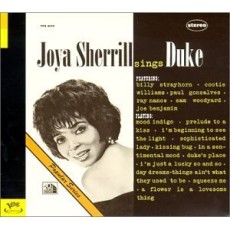
Joya Sherrill was born on August 20, 1924 in Bayonne, New Jersey and originally aspired to be a writer. While still in high school her father arranged for an introduction with Duke Ellington in 1942, aged 17. Six months later she joined the orchestra fronting the band as his vocalist. Leaving briefly to attend Wilberforce University, she returned to the group from 1944 to 1946. She had a hit with Ellington’s tune “I’m Beginning to See the Light”.
Subsequently, she worked as a soloist, performing with Rex Stewart, Ray Nance and others into the 1960s. She returned to Ellington for 1959’s A Drum Is A Woman. She toured the U.S. in 1959 and then took a role in the Broadway show “The Long Dream”. She toured with Benny Goodman in the USSR in 1962 and then returned to sing with Ellington in 1963.
One of the first Blacks to host a television program, from 1970 to 1982 she had a children’s television show, “Time for Joya”, later called “Joya’s Fun School. Although she only taped a few years worth of original episodes, the show would be seen in reruns for twelve years. Late in the 1980s she hosted a children’s show in the Middle East.
Joya Sherrill, jazz vocalist, died of complications from leukemia on June 28, 2010 in Great Neck, New York at the age of 85.
More Posts: vocal
Daily Dose of Jazz…
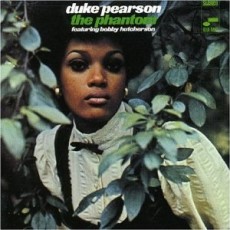
Duke Pearson was born Columbus Calvin Pearson, Jr. in Atlanta, Georgia on August 17, 1932. He first studied brass instruments at the early age of five, but dental issues forced him to pursue another instrument, the piano. His budding talent moved his uncle to give him the nickname Duke, a reference to Ellington. He attended Clark College while also playing trumpet in Atlanta area groups. In the early 50s he enlisted in the Army and continued to perform with different ensembles in Georgia and Florida prior to moving to New York in 1959.
In New York, Pearson gained the attention of trumpeter Donald Byrd, who saw him performing with the Art Farmer/Benny Golson Sextet. Shortly afterwards, Byrd asked him to join his newly formed band, the Donald Byrd-Pepper Adams Quintet. Pearson was also the accompanist for Nancy Wilson’s 1961 tour. During that same year, Pearson became ill before a Byrd-Adams show, and newcomer Herbie Hancock took the piano bench, eventually leading to Hancock’s permanent residency.
After the death of Ike Quebec in 1963, Pearson took over his position as A&R man for Blue Note. From that year until 1970, Pearson was a frequent session musician and producer for numerous Blue Note albums while also leading his own recording dates. This was odd, since Pearson also recorded with his co-led big band with Byrd for Atlantic Records; a stipulation he made sure was in his Atlantic contract. However, he was a big part in shaping the Blue Note label’s hard bop direction in the 1960s
Duke eventually retired from Blue Note, opting to teach at Clark College, tour with Carmen McRae and Joe Williams, and reforming his big band throughout the Seventies. Pianist and producer Duke Pearson passed away from complications due to multiple sclerosis on August 4, 1980 in his hometown of Atlanta.
More Posts: piano
Daily Dose of Jazz…
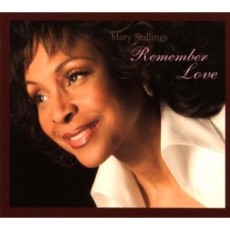
Mary Stallings was born August 16, 1939 in San Francisco, California, one of the eldest of 11 children growing up in the Laurel Heights district, where she still lives, starting as a gospel singer at the First AME Church. Her professional singing career began before she graduated from Lowell High School. Encouraged by her uncle, saxophonist Orlando Stallings, she listened closely to the great jazz singers.
As a teenager, Stallings was appearing in Bay Area nightclubs performing with Ben Webster, Cal Tjader, Earl Hines, Red Mitchell, Teddy Edwards and the Montgomery brothers. Before graduation from high school she joined R&B pioneer Louis Jordan’s Tympani Five. One night in the early Sixties at San Francisco’s Black Hawk nightclub, Dizzy Gillespie invited Ms. Stallings out of the audience and onto his bandstand to sing. By the time she was 26, Mary was playing the legendary Monterey Jazz Festival together with Gillespie in 1965.
The vocalist is perhaps best known for her 1961 collaboration with vibraphonist Cal Tjader on Cal Tjader Plays, Mary Stallings Sings on Fantasy, however, she went on to tour Asia, South America and perform stateside sharing billing with Billy Eckstine, Joe Williams, Tony Bennett and Ella Fitzgerald. From 1969 – ’72 she held a three-year residency as the Count Basie Orchestra girl singer.
After a short semi-retirement Stallings returned to full-time singing at the end of the eighties and finally came to the attention of the national jazz audience with her 1994 release of the aptly titled “I Waited for You” with the Gene Harris Quartet. She followed with Fine and Mellow, Spectrum, Manhattan Moods, Live at the Village Vanguard and Remember Love.
Over the years Mary has worked with jazz luminaries Monty Alexander, Paul Humphries, Ron Eschete, Hendrik Meurkens, Dick Oatts, Geri Allen, Ben Wolfe and Andy Simpkins. She has performed at major festivals being backed by the likes of Marcus Shelby’s Jazz Orchestra, Eric Reed Trio and Wycliffe Gordon and is the recipient of San Francisco’s SF Jazz Beacon Award. She continues to perform, tour and record.
More Posts: vocal
Daily Dose Of Jazz…
Joseph Armand Castro was born on August 15, 1927 in Miami, Arizona and went to school in Pittsburg, north of Oakland, California in the Bay area where he began playing professionally at the age of 15. After graduation he enrolled at San Jose State University but his matriculation was interrupted not once but twice by Army service and then with the forming of a working trio.
Moving to New York City in 1956 Castro hit the ground working at Basin Street, The Embers, Hickory House and Birdland. During this period in his career, Leonard Feather and Dave Brubeck critically lauded his talent.
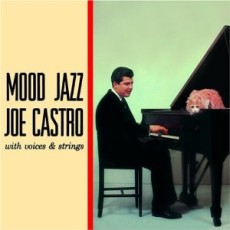
Two years later Joe moved back to the West Coast landing in L.A. playing with Teddy Edwards, Billy Higgins and Leroy Vinnegar. The bebop pianist recorded and performed extensively with The Teddy Edwards Quartet while also making two of his own recordings as a leader for Atlantic Records. His debut album in 1956 “Mood Jazz” utilized three different ensembles: a large orchestra with strings and voices, another string orchestra without voices and a regular jazz combo of piano, trumpet, alto saxophone, bass, and drums. His sophomore album titled “Groove Funk Soul” was recorded on July 18, 1958 and included tenor saxophonist Teddy Edwards, bassist Leroy Vinnegar and Billy Higgins on drums.
In the early 1960’s, tobacco heiress/jazz enthusiast Doris Duke and then long-term boyfriend Castro, along with silent partner and friend Duke Ellington, formed record company Clover Records and music publishing company Jo-Do. Castro’s third album as a leader titled “Lush Life” was the only album released on Clover Records. But by 1966, Jo-Do, Clover, and the Castro-Duke relationship had failed, and all three were shortly dissolved.
From 1959 to 1960, Castro backed vocalists Anita O’Day and June Christy; was music director for Tony Martin from 1961 to 1963. He performed with sidemen Chico Hamilton, Red Mitchell, Ed Shonk and Howard Roberts in his trios and quartets. Castro moved to Las Vegas in the 70s and continued to accompany vocalists and play in Las Vegas pit bands until he became the musical director for the Tropicana’s Folies Bergere. Pianist Joe Castro passed away on December 13, 2009.
More Posts: piano
Daily Dose Of Jazz…
Lorez Alexandria was born Dolorez Alexandria Turner on August 14, 1929 in Chicago, Illinois and began as a singer in churches in her teens, spending 11 years as part of an “a cappela” choir. Turning to jazz, she worked the local Chicago club scene before moving to Los Angeles in 1962 to further her career.
Although Alexandria never made the anticipated breakthrough to a wider audience, but she was highly regarded as a jazz singer by those who knew her work, whether as critics, musicians or fans. Over the course of her career Lorez recorded with such musicians as King Fleming, Ramsey Lewis, Howard McGhee and Gildo Mahones.
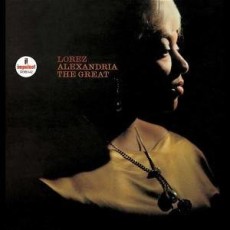
Lorez had an attractive voice, a good feel for jazz phrasing, and a cleanly enunciated delivery that was always highly sensitive to the import of the lyric she was singing. She remains best known for her album Alexandria the Great released in 1964 that featured her in a variety of contexts ranging from big bands to small groups, including several tracks with the Wynton Kelly Trio.
She recorded several albums, including This is Lorez Alexandria with the King Fleming Quartet 1957; Deep Roots 1960; A Woman Knows 1978 and Harlem Butterfly 1984.
Retiring from performing in 1996, she suffered a stroke shortly afterwards, remaining in failing health. Vocalist Lorez Alexandria succumbed to complications from kidney failure on May 22, 2001 in Los Angeles, California.
More Posts: vocal