


Daily Dose Of Jazz…
Joe Puma was born on August 13, 1927 in the Bronx, New York. He became known professionally playing with Joe Roland in 1949. During the ‘50s he held down a position as a studio musician working with Louis Bellson, Artie Shaw, Eddie Bert, Herbie Mann, Mat Mathews, Chris Connor and Paul Quinichette. In 1957 he won the “New Star Award for Guitar” from Metronome Magazine.
He went on to record as a leader during this time and into the Sixties working with Morgana King, Bobby Hackett, Gary Burton and Carmen McRae and between 1972 and ’77 the guitarist led an ensemble with Chuck Wayne. He continued to perform and teach into the late 90s.
The typical Puma style was filled with clean melodic lines, perfect “comping” behind the other players. He had a humorous ad lib quality that showed up as “out of tempo” playing or quoting other melodies.
Guitarist Joe Puma left the world eight albums as a leader and numerous others as a sideman, passing away on May 31, 2000 in New York City a few months shy of his 73rd birthday.
More Posts: guitar
Daily Dose Of Jazz…
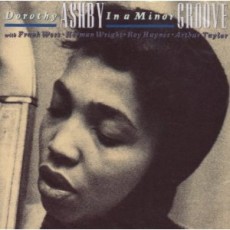
Dorothy Ashby was born Dorothy Jeanne Thompson on August 6, 1932 in Detroit, Michigan growing up around music where her father, guitarist Wiley Thompson, often brought home fellow jazz musicians. As a young girl, Dorothy would provide support and background to their music by playing the piano. She attended Cass Technical High with fellow students Donald Byrd, Gerald Wilson and Kenny Burrell. While in high school she played a number of instruments including the saxophone and string bass before coming upon the harp.
Attending Wayne State University in Detroit, Ashby studied piano and music education; graduated and began playing piano around the Detroit jazz scene. By 1952 she had made the harp her main instrument, and at first her fellow jazz musicians were resistant to the idea of adding the harp into jazz performances. Overcoming their initial resistance and perception of it being an instrument of classical music and also somewhat ethereal in sound, she built support for the jazz harp by organizing free shows and playing at dances and weddings with her trio.
She recorded with Ed Thigpen, Richard Davis, Jimmy Cobb, Frank Wess and others in the late 1950s and early 1960s and had her own radio show in Detroit. Ashby played with Louis Armstrong and Woody Herman, was included in Down Beat magazine’s Best Jazz Performances, and produced Black theater in Detroit by starting a theatrical group with her husband John Ashby providing a training ground for actors like Ernie Hudson,
By the late 1960s, the harpist settled in California breaking into the studio recording system with the help of the soul singer Bill Withers who recommended her to Stevie Wonder playing on the former’s +’Justments and the latter’s “If It’s Magic” in the Seventies. As a result, Dorothy played studio sessions for Dionne Warwick, Diana Ross, Earth, Wind & Fire, and Barry Manilow. She was featured in the song “Come Live With Me” on the soundtrack for the 1967 movie Valley of the Dolls.
Along with Alice Coltrane, Ashby extended the popularization of jazz harp past a novelty, showing how the instrument can be utilized seamlessly as much a bebop instrument as the saxophone. Her skill and creativity is recognized today and her musical legacy is enduring as numerous hip-hop musicians have sampled her music.
Dorothy Ashby, harpist and composer, passed away from cancer on April 13, 1986 in Santa Monica, California.
More Posts: harp
Daily Dose Of Jazz…
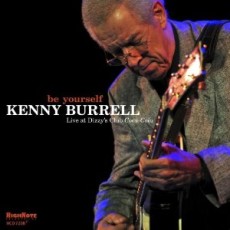
Kenneth Earl Burrell was born July 31, 1931 in Detroit, Michigan and began playing guitar at age 12. He cites his influences as Charlie Christian, Django Reinhardt and Wes Montgomery. He made his debut recording with Dizzy Gillespie’s Sextet while still matriculating Wayne State University in 1951.
After graduating Kenny went on the road with Oscar Peterson in 1955 and a year later moved to New York City. During this decade and forward Burrell has led his own groups and recorded some 40 albums and CDs, many of them well-received albums, such as, Midnight Blue, Blue Lights, Sunup to Sundown, Soft Winds, and his 75th Birthday Bash.
A consummate sideman, Burrell recorded with a wide range of prominent musicians. A highly popular performer, he has won several jazz polls in Japan, United Kingdom and the United States.
In the 1970s he began leading seminars about music, particularly “Ellingtonia”, examining the life and accomplishments of Duke Ellington. As of 1996 he has served as Director of Jazz Studies at UCLA, mentoring such notable alumni as Gretchen Parlato and Kali Wilson.
Guitarist Kenny Burrell has amassed over sixty albums as a leader and another 58 as a sideman with the likes of Jimmy smith, Lalo Schifrin, Charlie Rouse, Sonny Rollins, Ike Quebec, Wynton Kelly, Etta Jones, Milt Jackson, Coleman Hawkins and Red Garland among numerous others. He continues to perform, record and tour.
More Posts: guitar
Daily Dose Of Jazz…
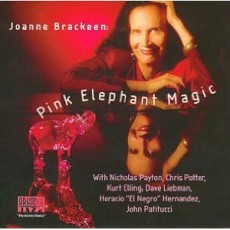
Joanne Brackeen was born Joanne Grogan on July 26, 1938 in Ventura, California but has used her married name throughout her career. The pianist and music educator attended the Los Angeles Conservatory of Music, but devoted her talents to jazz by imitating Frankie Carle albums. She was greatly influenced by Charlie Parker and bebop.
Her career began in the late 1950s while working with names like Dexter Gordon, Teddy Edwards, Harold Land, Don Cherry, Charlie Haden and Charles Lloyd. In 1969 Brackeen began to “take off” as she became the first woman to join Art Blakey’s Jazz Messengers.
In the 70s Joanne he played with Joe Henderson (1972-75) and Stan Getz (1975-1977) before leading her own trio and quartet. Brackeen established herself as a cutting edge pianist and composer through her appearances around the world, and her solo performances also cemented her reputation as one of the most innovative and dynamic of pianists. Her trios featured such noted players as Clint Houston, Eddie Gomez, John Patitucci, Jack DeJohnette, Cecil McBee and Billy Hart.
She has served on the grant panel for the National Endowment for the Arts, toured the Middle East with the US State Department as sponsor, had solo performances at Carnegie Hall and is a professor at the Berklee College of Music. With 25 albums to her credit, pianist Joanne Brackeen continues to perform and record.
More Posts: piano
Daily Dose Of Jazz…
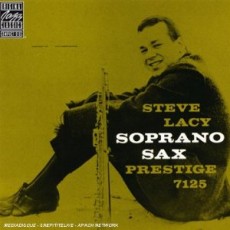
Steve Lacy was born Steven Norman Lackritz on July 23, 1934 in New York City. He didn’t begin his career until age sixteen, coming to prominence in the 1950s as a progressive Dixieland musician playing with the likes of Henry “Red” Allen, Pee Wee Russell, George ”Pops Foster and Zutty Singleton, as well as Kansas City jazz musicians like Buck Clayton, Dicky Wells and Jimmy Rushing.
Working extensively in experimental jazz and dabbling in free improvisation, Lacy’s music was typically melodic and tightly structured over a long and prolific career. He became involved with the avant-garde, performed on “Jazz Advance” in 1956, the debut album of Cecil Taylor, and appeared with his groundbreaking quartet at the 1957 Newport Jazz Festival.
Steve made a notable appearance on an early Gil Evans album, however, his most enduring relationship, however, was with the music of Thelonious Monk, his first recorded album in 1958 as a leader “Reflections” featured only Monk compositions. He briefly played in Monk’s band in 1960 and later on Monk’s Columbia session “Big Band/Quartet” in 1963.
Monk tunes became a permanent part of his repertoire, making an appearance in virtually every concert appearance and on his albums. He often collaborated with trombonist Roswell Rudd in presenting interpretations of Monk, Mingus, Ellington and Herbie Nichols’ compositions, rarely playing standard popular or show tunes. In the 1960s he continued to work with other players involved in the American free-jazz avant-garde, and in the Seventies immersed in the European free improvisation scene that would remain an important element in his work thereafter.
Steve became a highly distinctive composer with his signature simplicity of style. He became a widely respected figure on the European jazz scene for several decades, was the recipient of a MacArthur Fellowship, began teaching at the New England Conservatory of Music in Boston and performed one of his last public performances in front of 25,000 people at the close of a peace rally on Boston Common in 2003.
Steve Lacy, soprano saxophonist, was diagnosed with cancer continued playing and teaching until weeks before his death on June 4, 2004 at the age of 69.
More Posts: saxophone