

Daily Dose Of Jazz…
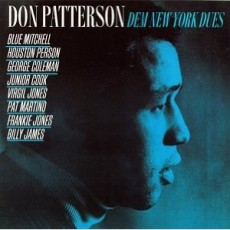
Don Patterson was born July 22, 1936 in Columbus, Ohio. He started studying piano as a child, heavily influenced by Erroll Garner but by 1956 switched to organ after hearing Jimmy Smith play. Making his debut on organ in 1959 he played with various groups into the early Sixties that saw him start performing regularly with Sonny Stitt, where he made a name for himself. This led to numerous recording sessions as a leader with Prestige and later Muse Records beginning in 1964 with sidemen guitarist Pat Martino and drummer Billy James.
During the Sixties, Don recorded as a sideman with Eddie “Lockjaw” Davis, and Eric Kloss but his most commercially successful album was his 1964 “Holiday Soul” reaching #85 on the Billboard 200 three years later. However, with his troubles with drug addiction hobbling his career in the 70s, while residing in Gary, Indiana he would occasionally record for Muse Records.
By the 1980s organist Don Patterson had moved to Philadelphia, Pennsylvania and made a small comeback, but his health continued to deteriorate over the course of the decade, forcing him to frequent dialysis until he passed away on February 10, 1988. He left a catalogue of twenty-one albums as a leader and thirteen as a sideman.
More Posts: organ
Daily Dose Of Jazz…
Helen Merrill was born Jelena Ana Milcetic on July 21, 1930 in New York City to Croatian immigrants. The internationally renowned jazz vocalist began singing in jazz clubs in the Bronx at the age of fourteen. By the time she was sixteen, she had taken up music full time and in 1952 made her recording debut when asked to sing “A Cigarette For Company” with the Earl Hines Band that was released on their Xanadu album.
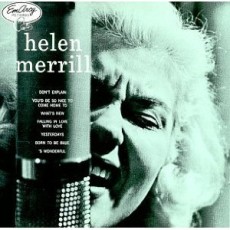
As a result of this exposure she received two subsequent singles recorded for Roost Records and was then signed by Mercury for their new Emarcy label. In 1954, she recorded her first and one of her most acclaimed LP simply titled “Helen Merrill” featuring legendary jazz trumpeter Clifford Brown and bassist/cellist Oscar Pettiford, among others. The album was produced and arranged by Quincy Jones, who was then just twenty-one years old. The success of the album got her signed to an additional four-album contract with Mercury.
Her follow-up 1956 album Dream of You arranged by Gil Evans was the precursor to the musical foundations for his Miles Davis years. By the 60s she was in Europe touring and enjoying greater commercial success than in the States. Developing a following in Japan that remains strong to this day, she not only recorded in Japan, Merrill became involved in producing albums for Trio Records and hosting a show on a Tokyo radio station.
Helen returned to the U.S. in 1972 and has continued recording and regular touring since then. Her later career has seen her experiment in different music genres, recording a bossa nova album, a Christmas album a Rodgers and Hammerstein album, as well as resurrecting “Dream of You” in 1987 with fresh arrangements titled “Collaboration” and co-producing “Billy Eckstine Sings With Benny Carter” and singing on duet on two ballads. By 1995 she recorded “Brownie: Homage to Clifford Brown in tribute to the late trumpeter.
Helen Merrill’s career has spanned six decades with no fade in her popularity and has recorded and performed with some of the most notable figures in the American jazz scene such as Chet Baker, San Getz and Romano Mussolini, among many, many others.

More Posts: vocal

Daily Dose Of Jazz…
Peter Ind was born July 20, 1928 in Middlesex, England who didn’t begin playing double-bass professionally until the late Forties as part of the house band on the Queen Mary. Relocating to New York in 1951 he played with Lennie Tristano, Lee Konitz, Buddy Rich, Booker Ervin, Mal Waldron and Slim Gaillard.
Branching into production Peter became a pioneer in stereo recording and the overdubbing of jazz in the Fifties. He produced sessions in his loft for Zoot Sims, Gerry Mulligan and Booker Little and founded his own “Wave” label in 1961, releasing as a leader “Looking Out” featuring Joe Puma and Dick Scott.
By 1963 Ind had moved to Big Sur, California where he remained until 1966. During this period he concentrated on performing unaccompanied, and recorded several albums of solo material. In 1965 he played with Konitz and Warne Marsh and continued to play with Marsh and Konitz into the 1970s after his return to England in 1967. Private recordings under the Wave imprint began to be issued.
In 1984 he opened a nightclub in London called the Bass Clef and after several successful years, the club had to close for tax reasons. Peter Ind continues to record and issue CDs, perform internationally and has written two books – “Jazz Visions” that explores the legacy of Lennie Tristano and “The Environment and Cosmic Metabolism” centering on energy concerns.
More Posts: bass
Daily Dose Of Jazz…
Carmell Jones was born in Kansas City, Kansas on July 19, 1936 and was reared by parents how were both teachers. He became interested in music and jazz, by his own admission, at the age of two. Piano lessons began at age five, gave way to the “that’s for sissy’s attitude” and trumpet started at seven.
He spent two years in the army followed by two years at the University of Kansas as a music education and trumpet major. Leaving the Midwest for the Pacific coast, he became a California studio musician in 1960 recording with such artists as Sammy Davis Jr., Bob Hope, and Nelson Riddle. During this chapter in his success story, he was being compared to Clifford Brown and Fats Navarro. Carmell developed a close association with Bud Shank as a member of his quintet. He recorded with many other notables and most importantly he recorded his first album under his own name and contract with Pacific Jazz – “The Remarkable Carmell Jones”.
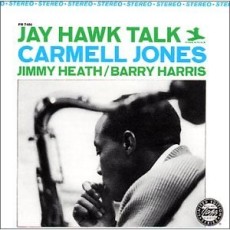
In ‘64 moving to New York he joined the Horace Silver Quintet recording three albums with Silver including “Song For My Father”. Down Beat Magazine awarded Jones the designation of “New Star Trumpeter” and signing with Prestige, he recorded what he considers his most successful personal album, “Jay Hawk Talk”, with pianist Barry Harris, tenor Jimmy Heath, drummer Roger Humphreys and bassist Teddy Smith. This album received the critics 5 Star Best Album Award.
The next year Carmell left the U.S. for Germany and spent the next fifteen years working with Milo Pavlovic, Herb Geller, Leo Wright and Eugene Cicero, the SFB Big Band and Radio Free Berlin recording 8 hours a day, composing and arranging for radio, TV and film. Upon his return to the States he devoted much of his time building new musicians from the ground up teaching music in his hometown elementary schools.
Carmell Jones, trumpeter, composer, arranger, music publisher, educator and recording artist with over sixty albums to his credit passed away in Kansas City, Kansas on November 7, 1996.
Daily Dose Of Jazz…
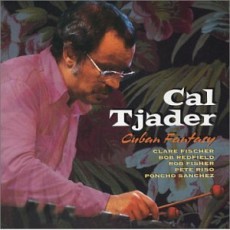
Callen Radcliffe Tjader, Jr. a.k.a. Cal Tjader was born July 16, 1925 in St. Louis, Missouri to touring Swedish-American vaudevillians, a tap dancing father and pianist mother. At two, his parents settled in San Mateo, California, opened a dance studio where he received piano and tap instruction from his parents. Tapping alongside his father in the Bay area he landed a role in the film “The White of the Dark Cloud of Joy” tapping with Bill “Bojangles” Robinson.
Playing in a Dixieland band around the Bay area, at sixteen Cal entered and won a Gene Krupa solo contest but the win was dampened by Pearl Harbor. After serving in the Army, he enrolled at San Jose State College and under the G.I. Bill majoring in education. He later transferred to San Francisco State College, took timpani lessons, met Dave Brubeck who introduced him to Paul Desmond. The three formed the Dave Brubeck Octet with Tjader on drums and recorded one album.
Disbanding the octet, Tjader and Brubeck formed a trio that became a fixture in the San Francisco jazz scene. During this period he taught himself the vibraphone, alternating between it and the drums depending on the song. A diving accident in 1951 forced Brubeck’s trio to dissolve, however, Tjader continued trio work with bassist Jack Weeks and pianists John Marabuto or Vince Guaraldi, recording his first 10″ LP as a leader with them for Fantasy. He went on to work with George Shearing and continued recording for Fantasy.
After a gig at the Blackhawk Cal quit Shearing and in 1954 formed The Cal Tjader Modern Mambo Quintet that produced Mambo with Tjader. The Mambo craze reached its peak in the late 1950s, and his band opened the second Monterey Jazz Festival in 1959. The Sixties was his most prolific period and his biggest success was the 1964 album Soul Sauce, the title track, a Dizzy Gillespie composition.
The 70s were lean years suffering like most jazz artists due to rock and roll’s explosive growth. During his later years he cut what most consider his seminal work “Onda Va Bien”, roughly translated as The Good Life, earning him a Grammy for Best Latin Recording.
Just as he was born on tour, he died touring on the road with his band in Manila, succumbing from a heart attack on May 5, 1982. Cal Tjader, who 40 year career playing vibraphone, drums, bongos, congas, timpani and piano stands alongside Lionel Hampton and Milt Jackson as a vital influence and is linked with swinging freely between jazz and Latin music.
More Posts: percussion,piano,vibraphone