

Daily Dose Of Jazz…
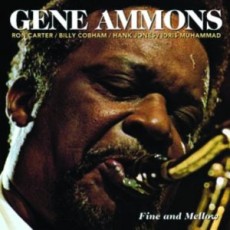
Eugene Ammons was born in Chicago, Illinois on April 14, 1925 to one of the greatest boogie-woogie pianist, Albert Ammons. At the age of 18 he left Chicago to go on the road with King Kolax for a year and in 1944 and ‘49 he worked as a featured soloist with Billy Eckstine and Woody Herman respectively. By 1950 he formed a duet with Sonny Stitt and recorded as a leader from 1947 to 1953 for the Mercury, Aristocrat, Chess, Decca, United and for the rest of his career he was affiliated with Prestige.
Known as “Jug” and “The Boss”, Gene’s playing showed influences from Lester Young and Ben Webster and both helped develop higher levels of expressiveness with from the tenor. Along with Dexter Gordon and Sonny Stitt, he integrated those developments into the emerging vernacular of bebop. His adeptness with technical aspects did not abandon the commercial blues and R&B sounds and he became an important part of the soul jazz movement in the mid-50s combining the tenor with the Hammond B3.
Using a thinner drier tone Ammons exploited a vast textural range that would later influence Stanley Turrentine, Houston Person and Archie Shepp and much later Joshua Redman. Yet he had little interest in the modal jazz of Coltrane, Henderson or Shorter. His ballads are classic, a testament to his sense of intonation, melodic symmetry and lyrical expressiveness.
Along with Von Freeman, they founded the Chicago School of Tenor Saxophone. On August 6, 1974 Gene Ammons passed away after a battle with cancer.

More Posts: saxophone

From Broadway To 52nd Street
On October 19, 1938 the musical Knickerbocker Holiday opened at the Ethel Barrymore Theatre starring Walter Huston, Ray Middleton, Richard Kollmer and Jeanne Madden. The play ran for 168 performances with music composed by Kurt Weill and Maxwell Anderson. From the musical came the jazz standard September Song.
The Story: As he is writing the history of New York, Washington Irving seems to wander back to the 17th century just as New Amsterdam is awaiting the arrival of Peter Stuyvesant. The town council seeks to divert the new governor from its corruption and ineptitude by staging a hanging of a rebellious young man named Brom.
Brom has brashly asked for the hand in marriage of Tina, one of the councilor’s daughters. Stuyvesant pardons Brom but refuses him marriage to Tina. Stuyvesant decides to marry Tina, prompting Brom to rouse the citizens against the governor. Sensing the way the political winds are blowing, the governor backs down, his decision aided by Irving’s warning for him to consider his place in history.
Broadway History: While Broadway is experiencing both success and failure, Hitler takes control of the army and marches into Austria; Joe Louis takes the heavyweight championship title from Nathan Mann followed by a first round KO of Max Schmeling; the first play is telecast with the original cast of Susan and God; the Yankee Clipper completes its first cross Atlantic flight; Howard Hughes flies around the world in 91 hours; and instant coffee is invented.
Sponsored By

www.whatissuitetabu.com
More Posts: vocal
Daily Dose Of Jazz…
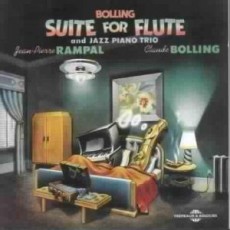
Claude Bolling was born April 10, 1930 in Cannes, France. He studied at the Nice Conservatory in Paris. A child prodigy whose primary influence was Duke Ellington, he was playing jazz piano professionally at age 14 with Lionel Hampton, Roy Eldridge and Kenny Clarke. Drawing inspiration from the New Orleans sound of Jelly Roll Morton, King Oliver, Louis Armstrong and Sidney Bechet and blending it with the music of Johnny Hodges, Barney Bigard and Cootie Williams created an interesting voice for the small band Bolling assembled in 1945. This combination put Claude in the midst of the trad jazz scene in Europe that evolved during the fifties.
He worked with Paul Gonsalves, Roy Eldridge, Lionel Hampton, Cat Anderson and Rex Stewart and by 1955 was leading his own orchestra. Stepping aside from his jazz recording and performance duties in the 60’s, Bolling ventured into creating, managing and producing a female pop group Les Parisiennes, composed for film and television (amassing over a hundred scores), expanded his interpretive range to include the early American modern jazz pianists like Erroll Garner, Willie “The Lion” Smith, Fats Waller and Horace Silver.
His European fans followed his decades of playing ragtime, blues, New Orleans jazz, boogie woogie and swing, however, his American devotees gained access to his suites written and arranged for classical flute, guitar, trumpet, violin and cello soloists and a mainstream jazz piano trio beginning with his collaboration with flautist Jean-Pierre Rampal, a mixture of baroque elegance and modern swing that stayed at the top of the hit parade for two years and in the Billboard “Top 40” for 530 weeks, roughly ten years.
He became friends, worked with and paid tribute in his later years to Oscar Peterson, Duke Ellington, Django Reinhardt, Stephane Grappelli and Lionel Hampton. Claude Bolling, at 89, a renowned jazz pianist, composer, arrange and occasional actor is still active.

More Posts: piano
From Broadway To 52nd Street
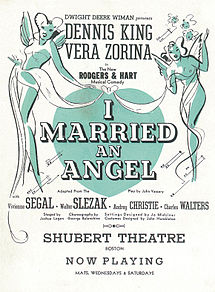
I Married An Angel opened on Broadway at the Shubert Theater on May 11, 1938. Running for three hundred and thirty-eight performances, the musical starred Dennis King, Audrie Christie, Vera Zorina and Vivienne Segal. Richard Rodgers and Lorenz Hart composed the score from which emerged Spring Is Here as another jazz standard.
The Story: The musical tells the story of a banker and ladies man who breaks off his engagement, swearing he will marry an angel. A real angel promptly flies into his life and he marries her. But her angelic honesty causes no end to problems for him until his sister teaches the angel the way of the cynical world. His sister also bribes a cab driver to delay creditors until a way is found to save her brother’s bank.
Jazz History: On the Street of Jazz musicians, jazz lovers, college students and big businessmen—everybody knew that this was “The Street that Never Slept,” the street where every night was New Year’s Eve. Here, for the price of a drink or two, you could walk through the whole history of jazz. Hot jazz was born and raised on The Street, as were the big swing bands of the thirties and the modern “cool” jazz combos of the forties. Comics like Alan King and Joey Adams got their start here, as did musicians like Erroll Garner, Jack Teagarden, and Coleman Hawkins.
Bessie Smith performed on the Street, as did Count Basie, Charlie “Bird” Parker, Dizzy Gillespie, Billie Holiday, Art Tatum, Sarah Vaughn, the Dorsey Brothers, Artie Shaw, and other jazz greats. The Street gave birth in Prohibition-era speakeasies, where musicians jammed for gin or just for the fun of it and its post-Repeal blossoming as the center of the jazz universe. The Street lined up and down on both sides with tiny, smoke-filled rooms where black and white musicians played to capacity crowds long before its postwar decline to become a tawdry tenderloin of strip and clip joints.
Sponsored By
www.whatissuitetabu.com
More Posts: broadway
Daily Dose Of Jazz…
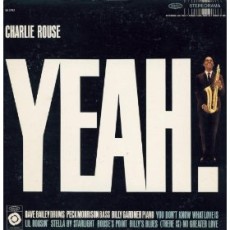
Charlie Rouse was born on April 6, 1924 in Washington, DC. He played tenor saxophone and flute, developing a distinctive nasal tone complimenting a bop-oriented style. Rouse moved very little, looked straight-ahead and wore a solemn expression when he played. He became highly influential by association with Thelonious Monk from 1959 to 1970. He would later become a founding member of Sphere, a band that paid tribute to Monk’s music.
Throughout the forties Rouse worked with Billy Eckstine, Dizzy Gillespie, Duke Ellington, made his recording debut with Tadd Dameron, and as the 50’s opened he was a part of Count Basie’s octet, and worked with Clifford Brown and Oscar Pettiford. He co-led the Jazz Modes with Julius Watkins and would go on to work with Mal Waldron. He would record, as a leader gaining some recognition by the eighties; with Carmen McRae on her classic Carmen Sings Monk project, and his last recording would be a Monk tribute concert.
The hard bop tenor and flautist died of lung cancer at the age of 64 in Seattle, Washington on November 30, 1988. Coincidently, Monk’s patroness NIca de Koenigswarter died the same day in New York City.