

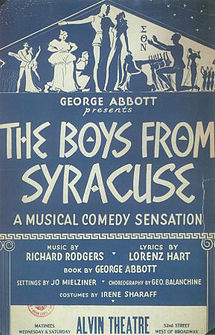
From Broadway To 52nd Street
The Boys From Syracuse came to Broadway with music and lyrics by Richard Rodgers and Lorenz Hart and opened on November 23, 1938 at the Alvin Theatre. The musical ran for two hundred and thirty-five performances, giving the world and jazz the songs “Falling In Love With Love” and “This Can’t Be Love”. The show starred Eddie Albert, Ronal Graham, Teddy Hart and Jimmy Salvo.
The Story: This is the tale of separated twins when young, Antipholus of Ephesus and Antipholus of Syracuse, who have taken on twin servants both named Dromio. It is when the pair from Syracuse come to Ephesus, that a comedy of errors ensues.
Jazz History: As the country becomes though over-commercialized with swing, the necessity of change hovers in the air. By the end of the Thirties, Coleman Hawkins would open the door that whet the appetites and influence aspiring jazz improvisers seeking a new mode of expression in small group settings and after-hour jam sessions. His rendition of Body and Soul was a landmark recording that sparked the emergence of bebop.
Sponsored By

www.whatissuitetabu.com
More Posts: broadway
Daily Dose Of Jazz…
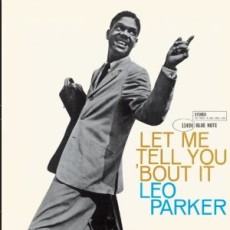
Leo Parker was born on April 18, 1925 in Washington, DC. He studied alto saxophone in high school and by 1944 had recorded with Coleman Hawkins. Switching to baritone the same year, he joined Billy Eckstine’s bebop band for the next two years.
In 1945 he became a member of the “Unholy Four” of saxophonists joining Dexter Gordon, Sonny Stitt, Gene Ammons. Possessed of a big, beefy sound tone and a fluent technique that spoke to R & B and advanced harmonies of bebop, Leo played with Dizzy Gillespie, Illinois Jacquet, Fats Navarro, J.J. Johnson, Teddy Edwards, Wardell Gray and Sir Charles Thompson, the later which he had a hit with “Mad Lad”.
During the ‘50s Leo experienced problems with drug abuse that interfered with his recording obligations. Although he made two comebacks recordings for Blue Note in 1961, the following year Leo Parker died of a heart attack at age 36 in New York City on February 11, 1962.
More Posts: saxophone
Daily Dose Of Jazz…
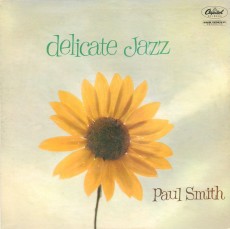
Paul Smith also known as Paul T. Smith was born on April 17, 1922 in San Diego, California. After playing early on with Johnny Richards in 1941 and spending a couple of years in the military, the pianist played with Les Paul from 1946–1947 and Tommy Dorsey from 1947–1949, them moved to L.A. and became a studio musician.
Smith has recorded frequently as a leader both with his trios and as a soloist. As a sideman he worked with Dizzy Gillespie, Anita O’Day, Buddy DeFranco, Louis Bellson, Steve Allen, Sammy Davis Jr., Rosemary Clooney, Stan Kenton Mel Torme and Ella Fitzgerald, the later with whom he was her conductor and pianist from 1956 to 1978.
Throughout his career Smith has worked in television with Bing Crosby, Red Skelton, Dinah Shore, Nat King Cole, Carol Burnett and many more, has toured around the world and has authored a number of educational books and CDs, most of which focus on explaining his particular approach to jazz piano.
Often praised for his brilliant technique and lyrical playing, he has performed in various genres of jazz, most typically bebop but has delved into cool jazz, swing, and traditional pop. Pianist Paul Smith passed away of heart failure at the age 91 in Torrance, California on June 29, 2013.

More Posts: piano
Daily Dose Of Jazz…
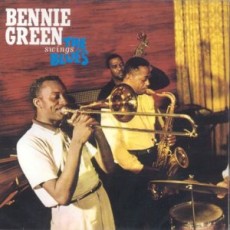
Bennie Green was born on April 16, 1923 in Chicago, Illinois. After playing locally around Chicago, at nineteen he teamed up with the Earl Hines Orchestra alongside Dizzy Gillespie and Charlie Parker from 1942-1948, gained some fame for his work with Charlie Ventura, played with Gene Ammons-Sonny Stitt, Charlie Ventura then joined Earl Hines’ small group in the early Fifties.
Following this last tenure with Hines, Bennie led his own groups for the rest of the decade. In the Sixties he played with sidemen Charlie Rouse, Paul Chambers, Louis Hayes, Sonny Clark, Jimmy Forrest and many others. He recorded as a leader for Decca, Blue Note, Bethlehem, Jazzland, Vee-Jay and Prestige during this same period.
By the end of the 60s, Green worked with Duke Ellington but then moved to Las Vegas where he spent his final years playing in hotel bands emerging only to play the Newport Jazz Festival and New York jam sessions. He was one of the few trombonists of the 1950s who played in a style not influenced by J.J. Johnson. He possessed a witty sound and full tone that was reminiscent of the swing era phrasing with an influence of R&B.
It has been speculated that Green was the first trombonist to consort with beboppers and whose ear enabled him to adopt aspects of their harmonic approach. On March 23, 1977 swing and bop trombonist Bennie Green passed away in San Diego, California at age 53.

More Posts: trombone
Daily Dose Of Jazz…
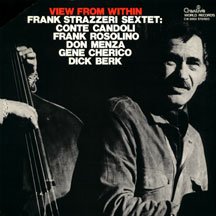
Eugene Valentino Cherico was born on April 15, 1935 in Buffalo, New York. As a child he played drums and pursued a drumming career until he hurt his hand while in a special services band in the Army whereupon he picked up the double bass as therapy. He attended Berklee College of Music where he met Toshiko Akiyoshi with whom he would tour and record intermittently for many years.
Throughout the Fifties and 60s Cherico worked as a sideman with Herb Pomeroy, Maynard Ferguson, Red Norvo, Benny Goodman, George Shearing, Stan Getz, Peter Nero Joe Morello, Paul Desmond and Gary Burton.
Much of the ‘70s Gene made a living as a studio musician siding with Frank Strazzeri, Louis Bellson Peggy Lee, Lew Tabackin, Frank Sinatra, Nancy Wilson Gerry Mulligan, Carmen McRae and Frank Sinatra, who he toured with into the early eighties. In 1984 he retired after being diagnosed with non-Hodgkins lymphoma and after a ten-year battle, double bassist Gene Cherico passed away on August 12, 1994 in Santa Monica, California.

More Posts: bass