

Daily Dose Of Jazz…
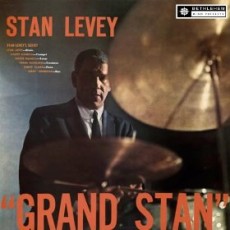
Stan Levey was born in Philadelphia, Pennsylvania on April 5, 1926, the son of a car salesman and boxing promoter. A self-taught prodigy, at age 16 Levey went to a local club where Dizzy Gillespie was headlining and convinced him to let him sit in on drums. So impressed was Dizzy that he offered the youngster an opportunity to join the group full-time. Taking some heat for recruiting a white, Jewish 16 year old to anchor his band, Dizzy simply responded – “show me a better black drummer and I’ll hire him”.
Levey joined the group, relocated to New York City with Dizzy, joined a small band led by Coleman Hawkins featuring Thelonious Monk, cut his first recording session with Art Tatum, played with Ben Webster and sat in with Woody Herman’s First Herd when regular drummer was unavailable.
In 1945 Levey joined Charlie Parker’s Quintet and when Dizzy and Charlie joined forces later that year they kept Levey and brought in bassist Al Haig and pianist Curly Russell. Considered the first and most innovative bebop lineup in history and it was during this period that classic standards like “A Night In Tunisia”, “Manteca” and Groovin’ High” were written.
During the late 40’s Levey toured with Norman Granz’s Jazz At The Philharmonic, in 1951 returned to Philly and formed his own band, worked five years with Stan Kenton, settled on the West coast joining Howard Rumsey’s Lighthouse All Stars and his drumming would influence the emerging West Coast jazz sound. He increased his session playing backing the likes of Sinatra, Fitzgerald, Holiday and Streisand. He played on over three hundred soundtracks for television and film, and turned his passion for photography into shooting a number of record covers.
Levey retired from music in 1973 to pursue his love of photography and he covered everything from fashion spreads to industrial photos to record jackets. On April 19, 2005 he passed away in Van Nuys, California at the age of 79. He never returned to music.

More Posts: drums
Daily Dose Of Jazz…
Abraham Samuel “Boomie” Richman was born on April 2, 1922 in Brockton, Massachusetts and began his career as a tenor saxophonist playing locally in his hometown. Moving to New York at twenty and within three years became a key soloist with the Tommy Dorsey Orchestra, a gig that lasted for six years at the height of the big band era. Playing a Selmer Tenor Mark VI saxophone with a baritone reed with a wide flare created a very expensive sound for the tenor who also played clarinet, bass clarinet, piccolo and flute.
Following his leaving the Dorsey band he were spent as a session player for the likes of Ella Fitzgerald, Tony Bennett, Nat King Cole, Frank Sinatra, Rosemary Clooney, Lena Horne, Sammy Davis, Benny Goodman, Peggy Lee, Judy Garland and Buddy Holly.
Richman played with Benny Goodman off and on throughout the early fifties. Upon his retirement from Goodman in 1956, he became the ‘first-call’ studio ace in New York City recording for television and radio commercials. This had him playing on shows hosted by Jimmy Dean, Perry Como, Dick Cavett, Patti Page, Pat Boone and Andy Williams. His last recording was for the movie The Godfather. His swing-based style remained unchanged well into the eighties when he retired from the music scene.

More Posts: saxophone
Daily Dose Of Jazz…
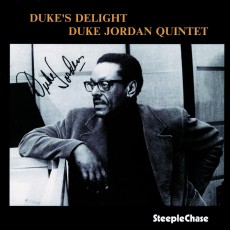
In the jazz world his moniker was Duke Jordan but he was born Irving Sidney Jordan on April 1, 1922 in Brooklyn, New York. The gifted and imaginative pianist was well known for his work with Charlie Parker during his classic quintet years with Miles Davis. From the 50’s on he had a long solo career performing in trio format after playing for periods with Sonny Stitt and Stan Getz. His most notable composition Jordu became a jazz standard when Clifford Brown adopted it into his repertoire.
He married the talented jazz singer Sheila Jordan in 1952 and the union lasted for a decade. He continuously performed throughout the sixties although he faded from the public eye until he began recording an extensive sequence of albums for Steeplechase in 1973 producing some of his best live recordings.
In 1978 he moved his residence to Copenhagen, Denmark where he lived until his death on August 8, 2006. His music always reflected the inherently melodic style that was enlivened by his delightful crisp touch and unexpected turns of phrase. Duke Jordan’s recordings can be found on Prestige, Savoy, Blue Note, Charlie Parker Records, Muse, Spotlite and Steeplechase.

More Posts: piano
From Broadway To 52nd Street
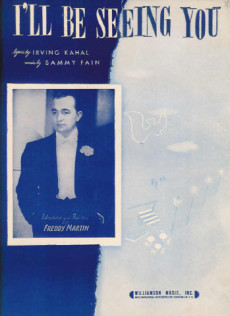
Right This Way came to fruition on January 5, 1938 as the production opened at the 46th Street Theatre. Brad Greene and Fabian Storey composed the music with Marianne Brown Waters writing the lyrics for the majority of the musical that was categorized as an original musical comedy set in Paris and Boston. The show starred Henry Arthur, Nelson Barcliff, Christine Bromley and Maude Carroll. Though the show only ran for 15 performances, the one song written by Irving Kahal and Sammy Fain, “I’ll Be Seeing You” was featured and became destined to be a jazz classic.
Broadway History: While Broadway prospered with a variety of shows being produced on The Great White Way not realizing that just some eight months away the city would be struck by what would be labeled as the “Long Island Express” or “The Great New England Hurricane of 1938”. The storm claimed 700 lives, injured another 700 more, destroyed 4500 homes, cottages and farms, damaged another 15,000 along with 26,000 cars, wiping out power above 59th Street, flooding subways and causing the East River to overflow to an estimated tune of three hundred million dollars. Despite the destruction, one unexpected positive outcome did emerge from the storm. The devastation reportedly helped solve the unemployment crisis that had been lingering since the Great Depression, as thousands of people were able to find work on Long Island helping to clean up and repair the damage.
Sponsored By

www.whatissuitetabu.com
More Posts: broadway
Daily Dose Of Jazz…
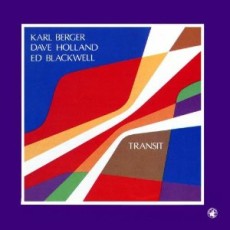
Karl Hanns Berger was born March 30, 1935 in Heidelberg, Germany and began playing piano when he was ten. By the time he reached young adulthood he had landed a job at Club 54 in his hometown as the house pianist and accompanied visiting American musicians such as Leo Wright, Lex Humphries and Don Ellis. During their stays he was able to learn the complexities of modern jazz.
Berger eventually picked up the vibraphone and in the early sixties became intrigued with free jazz. By 1965 he was a part of Don Cherry’s Paris-based quintet and the next year they came to New York to record Symphony For Improvisers on Blue Note. Staying in the U.S. Berger recorded his first album the following year.
Most of his output has been experimental in the free jazz circles playing with the likes of Carla Bley, Lee Konitz, John McLaughlin, Dave Holland, Sam Rivers, Pharoah Sanders, The Mingus Epitaph Orchestra and many others. From 1969 to 1975 Karl Berger continuously won the Down Beat critics poll for best jazz vibraphone player of the year.
In 1972 along with his friend and mentor Ornette Coleman, he founded the Creative Music Studio in Woodstock, New York, which was geared toward encouraging young students to explore their own creative ideas instead of imposing traditional concepts upon them. With visiting educators like Jack DeJohnette, Sam Rivers, and Anthony Braxton amongst other prominent musicians the school flourished until the mid eighties when Berger decided to venture back into performing.
From 1985 on Berger has led a 28-piece big band, played festivals worldwide, recorded as a leader and sideman, extending his educator talents to teaching jazz and ensemble playing in Frankfurt, and chaired the Music Department at U Mass-Dartmouth.
The musicologist, composer, pianist and vibraphonist was directly influenced by Ornette Coleman and his playing eschews four-mallet technique with an understanding and ability to play any meter from standard time signatures to odd meters and polyrhythms based on core elements of swing and coherent melody. Karl Berger continues to pursue the range of his instrument through recording, performing and touring.

More Posts: piano,vibraphone