

Daily Dose Of Jazz…
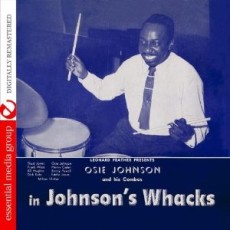
Osie Johnson was born James Johnson in Washington, DC on January 11, 1923. He started his drumming career in 1941 in Boston with the Sabby Lewis band and then during the war years in the Navy Band. Upon discharge from the service he freelanced around Chicago until he joined the Earl Hines band from 51-53.
He played stints with Dorothy Donegan and Illinois Jacquet prior to becoming one of the most in-demand drummers in the 50’s and first half of the 60’s in New York. As a busy session musician working with the likes of Coleman Hawkins, Dinah Washington, Wes Montgomery and Sonny Stitt, Paul Gonsalves, Zoot Sims and Mose Allison among the many who’s who list of musicians he kept time for.
On February 10, 1966 drummer, composer, arranger and singer Osie Johnson, who made a countless recordings as a leader and studio musician, passed away in New York City at the age of 43.

Daily Dose Of Jazz…
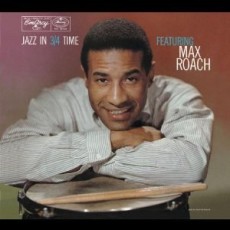
Max Roach was born Maxwell Lemuel Roach into the musical family of Alphonse and Cressie Roach on January 10, 1924 in the township of Newland in Pasquotank County, North Carolina. At the age of 4 the family moved to Bedford–Stuyvesant in Brooklyn, New York and few years later he was playing bugle and by 10 he was drumming in gospel bands. Upon graduation from Boy’s High School in 1942, the eighteen year old was called up to the majors filling in for Sonny Greer in the Duke Ellington Orchestra.
Roach’s most significant innovations came in the 1940s, when he and jazz drummer Kenny Clarke devised a new concept of musical time. By playing the beat-by-beat pulse of standard 4/4 time on the “ride” cymbal instead of on the thudding bass drum, Roach and Clarke developed a flexible, flowing rhythmic pattern that allowed soloists to play freely. The new approach also left space for the drummer to insert dramatic accents on the snare drum, “crash” cymbal and other components of the trap set. By matching his rhythmic attack with a tune’s melody, Roach brought a newfound subtlety of expression to his instrument.
Max along with Kenny Clarke were the first drummers to play bebop and performed in the bands of Dizzy Gillespie, Thelonious Monk, Coleman Hawkins, Bud Powell, Charles Mingus, Sonny Rollins, Clifford Brown, Duke Ellington, Miles Davis and Charlie Parker. He played on many of Parker’s most important records including the Savoy 1945 session, a turning point in recorded jazz.
Roach went on to lead his own groups, and made numerous musical statements relating to the Black civil rights movement. He once observed, “In no other society do they have one person play with all four limbs.” Jazz percussionist, drummer, composer and innovator Max Roach left the jazz world on August 16, 2007.

More Posts: drums

From Broadway To 52nd Street
In the thirties one name was destined for stardom and it belonged to Ethel Waters. Growing up in a solitary and restless childhood in Philadelphia’s poor and violent 8th Ward, she quickly became distrustful of authority, wary of kindness or commitment but connected to the songs “her people” sang and the stories they carried with them. She began singing in black nightclubs and the on the Chitlin’ Circuit, belting out gutsy and raunchy songs delivered with impeccable diction.
Debuting on Broadway in an unsuccessful revue called Africana, she soon was playing Rhapsody in Black making an unprecedented $2500 a week. But it was a gig in Harlem’s Cotton Club in 1933 where she introduced a Harold Arlen/Ted Koehler tune Stormy Weather that brought her unique talents to a wider audience. Irving Berlin was in the audience and when he heard Ethel, he knew she was right for one of the bravest range of songs ever produced on Broadway.
A revue cleverly tied together by the device of pretending that each song and skit was derived from headlines in one imaginary newspaper, was the basis for a new musical, As Thousands Cheer. It opened on September 30, 1933 at the Music Box and held the stage for 400 consecutive performances.
But it was Irving Berlin who brought a vibrant and exciting young singer named Ethel Waters downtown from Harlem and centered two songs composed by Berlin that went on to establish themselves in jazz history. The first headline simply said “Heat Wave” in which a young woman starts a heat wave by letting her seat wave! The second headline read: Unknown Man Lynched By Frenzied Mob and behind Ethel Waters was the silhouette of a man with a rope around his neck hanging from a tree as she sang “Supper Time”.
Sponsored By

www.whatissuitetabu.com
More Posts: broadway
Daily Dose Of Jazz…
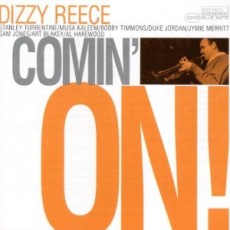
Dizzy Reece was born Alphonso Son Reece on January 5, 1931 in Kingston, Jamaica. The son of a silent film pianist, Reece attended the Alpha Boys School, which was famed for its musical alumni. He first took up the baritone saxophone but switched to trumpet at 14. From the age of 16 he was a full-time musician, moving to London in 1948 and spending the 50’s working in Europe with much of his time in Paris.
Reece found himself overshadowed by the innovators of the hard bop style, even though the trumpeter had his own distinctive sound and compositional style. He did, however, work with Don Byas, Kenny Clarke, Frank Foster and Thad Jones among others and winning praise from Miles Davis and Sony Rollins he emigrated to New York in 1959. Struggling through the 60’s, Reece recorded a series of critically acclaimed projects for Blue Note such as “Blues In Trinity”, “Star Bright”, “Comin’ On!” and “Soundin’ Off”.
Remaining active as a musician and writer, Dizzy Reece has recorded over the years with Victor Feldman, Tubby Hayes, the Paris Reunion Band, the Clifford Jordan Big Band, Dexter Gordon, Ted Curson, Duke Jordan, Sun Ra alumni John Gilmore and Philly Joe Jones.

More Posts: trumpet
Daily Dose Of Jazz…
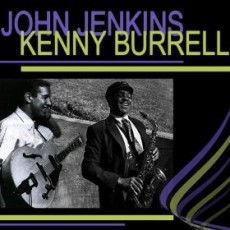
The hard bop alto saxophonist John Jenkins was born January 3, 1931 in Chicago, IL where he initially studied clarinet in high school but switched to saxophone after six months on the instrument. He played in jam sessions led by Joe Segal at Roosevelt College from 1949-1956 going on to play with Art Framer in 1955 and led his own group in Chicago later that year.
Jenkins had a sound similar to Jackie McLean and the 50’s saw his most active period. In 1957 he played with Charles Mingus s and recorded two albums as a leader, “Jenkins, Jordan & Timmons” on the New Jazz label and “John Jenkins with Kenny Burrell” on Blue Note.
He played as a sideman with Donald Byrd, Hank Mobley, Paul Quinichette, Clifford Jordan, Sahib Shihab and Wilbur Ware. in the late 1950s and early 1960s, but essentially dropped out of music after 1962, aside from a few dates with Gloria Coleman.
After leaving the jazz world John worked as a messenger in New York and dabbled in jewelry; he sold brass objects at street fairs in the 1970s. After 1983 he began practicing again and playing live on street corners and he played with Clifford Jordan shortly before his death on July 12, 1993.
More Posts: saxophone