

Daily Dose Of Jazz…
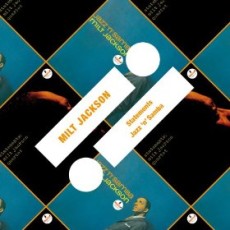
Milt Jackson was born Milton Jackson on January 1, 1923 in Detroit, Michigan. Discovered by Dizzy Gillespie and hired in 1946 for his sextet and also for his larger ensembles. He quickly acquired experience working with the most important figures in jazz of the era, including Woody Herman, Howard McGhee, Thelonious Monk and Charlie Parker.
In the Gillespie big band, Jackson fell into a pattern that led to the founding of the Modern Jazz Quartet. He was part of Gillespie’s small group swing tradition within a big band, consisting of pianist John Lewis, bassist Ray Brown and drummer Kenny Clarke. They would become a working group in their own right around 1950 and became the Milt Jackson Quartet but by the time Percy Heath replaced Ray Brown, in 1952 they became the Modern Jazz Quartet.
After some twenty years the MJQ disbanded in 1974 and Jackson pursued more money and his longed for improvisational freedom. The group reformed in 1981, however, and continued until 1993, after which Jackson toured alone, performing in various small combos, although agreeing to periodic MJQ reunions.
He recorded prolifically, his tunes, “Bluesology”, “Bags & Trane”, “The Late, Late Blues” and “Bag’s Groove” are jazz standards. He has recorded with J.J. Johnson, Roy McCurdy, B.B. King, John Coltrane, Wes Montgomery, Hank Mobley, Oscar Peterson, Stanley Turrentine, Don Sebesky, Cannonball Adderley and Ray Charles on the very short list.
A very expressive player, Bags, as he was affectionately known and referring to the bags under his eyes from staying up all night, differentiated himself from other vibraphonists in his attention to variations on harmonics and rhythm. He became one of the most significant vibist and was at the top of his game for 50 years playing bop, blues, and ballads with equal skill and sensitivity. Vibraphonist Milt Jackson, thought of as a bebop player but equally remembered for his cool swinging solos, left the jazz world on October 9, 1999 in Manhattan, New York.

More Posts: vibraphone
From Broadway To 52nd Street
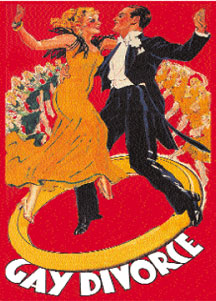
The stage of the Ethel Barrymore Theatre opened its curtains on November 29, 1932 to the Gay Divorce. The musical starred once again Fred Astaire, this time in his last Broadway show, and teaming up with Claire Luce and Erik Rhodes. Although Gay Divorce ran for only 248 performances, Night and Day, composed by Cole Porter, emerged to become a jazz classic.
The Story: In this musical unfolds the story of a husband and wife who are having marital difficulties and in an effort to give her husband grounds for divorce, Mimi Pratt arranges to be caught with a paid co-respondent, by the name of Tonetti. But a young man named Guy falls for Mimi and manages to get himself confused with Tonetti; yet, amidst the confusion he pursues his courtship.
Broadway History: The theatre on Madison Square at the end of the 19th century was located at the intersection of Broadway and Fifth Avenue at W. 23rd Street. The Flatiron Building now occupies the site. By midway through the following decade, the street blazed with electric signs as each theatre announced its shows and stars in white lights. By the turn of the 20th century the street had an entirely different look with as many as sixteen theatres on Broadway itself and many others located on side streets or other avenues.
Broadway became much more than a mere twelve blocks. It started at 13th Street and wound its way a mile and a half up the avenue to 45th Street ending in the heart of Longacre Square. The first decade of the century also saw the construction of many theatres, most notably The New Amsterdam on 42nd Street in 1903 along with four others the same year that are still standing today. Longacre Square had the first moving electric signs and it was when the Times Building was erected in 1904 that Longacre Square ceased to exist. It was now known as Times Square.
Sponsored By

www.whatissuitetabu.com
More Posts: broadway
Daily Dose Of Jazz…
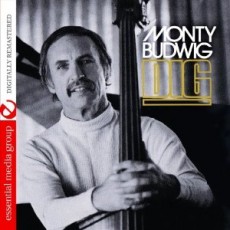
Monty Rex Budwig was born on December 26, 1926 in Pender, Nebraska. He began playing bass during high school, gigged with Vido Musso in 1951 and continued in the military band while in the Air Force.
In 1954 he moved to Los Angeles and became a sought after bassist in the West Coast jazz scene. He played with Barney Kessel and The Red Norvo Trio when he arrived followed by stints with Zoot Sims and the Woody Herman Orchestra. Budwig soon became a studio fixture, recording and performing as a sideman on countless sessions with many notable jazz musicians such as Carmen McRae, Barney Kessel, Woody Herman, Red Norvo, Bob Cooper, Scott Hamilton, Bud Shank, Shelly Manne and the Lighthouse All Stars.
Best known for his melodic solos and his ability to swing a band, Monty was highly regarded for playing with Vince Guaraldi, but there has been some question as to whether or not he was the bassist heard on the Charlie Brown Christmas Album. He released one recording as a leader titled “Dig” on the Concord label that included his wife Arlette McCoy on electric piano. Double bassist Monty Budwig passed away on March 9, 1992.
More Posts: bass
Daily Dose Of Jazz…
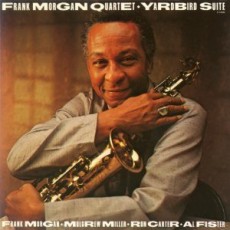
Frank Morgan was born on December 23, 1933 in Minneapolis, Minnesota and took after his father playing the guitar until he was seven, when he went to see Charlie Parker. Meeting him backstage, Parker suggested the clarinet for embouchure and two years later he switched to the saxophone.
Moving to California at age of 14, Frank entered and won a talent contest that provided him the opportunity to solo with Freddy Martin. But he hung out in the wrong circles and started taking heroin at 17, subsequently becoming addicted. He recorded with Teddy Charles in ’53 and Kenny Clarke in ’54 and touted as Charlie Parker’s successor, he would cut his first self-titled album “Frank Morgan” in 1955.
It would be three decades before his sophomore project due to his addiction and spending some twenty years in prison for various drug-related crimes. He would, however, form a small ensemble at San Quentin prison in the 1960s with another addict and sax player Art Pepper.
The Frank Morgan Quartet featured pianist Dolo Coker on piano, Flip Greene on bass and drummer Larance Marable. In 1985 he started recording again, releasing Easy Living in June 1985. This kicked off one of jazz’s most amazing comebacks. He recorded and toured vigorously but suffered a stroke in 1998. He subsequently recovered and once again began recording and performing.
Though mainly playing alto saxophone, Frank also played soprano and has recorded a string of excellent sets for Contemporary, Antilles, and Telarc, and has become an inspiring figure in the jazz world. Bebop alto saxophonist Frank Morgan passed away on December 14, 2007.

More Posts: saxophone
From Broadway To 52nd Street
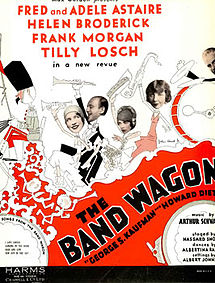
The Band Wagon hit the stage on June 3, 1931 at the New Amsterdam featuring Frank Morgan, Helen Broderick and Fred and Adele Astaire in their 10th and final Broadway appearance together. This revue utilized for the first time on Broadway, a double revolving stage for both its musical numbers and sketches. Dancing In The Dark written and composed by Arthur Schwartz and Howard Dietz, remains a jazz standard.
The Story: The revue, which ran 260 performances, had Fred and Adele cast as two French children cavorting with hoops, riding a Bavarian merry-go-round and several other sketches.
Broadway History: Theater posters are probably as old as the idea of the poster, but they really blossomed as an art form during the Industrial Revolution, when lithographic printing was perfected and affordable. In Paris during the Belle Époque (1880-1914) such posters were everywhere, a feature of the city. It was then that theater posters first became popular as decoration and memorabilia at home. When color printing developed (chromolithography), poster artists became even more popular and individually famous – like artist Jules Cheret, whose beautiful poster-girls (literal pin-up girls) were called “Chèrettes.” More and more reputable artists started creating posters. Toulouse-Lautrec, for instance, created many famous ones – an important part of his career.
Since that heyday, artists have continued to experiment with posters, including posters for the stage. Posters are an interesting genre-blending fine art, illustration, graphic art, advertising, and typography – so poster design attracts artists from each of those fields, for a lively cross-pollination of styles and ideas. All of which make posters a particularly rich and exciting contemporary art form.
The poster is also a supremely timely and ephemeral art designed to be used this one time for this one show, making them a sort of limited-time-offer art. Added to posters’ artistic merit, their time-capsule quality and their commemoration of now vanished events (plus the inevitable rarity of a paper artifact surviving) make posters ideal collectibles.
Sponsored By
www.whatissuitetabu.com
More Posts: broadway