

Daily Dose Of Jazz…
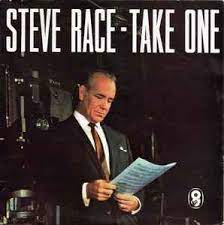
Stephen Russell Race was born April 1, 1921 in Lincoln, England and learned the piano from the age of five. His education from 1932 to 1937 was at Lincoln School, where he formed his first jazz group. At sixteen, he attended the Royal Academy of Music, studying composition under Harry Farjeon and William Alwyn. After leaving the academy, he wrote occasional dance band reviews for Melody Maker and, in 1939, joined the Harry Leader dance band as pianist, succeeding Norrie Paramor.
Race joined the Royal Air Force in 1941, and formed a jazz/dance quintet. After World War II, he began a long and productive career with the BBC, where his ready wit, musicianship and broad musical knowledge made him a much sought after musical accompanist for panel games and magazine shows, such as Whirligig and Many a Slip.
Simultaneously he played in the Lew Stone and Cyril Stapleton bands, and arranged material for Ted Heath. By 1949 The Steve Race Bop Group recorded some of the first British bebop records for the Paxton label. These included four sides with Leon Calvert, Johnny Dankworth, Peter Chilver, Norman Burns, Jack Fulton. He also developed a sideline arranging player piano rolls for the Artona company.
the 1950s to the 1980s, he presented numerous music programs on radio and television. Steve was the chairman of the long-running light-hearted radio and TV panel game My Music which ran for 520 episodes from 1967 to 1994. He also presented Jazz For Moderns and Jazz 625 for the BBC in the 1960s.
As a composer, he produced a number of pieces in the jazz, classical and popular idioms. Blue Acara, Esteban Cera, Faraway Music, Nicola, Ring Ding and Pied Piper aer just a few of his well known compositions. He appeared as pianist/bandleader in the 1948 film Calling Paul Temple and with Sid Colin wrote two of the songs performed by Celia Lipton. He also wrote other scores for films. His autobiography, Musician at Large, was published in 1979, and was inducted into the Order of the British Empire (OBE). Pianist, composer, radio and television presenter Steve Race had his first heart attack in 1965 and transitioned from a second attack at his home in Great Missenden, Buckinghamshire, on June 22, 2009.
More Posts: bandleader,composer,history,instrumental,jazz,music,piano
Daily Dose Of Jazz…
Santo J. “Sonny” Russo was born on March 20, 1929 in New York City, New York and grew up in a musical family, both his father and grandfather were professional horn players. He first played piano and violin, and played with his father’s group at age 15, before settling on the trombone.
The consummate sideman, through the late Forties he started out playing with Buddy Morrow in 1947, Lee Castle in 1948, Sam Donahue in 1949, and Artie Shaw in 1949–50. The 1950s saw him performing with Art Mooney, Tito Puente, Jerry Wald, Tommy Tucker, Buddy Rich, Ralph Flanagan, the Sauter-Finegan Orchestra, Neal Hefti, Jimmy Dorsey, Tommy Dorsey, and Maynard Ferguson.
For a short period during the mid-1950s Russo found work in the bands of various Broadway shows, then in the late 1950s and 1960s he worked with Louie Bellson, Machito, Bobby Hackett, Benny Goodman, and Doc Severinsen. From 1969to 1972 he was a member of The Tonight Show orchestra, and he worked with Frank Sinatra from 1967 to 1988.
He played on Urbie Green’s 21 Trombones, soloed on numerous others, and toured with The World’s Greatest Jazz Band. Sonny recorded extensively with Jimmy Rushing, Tony Bennett, Lena Horne, Perry Como, Dinah Washington, Liza Minnelli, Elvis Presley, Paul Anka, Ray Charles, Steve Lawrence, and Eydie Gorme. He performs on the soundtracks to the films The Godfather, The Godfather II, Goodfellas, and Sophie’s Choice, and in 1971 on The Tonight Show he shared the stage with Louis Armstrong, playing the solo on Someday You’ll Be Sorry.
A fixture in the recording studios for radio and television, he was a regular in the Orchestra for Jerry Lewis’s Muscular Dystrophy Telethon in New York City. Always in demand he continued to work with Lewis on his one-man show, toured around the world with Sinatra who announced his playing a trombone solo on the tune I’ve Got You Under My Skin.
He has also done many gigs with the likes of Al Cohn, Zoot Simms, Mousey Alexander, and Milt Hinton. Trombonist Sonny Russo, a graduate of the Manhattan School of Music, transitioned on February 23, 2013.

More Posts: history,instrumental,jazz,music,trombone
Daily Dose Of Jazz…
Jackie Mills was born on March 11, 1922 in New York City and he first learned guitar before picking up drums when he was ten years old. He played in the swing groups of Charlie Barnet and Boyd Raeburn in the 1940s. He followed with gigs with Jazz at the Philharmonic, Gene Norman, Babe Russin, Mannie Klein, Dizzy Gillespie, Benny Goodman, Rene Touzet, Sonny Criss, Andre Previn, Lionel Hampton, Stan Getz, Woody Herman, and Red Norvo.
In the late 1940s Jackie became interested in bebop and began playing in a style influenced by Max Roach. He began playing with Harry James in 1949, working with him through the late 1950s.
Mills recorded as a session musician during the 50s, working with artists such as Gerry Wiggins and Anita O’Day. In his later career, Mills recorded occasionally, including with Freddie Roach in 1966 and Dodo Marmarosa in 1978, but was chiefly active as a record producer and co-founder of Choreo Records, doing production work for Columbia, MGM, Mainstream, Capitol and Liberty Records.
In 1969, Mills acquired Larrabee Sound Studios from its co-founders Gerry Goffin and Carole King. As owner and operator through the mid-1980s, the studio was acquired by his son Kevin.
Drummer Jackie Mills transitioned on March 22, 2010 in Beaumont, California.
Daily Dose Of Jazz…
Donald Trenner was born in New Haven, Connecticut on March 10, 1927. He began his career playing with Ted Fio Rito from 1943 to 1945, and followed this with a slot in Buddy Morrow’s orchestra in 1947.
In the Fifties Donn worked with Charlie Barnet, Jerry Gray, Charlie Parker, Stan Getz, Georgie Auld, Jerry Fielding, Skinnay Ennis, Les Brown, Dick Haymes, Jack Jones, Lena Horne, Ann-Margret, Shirley MacLaine and Nancy Wilson. By 1957 he was playing with Oscar Pettiford and toured Europe the following year with Anita O’Day.
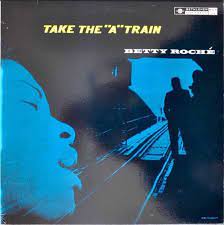
Entertaining the U.S. troops, Trenner toured with Bob Hope. In addition, he recorded with Tommy Dorsey, Vic Schoen, Howard McGhee, Frances Faye, Betty Roche, Nelson Riddle, Paul Broadnax, Dave Pell, Charles Mingus, and Ben Webster.
The 1960s saw him working as a studio musician, and leading The Steve Allen Show house band. He continued working in television throughout the 1970s and 80s. He led his own band, The Donn Trio with his first wife Helen Carr as the vocalist. Never recording as a leader, pianist and arranger Donn Trenner transitioned on May 16, 2020.
More Posts: arranger,bandleader,history,instrumental,jazz,music,piano
Daily Dose Of Jazz…
Jerry Ross was born Jerold Rosenberg on March 9, 1926 in Bronx, New York to Russian parents of the Jewish faith. Growing up, he was a professional singer and actor in the Yiddish theater. Following high school, he studied at New York University under Rudolph Schramm and introductions to singer Eddie Fisher and others brought him into contact with music publishers at the Brill Building, the center of songwriting activity in New York.
Ross met Richard Adler in 1950 and as a duo they became protégés of composer, lyricist, and publisher Frank Loesser. They began their career in the Broadway theater with John Murray Anderson’s Almanac, a revue for which they provided most of the songs, resulting in recordings of Acorn in the Meadow by Harry Belafonte and Fini by Polly Bergen.
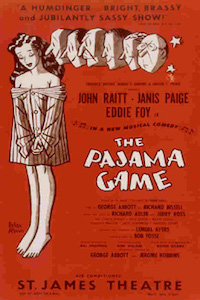
Their second effort, The Pajama Game, opened on Broadway in May 1954. It ran for 1063 performances, produced the jazz standard Hey There, won a Tony Award, Donaldson Award and the Variety Drama Critics Award. Two songs from the show,
Their next musical, Damn Yankees, opened on Broadway in 1955, starring Gwen Verdon. It ran for 1019 performances and produced the jazz standard Whatever Lola Wants, and won the Tony Award for Composer/Lyricist and Musical.
Composer and lyricist Jerry Ross, who wrote, alone or in collaboration more than 250 songs and was entered posthumously into the Songwriters Hall of Fame, transitioned on November 11, 1955, at the age of 29, from complications related to the lung disease bronchiectasis.
More Posts: composer,history,instrumental,jazz,lyricist,music,vocal