

Daily Dose Of Jazz…
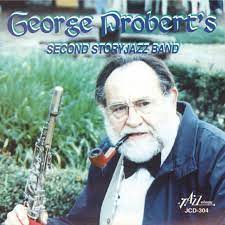
George Arthur Probert, Jr. was born on March 5, 1927 in Los Angeles, California and was an autodidact on his instruments. He first played with Bob Scobey from 1950 to 1953 and then went on to play with Kid Ory’s Creole Jazz Band.
Between 1954 and 1969, George played in the Firehouse Five Plus Two Dixieland Revival Band, an ensemble formed by Walt Disney Studios animators. They recorded with Disney composer George Bruns in 1957 and again in 1968.
Probert led his own bands from 1973, touring America and Europe. In 1997 he toured England, Germany & the Netherlands with Big Bill Bissonnette’s International Jazz Band. The all-star group featured Anthony “Tuba Fats” Lacen of New Orleans & British pianist Pat Hawes.
Clarinetist, soprano saxophonist and bandleader George Probert, who also worked as a television and movie music editor, transitioned on January 10, 2015 in Monrovia, California.

More Posts: bandleader,clarinet,history,instrumental,jazz,music
Daily Dose Of Jazz…
Alun Morgan was born on February 24, 1928 in Pontypridd, Wales and became interested in jazz as a teenager during World War II. Charlie Parker was a significant influence on him in the late 1940s.
Morgan began to write on jazz from the early 1950 for Melody Maker, Jazz Journal, Jazz Monthly and Gramophone, and for 20 years from 1969 a weekly jazz column in a local Kent newspaper.
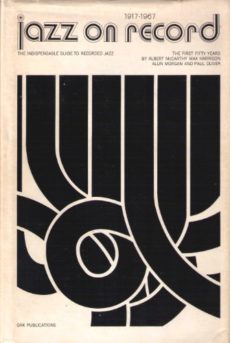
Over his writing career he completed liner notes for over 2,500 albums, initially for Vogue Records. From 1954 he contributed to music programs for BBC Radio. Morgan was the author of a book on modern jazz in England and the co-author of several books on jazz records. They were Jazz On Record: A Critical Guide, Jazz On Record: A Critical Guide To The First 50 years, Modern Jazz-The Essential Records, Modern Jazz – A Survey Of Developments Since 1939, Count Basie, and The Gramophone Jazz Good CD Guide.
He lectured on jazz at the Guildhall School of Music and Drama and the Royal Academy of Music in London, England. Additionally, he was a full-time architect until 1991.
Shortly after retiring from his other occupation, he emigrated to Australia to live out his life. Author and critic Alun Morgan transitioned on November 11, 2018.

Three Wishes
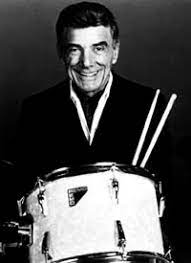
Louis Bellson was talking with Nica and during the conversation she asked him what three wishes he would ask for if they could be given and this was his answer:
-
-
“That jazz music would become an integral part of all music. And I hope that the American people would consider it a part of American creative art. Because I feel that its music potential has a place alongside all other great music of the world. And also it should be respected and the musicians should be respected too, because I feel in the future there is going to be a greater tie~in with symphony music.”
-
“I hope that all the young fine musicians today who are interested in jazz as a creative art have the opportunity to express themselves. By this I mean there are no clubs or places where the youngster can gain knowledge and learn his craft. It is shameful to know that there are many gigantic industries in every other form, but our creative form suffers the most.”
-
“I am hoping that music will mend the entire world. It has been proven that our relations with other countries has been one hundred percent pure in friendship because of music. I feel that music will blossom into a flower, and that flower will express one great thought, and that is: We belong to the human race and we all learn the same notes.”
-
*Excerpt from Three Wishes: An Intimate Look at Jazz Greats ~ Compiled and Photographed by Pannonica de Koenigswarter
More Posts: baroness,drums,history,instrumental,jazz,music,pannonica,three,wishes
Three Wishes
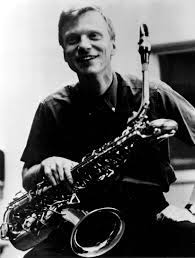
Gerry Mulligan was approached by Pannonica and asked if he could be granted three wishes what his be and his response was:
- “To play high trumpet accurately, drums, sing. And if there was a fourth, money.”
*Excerpt from Three Wishes: An Intimate Look at Jazz Greats ~ Compiled and Photographed by Pannonica de Koenigswarter
More Posts: baroness,clarinet,history,instrumental,jazz,music,pannonica,saxophone,three,wishes
Daily Dose Of Jazz…
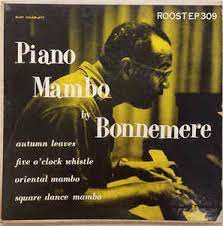
Edward Valentine Bonnemère was born on February 15, 1921 in Harlem, New York and during his school days was a church pianist. After military service in World War II he played with Claude Hopkins, and received his master’s degree from New York University.
In 1953 Eddie led a combo with Ray Barretto in the Savoy Ballroom. In 1955, he had a Mambo band, then in 1956 moved to Detroit, Michigan and became part of the house band at Baker’s Keyboard Lounge. He released a 10-inch album Ti-Pi-Tin / Five O’Clock Whistle on the Royal Roost label. He followed in 1959 with his trio recording Piano Bon-Bons and in 1960 The Sound of Memory. By 1964, with the participation of Kenny Burrell, he released his Jazz Orient-ed album on Prestige Records.
The mid-1960s, Bonnemère was one of the protagonists of an Africanization of the Catholic Mass spearheaded by Fr Clarence Rivers, as part of the Black Catholic Movement. Influenced by Mary Lou Williams he composed the Missa Hodierna for jazz ensemble and choir, which was first presented in 1966 during a service in Harlem’s St. Charles Borromeo Church. It was the first Jazz Mass ever in the United States. This mass was also performed in the Town Hall together with Howard McGhee’s instrumental composition Bless You.
In later years he worked as a church musician and composed the Missa Laetare and other liturgical works. He was also musical director of the Church of St. Thomas the Apostle in Manhattan, New York whose choir recorded his Mass for Every Season.
Pianist and composer Eddie Bonnemère transitioned on March 19, 1996 in New York City.
More Posts: bandleader,composer,history,instrumental,jazz,music,piano