

Daily Dose Of Jazz…
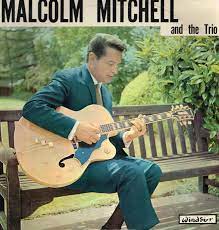
Malcolm Mitchell was born in London, England on November 9, 1926 and was originally taught by Ivor Mairants. In 1947 he was teaching jazz guitar when he formed The Trio with pianist Johnny Pearson and bassist Lennie Bush. At the BBC Maida Vale studios the trio would broadcast live on a Saturday morning.
1948 saw Mitchell become the first British musician to play with Duke Ellington and earn money for doing so. In 1933 the Duke of Windsor had insisted on sitting in on drums with the Ellington Band when it visited Britain but he didn’t get paid for it. Mitchell’s debut with Ellington was equally eccentric in its way.
Throughout the 40s and into the 50s the brutish Musicians’ Union, in tandem with the all-powerful fraternity, Ministry of Works, had a rule which banned American musicians from playing in England. In 1948 the Dizzy Gillespie and Spike Jones Orchestras had to cancel projected tours and the only way Ellington was able to work there was as a variety act without his band. He played piano at the London Palladium and music halls in nine other cities with his trumpeter Ray Nance, allowed in as a dancer and thus “Showbiz”, and his singer Kay Davis weren’t banned. The Union presumably didn’t regard them as musicians.
While the Union Ban was in place the Mitchell Trio, now with Johnnie Valmore Pearson on piano and Teddy Broughton on bass, accompanied other bewildered Americans variety artists including Hoagy Carmichael and Maxine Sullivan when they toured England. During those years he toured eight weeks in Sweden with Stephane Grappelli and Django Reinhardt.
His Mitchell Trio, with pianist Johnny Pearson and Teddy Broughton on bass, became well known supporting U.S. jazzmen and singers touring in the UK. Guitarist, bandleader and educator Malcolm MItchell passed away in Bognor Regis, England on March 9, 1998.
More Posts: bandleader,guitar,instrumental,jazz,music
Daily Dose Of Jazz…
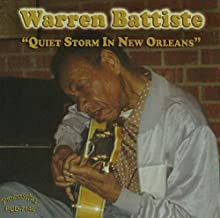
Warren Battiste was born on November 8, 1925 in New Orleans, Louisiana and was taught guitar by his father who played the banjo at Preservation Hall. Completing four year of study at Gruenwald Music School in his hometown, he became proficient not only on that instrument but also bass, banjo, and piano.
He first played with Fats Domino before heading off to New York City for Illinois Jacquet’s band. This gave him a very broad understanding from classic blues to R&B and jazz. Back in New Orleans he played thebest clubs on Bourbon Street, from Preservation Hall and Snug Harbor to the Matador and others.
He appeared in the film Shy People with movie stars Jill Clayburgh and Barbara Hershey. Warren has performed with George Benson, Jimmy McGriff, The Platters and The Inkspots. He went on to teach music at Wequachie High School, Essex County College and the Newark Art Center in New Jersey. He has released three albums as a leader ~ Street Jazz, Just Friends and Quiet Storm In New Orleans, the latter recorded in his 80s.
Guitarist Warren Battiste, who has been recognized with a Lifetime Achievement Award In Jazz from the New Orleans Jazz and Heritage Festival, continues to perform.
More Posts: bandleader,bass,guitar,history,instrumental,jazz,music
Daily Dose Of Jazz…
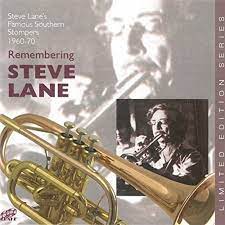
Steve Lane was born on November 7, 1921 in London, England where his father was a concertina player who recorded with the Rio Grande Tango Orchestra in the 1920s. Having heard his first jazz in the Rhythm Clubs of the late 1930s, his first choice of instrument was guitar, but, following wartime service, he switched to the cornet on which he soon developed a jazz style based on the hot trumpeters of the 1920s he so much admired, with particular emphasis on his role leading the collective ensemble.
A gifted composer of vocal and instrumental pieces, he deftly incorporated female vocalists as an integral part of the band, thus presenting a range of songs carefully chosen to showcase the singer, and the supporting musicians strictly trained in the art of accompaniment. A taskmaster offering little compensation and weekly rehearsals, his personnel changed often but allowed him the ability to discover young talent such as pianists Martin Litton and Bruce Boardman and trombonist Bob Hunt.
Steve led his own Southern Stompers jazz band in the early 1950, and also led and recorded with his Red Hot Peppers and the VJM Washboard Band for over 50 years. In 1952 he established the Ealing Jazz Club, and in the Sixties establishe the West End Jazz Club and was a founding partner of VJM Records.
Cornetist, guitarist, composer, arranger and bandleader Steve Lane, who was a traditional jazz player, passed awya on August 22, 2015 at age 93.
More Posts: arranger,bandleader,composer,cornet,guitar,history,instrumental,jazz,music,vocal
Daily Dose Of Jazz…
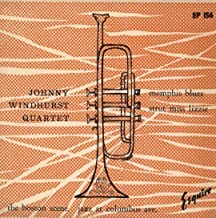
John Henry Windhurst came into this world on November 5, 1926 in New York City, New York and was a self taught trumpeter. At the age of 15 he played his first public performance at Nick’s, and made his professional debut during the spring of 1944 at one of Eddie Condon’s concerts at the Town Hall, both venues in New York City. By eighteen he replaced Bunk Johnson in Sidney Bechet’s band for a Savoy Cafe gig in Boston, Massachusett, which launched his career as a trumpeter.
Going on to play with Art Hodes and James P. Johnson at the Jazz at Town Hall concert in 1946, Johnny then moved to the midwest and after a brief stint in the Chicago, Illinois jazz scene he returned to the Savoy Cafe as a member of Edmond Hall’s band. Eventually he moved west to experience the west coast jazz scene in California. However, his inability to read music forced him to decline gigs with Benny Goodman and Woody Herman, emphasizing his preference for informal jamming.
Over the years, he played with Louis Armstrong, Nappy Lamare, Eddie Condon. Ruby Braff,George Wettling, Jack Teagarden and Barbara Lea. He also led his own band, Riverboat Five, through Columbus, Ohio and Boston for several years, opting to play colleges and small venues instead of the most popular east coast venues and nightclubs.He also did some off-Broadway work with Conrad Janis in the musical Joy Ride.
Windhurst only made one recording with his swing quartet called Jazz at Columbus Avenue, for the Transition label in 1956. On the record label Jazzology, George Buck released The Imaginative Johnny Windhurst which showcased his unique trumpet style. The LP was recorded at a showcase in Massachusetts, where the decision to record it was made on the spot just as the show began. The spontaneous set flaunts his innovative playing on timeless numbers such as Back In Your Own Backyard, Strut Miss Lizzie and Lover Come Back to Me.
He eventually moved upstate to Poughkeepsie, New York with his mother, where he finished his career in a dixieland band at Frivolous Sal’s Last Chance Saloon. Trumpeter Johnny Windhurst passed away from a heart attack at the age of 54 on October 2, 1981 in Dutchess County, New York.
More Posts: bandleader,history,instrumental,jazz,music,trumpet
Daily Dose Of Jazz…
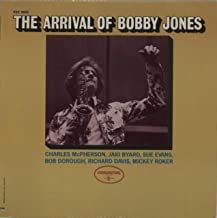
Bobby Jones, born October 30, 1928 in Louisville, Kentucky and played drums as a child, started on clarinet at age 8, and his father encouraged him to explore jazz. He studied with Simeon Bellison, Joe Allard, Charlie Parker, and George Russell.
He played with Ray McKinley from 1949 into the mid-1950s, and then with Hal McIntyre before rejoining McKinley later in the decade. During a stint in the Army he met Nat and Cannonball Adderley as well as Junior Mance. After his discharge he played country music and rock & roll as a studio musician, and did time with Boots Randolph. He worked with Glenn Miller in 1950 before returning to McKinley from 1959 to 1963.
He spent a brief time with Woody Herman and Jack Teagarden in 1963, and after the latter’s death he retired to Louisville and started a local jazz council there in addition to teaching at Kentucky State College. In 1969 he moved to New York City and played with Charles Mingus from 1970 to 1972, touring Europe and Japan with him. He also recorded sessions under his own name in 1972 and 1974.
Late in his life he moved to Germany, where he ceased performing due to emphysema. Saxophonist Bobby Jones passed away on March 6, 1980 in Munich, Germany.

More Posts: bandleader,history,instrumental,jazz,music,saxophone